
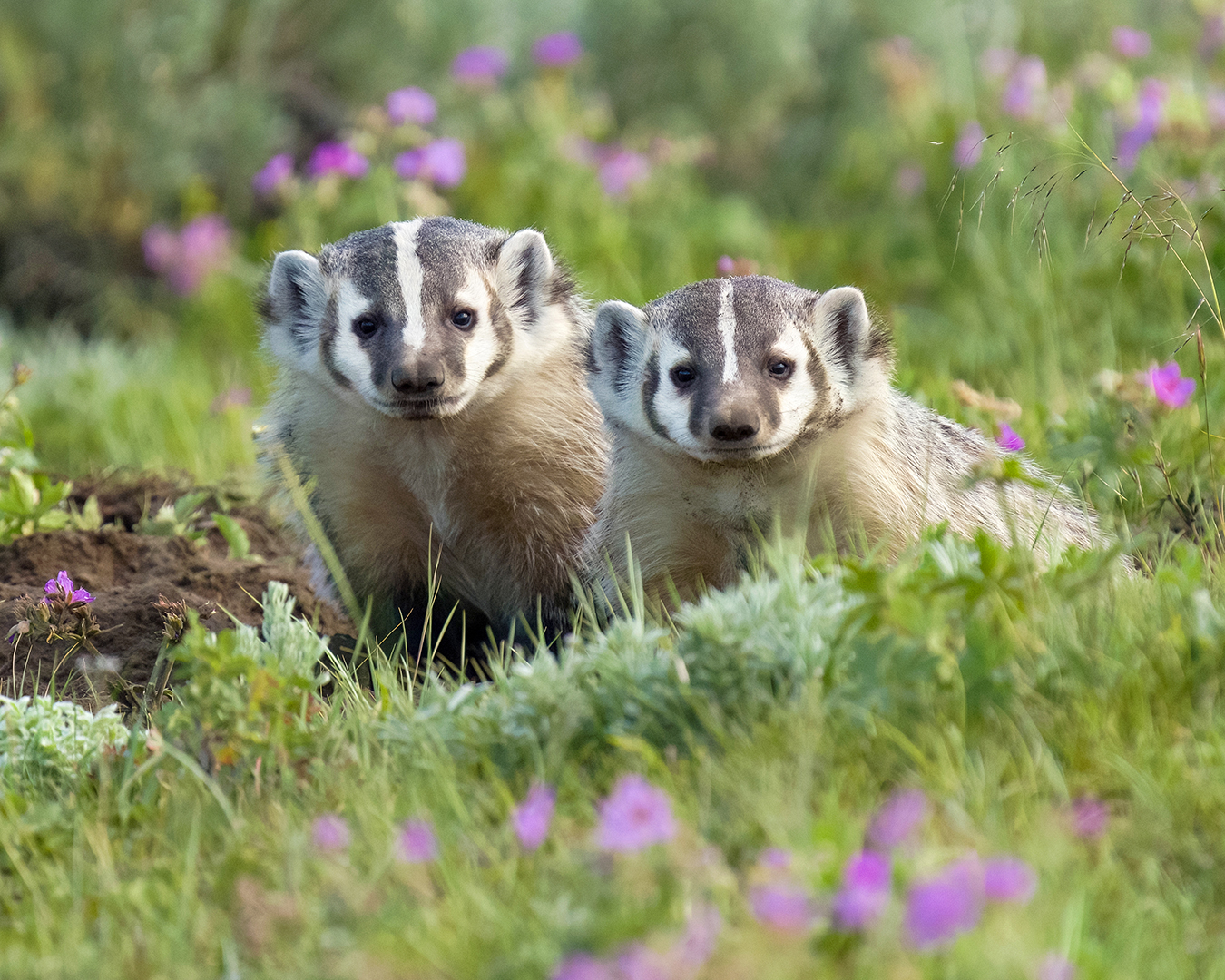
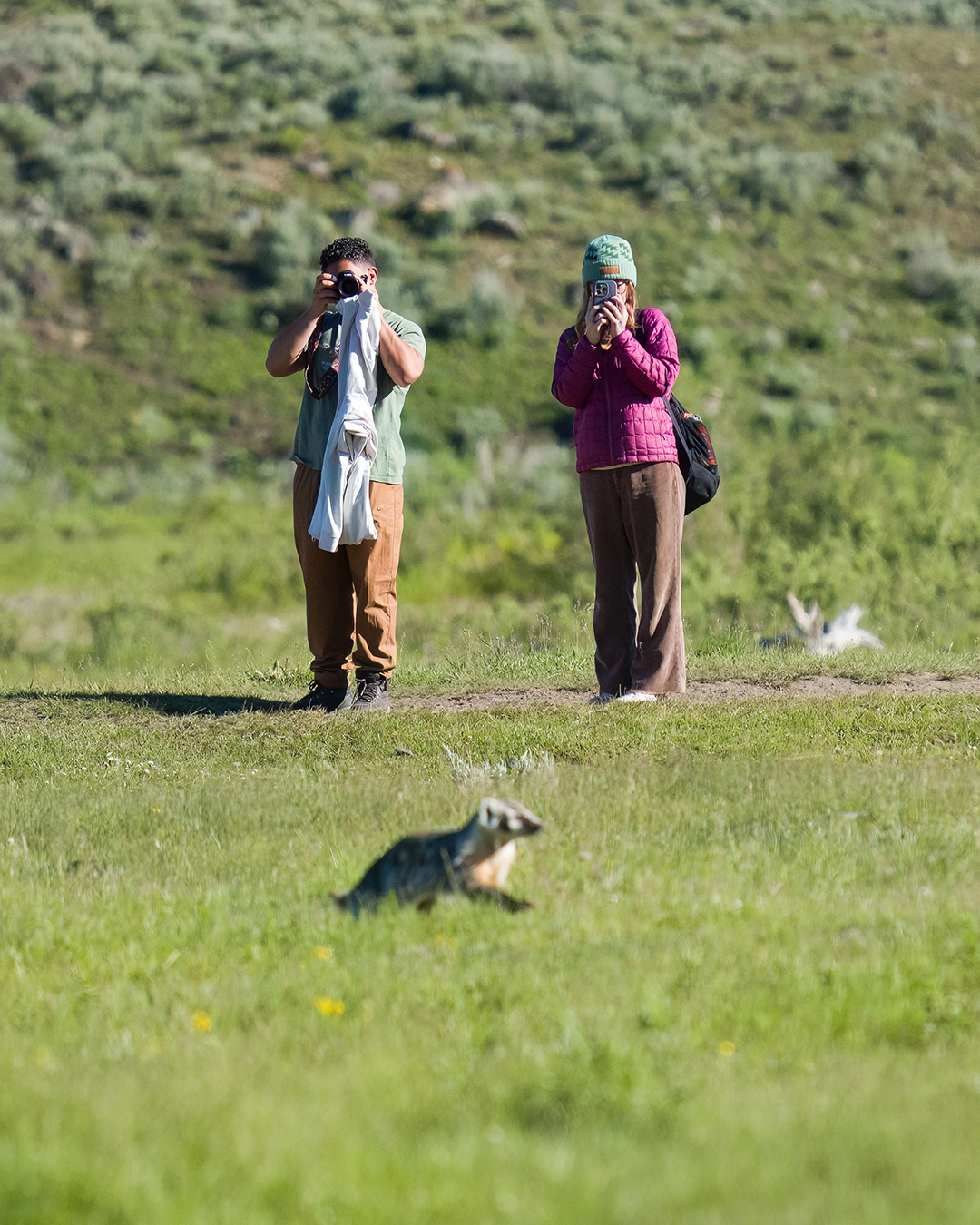
I’d just subjected Marie to a long, overly-detailed account of my morning badger sightings in Lamar Valley. “Oh and also,” I remembered to add, “some tourists saw one of the badgers, and they barely even stopped for a quick phone photo before walking right by.”
“Yeah, nobody cares about badgers,” Marie declared, her voice weary with the effort of having to share a truth that should be self-evident.
As someone who cares greatly about badgers, I wanted to object. But I understood Marie’s point. Most Yellowstone visitors get excited about bears and wolves. Surprisingly few people who happen to see an American badger even know what it is.
Marie herself wasn’t particularly interested in badgers, which might seem a little inconsistent when you consider how much she loves another small, fossorial mammal: meerkats. The explanation, apparently, is that Marie has watched every episode of the TV show Meerkat Manor, which presents a family of meerkats with cute names, relatable personalities, and dramatic narrative arcs. Raw documentary footage alone would have bored Marie, but Meerkat Manor won her over by crafting their footage into a compelling story.
Prior to this spring and summer, my badger sightings in Yellowstone were just isolated events. I hadn’t watched individual badgers over extended periods of time, and I didn’t know enough to place their behaviors into the context of a larger story. All that began to change in mid-May, when I stumbled across the natal den of a badger mom with three cubs in Lamar Valley. The triplet family stayed in the same den until the end of May, which meant I was able to watch them every morning for almost two weeks. I was hooked. The family became more challenging to find when they started relocating every day, but I still saw them often enough that by the end of July I knew the basic outlines of their story, along with some others.
THE TRIPLET FAMILIES
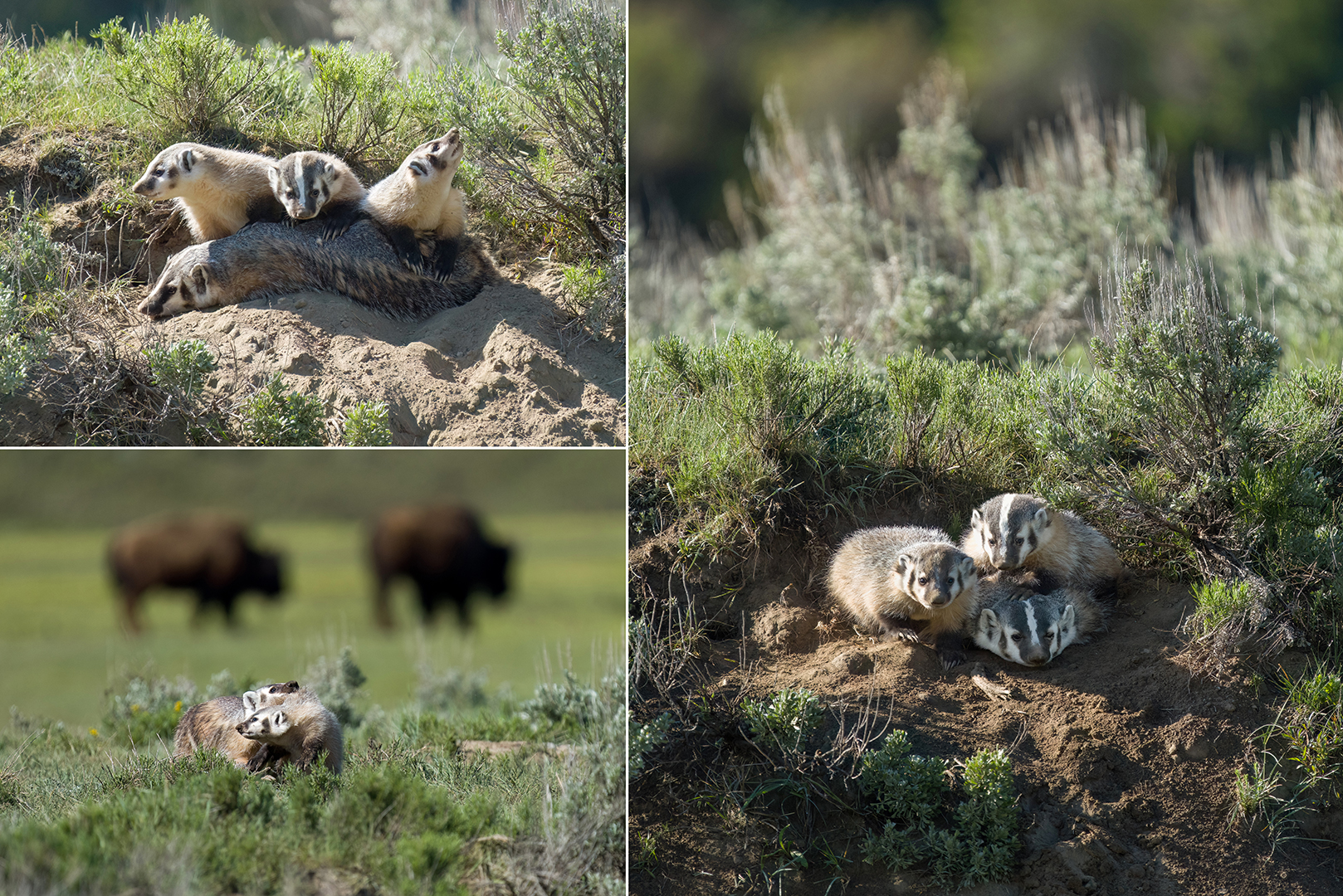
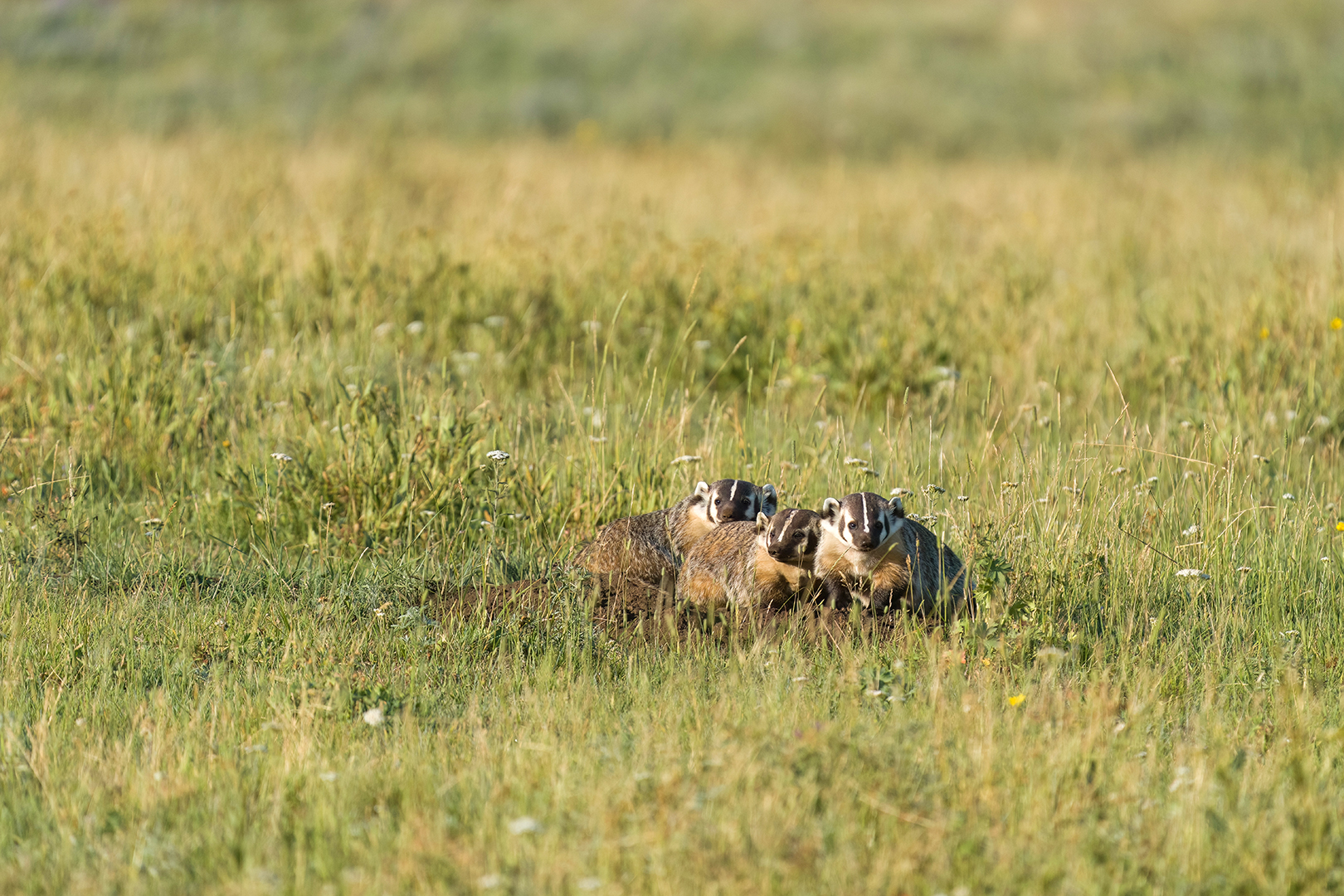
When Triplet Mom and her cubs were at their natal den, the entire family would appear at the entrance every morning for some fresh air and playtime before Mom headed out to hunt ground squirrels. Her hunts were almost always successful, and she brought whatever she caught back to the den to share with her cubs. Initially the cubs did no more than peek out of the den when Mom was around, but by the end of May they grew bold enough to spend a lot of time playing with each other at the entrance while they waited for Mom to return with breakfast.

At the end of May there was an incident that totally confused me. Over the course of several days, Triplet Mom had multiple confrontations with another adult badger near the natal den. Sometimes the cubs got involved, and more than once a cub appeared in the middle of a fight, even though I could have sworn all three of them were still in the den.

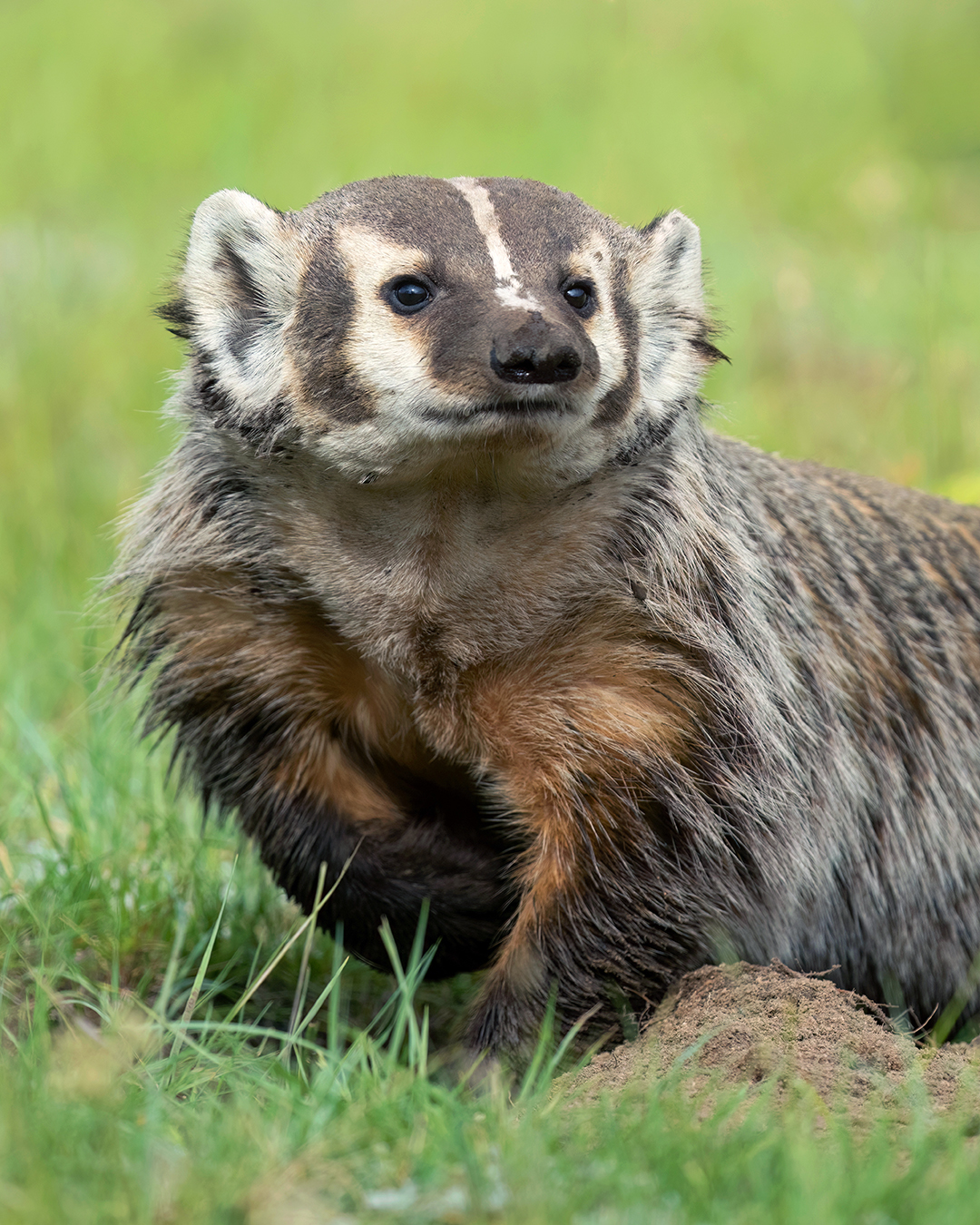
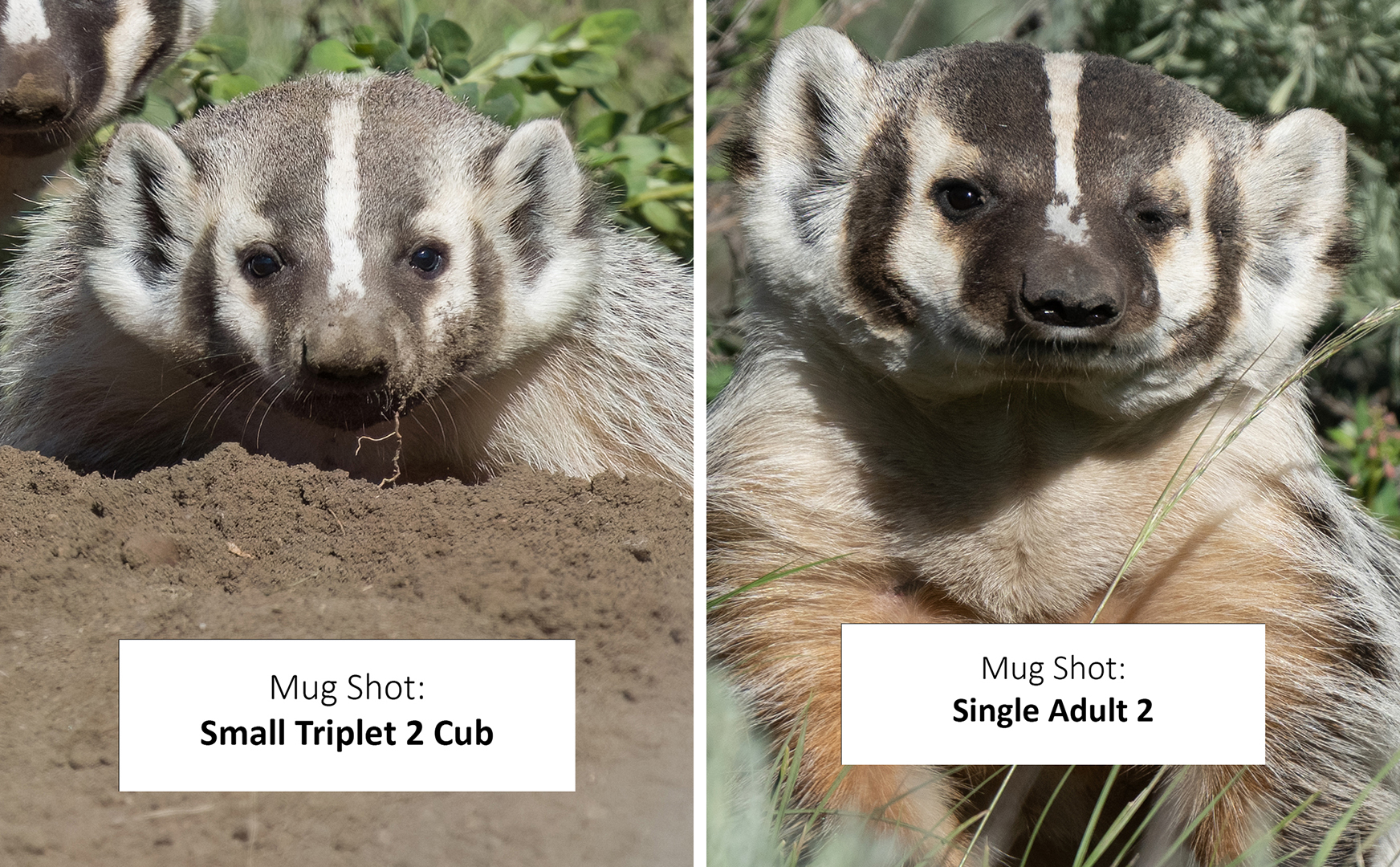
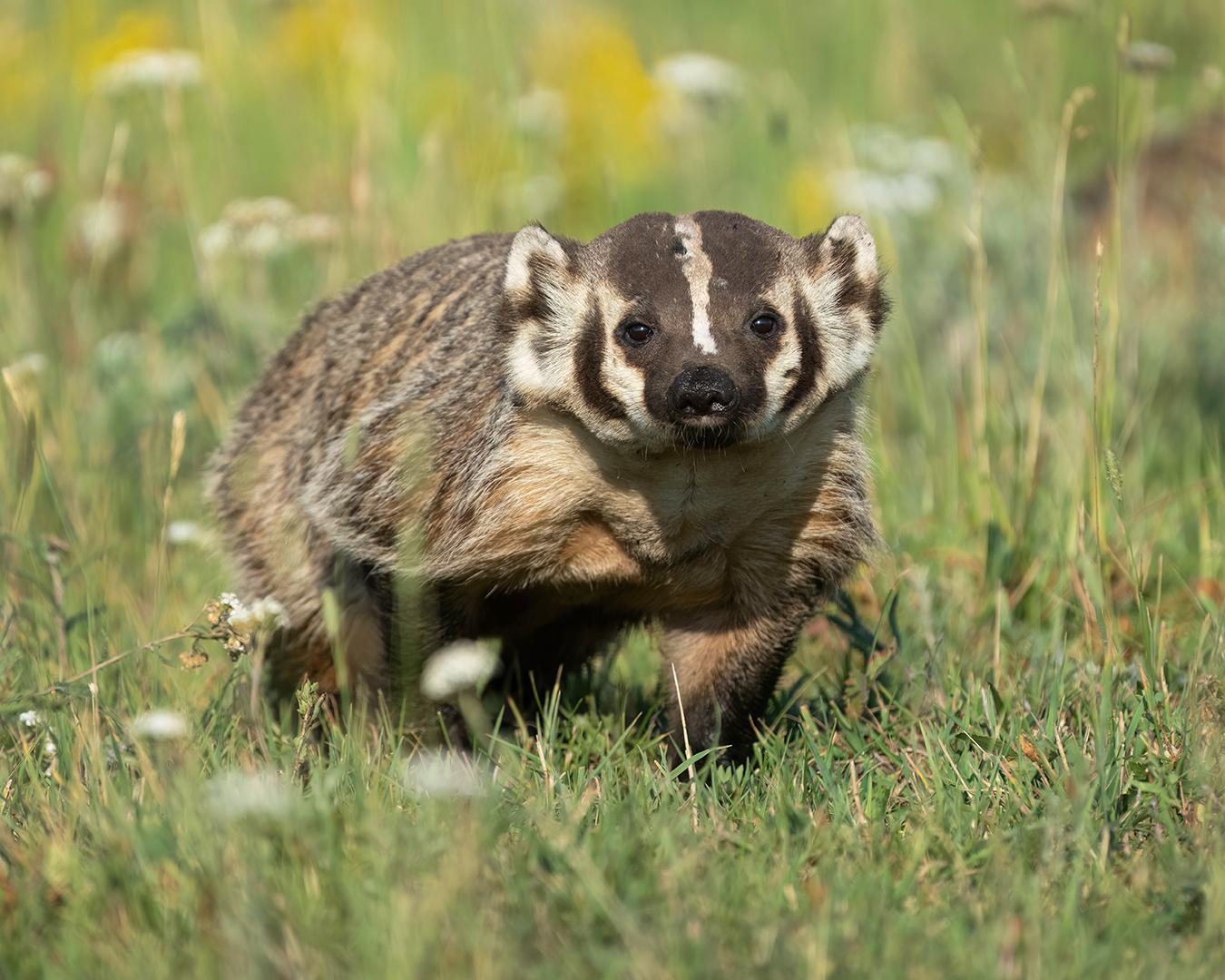
Only much later, when it finally dawned on me that I needed to be more systematic about identifying individual badgers, did I realize that the conflict involved two different triplet families. American badgers are generally pretty difficult to tell apart, but it turns out that the white stripe that runs down the middle of their face is almost like a fingerprint. Every stripe is unique, and they don’t change much over time. When I scoured through my photos to create “mug shots” of the badgers I’d been seeing, all of a sudden I could identify individual badgers with a high degree of confidence.
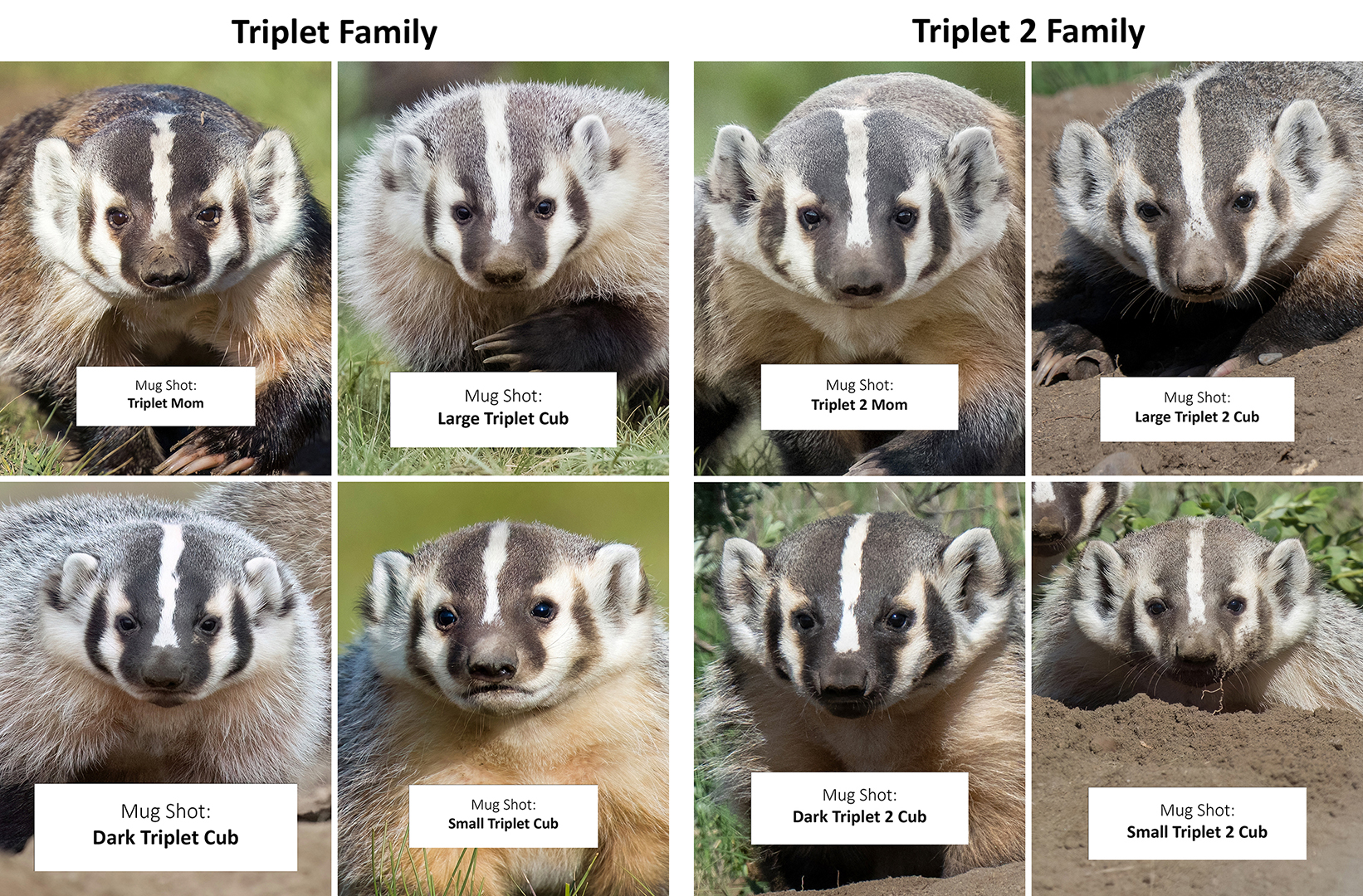
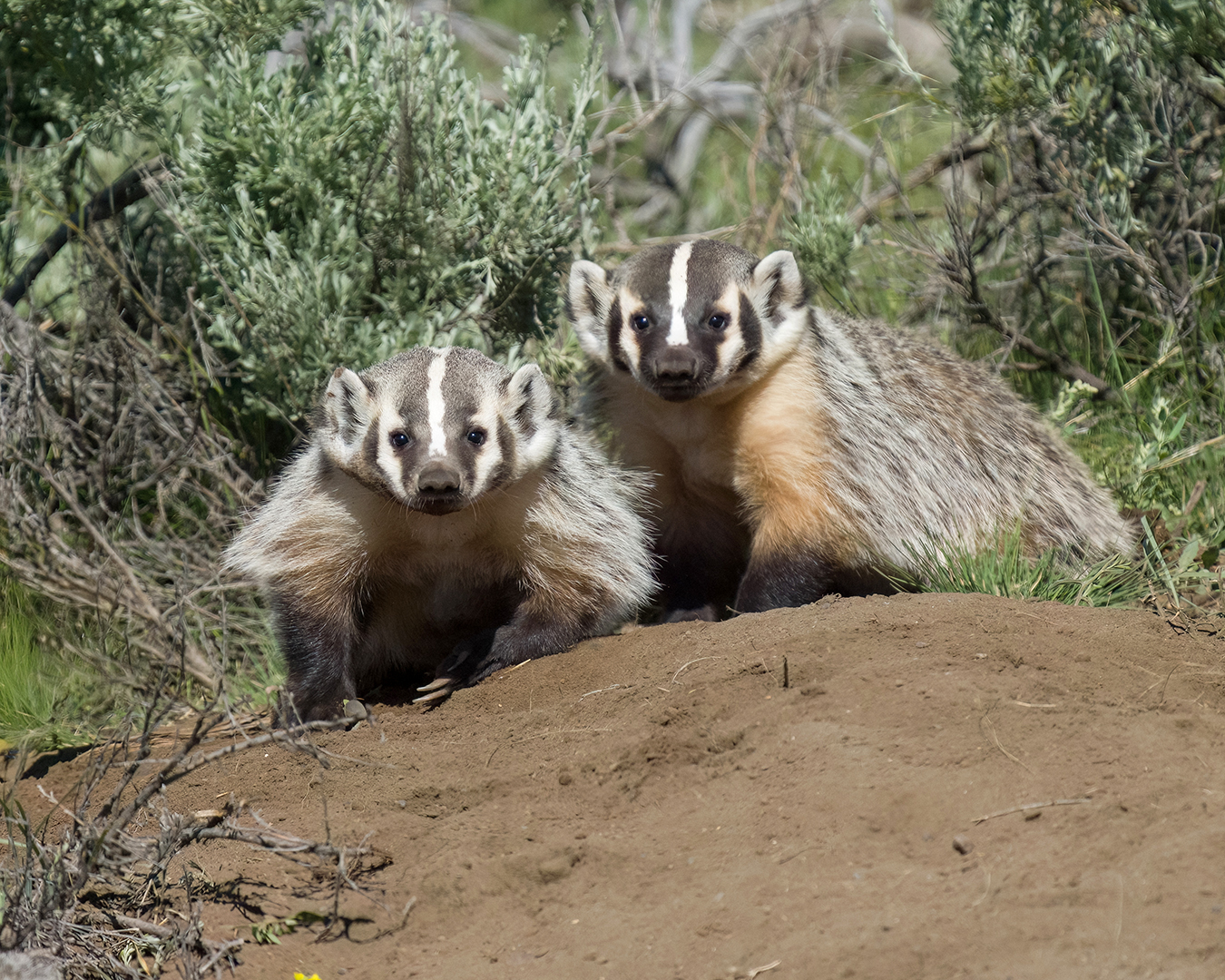
Thanks to the mug shots, I realized that the conflict I’d witnessed at the end of May must have started when Triplet 2 Mom moved her cubs to a burrow right across the trail from Triplet Mom’s natal den. Badgers are territorial, and neither of the moms wanted other badgers that close. I felt pretty stupid to have thought I was watching one family instead of two, but, in my defense, the families did look remarkably similar. Triplet Mom and Triplet 2 Mom were almost indistinguishable from a distance, and both groups of cubs included one with a darker face and two that were significantly different sizes.
At the end of that conflict, I thought I watched Triplet Mom move her cubs to a new den about a quarter mile away, but – again thanks to the mug shots – I now know that it had actually been the Triplet 2 Family. I didn’t find the original Triplet Family again until later in June, at a den about a half mile in the other direction.
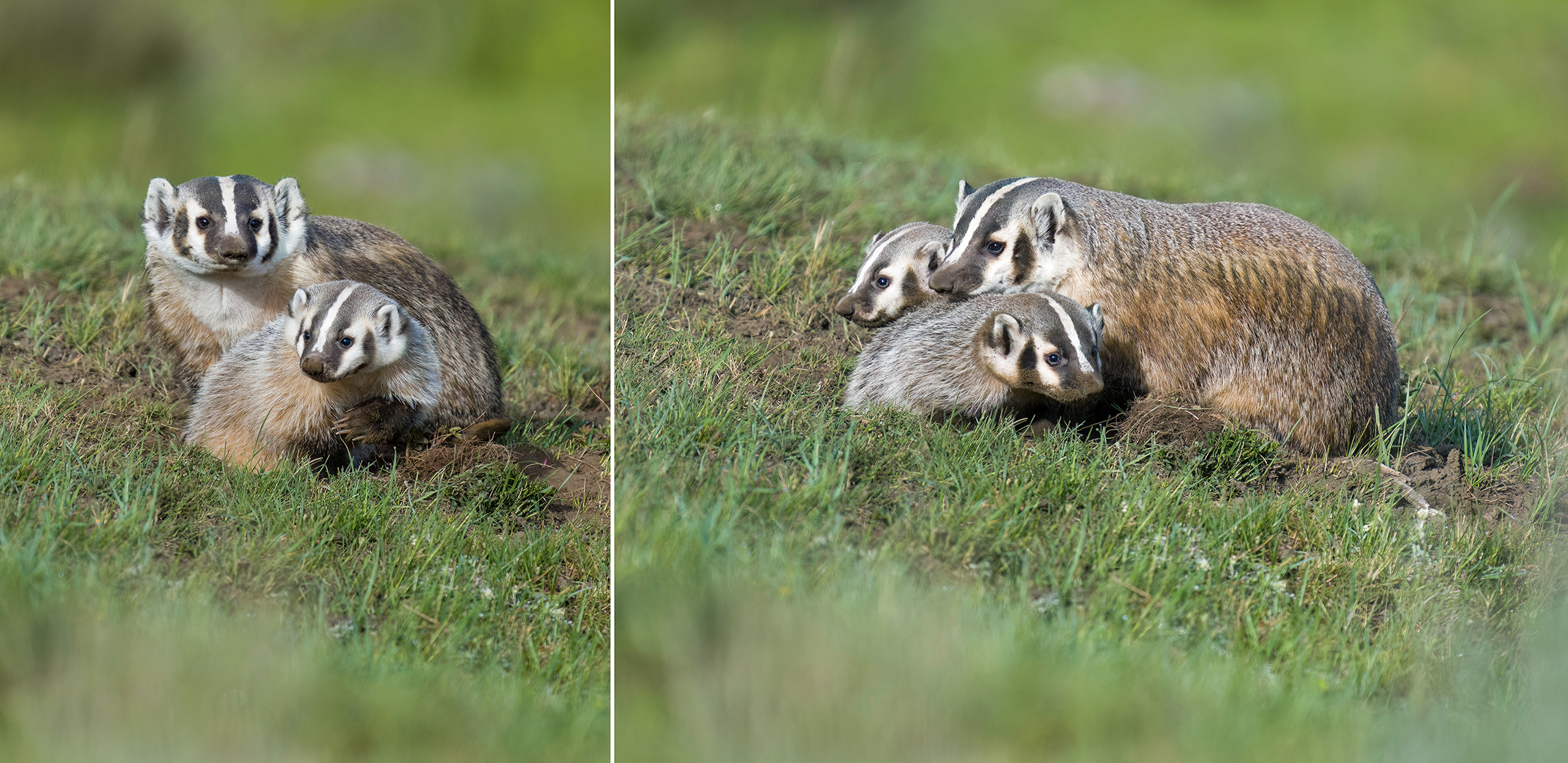
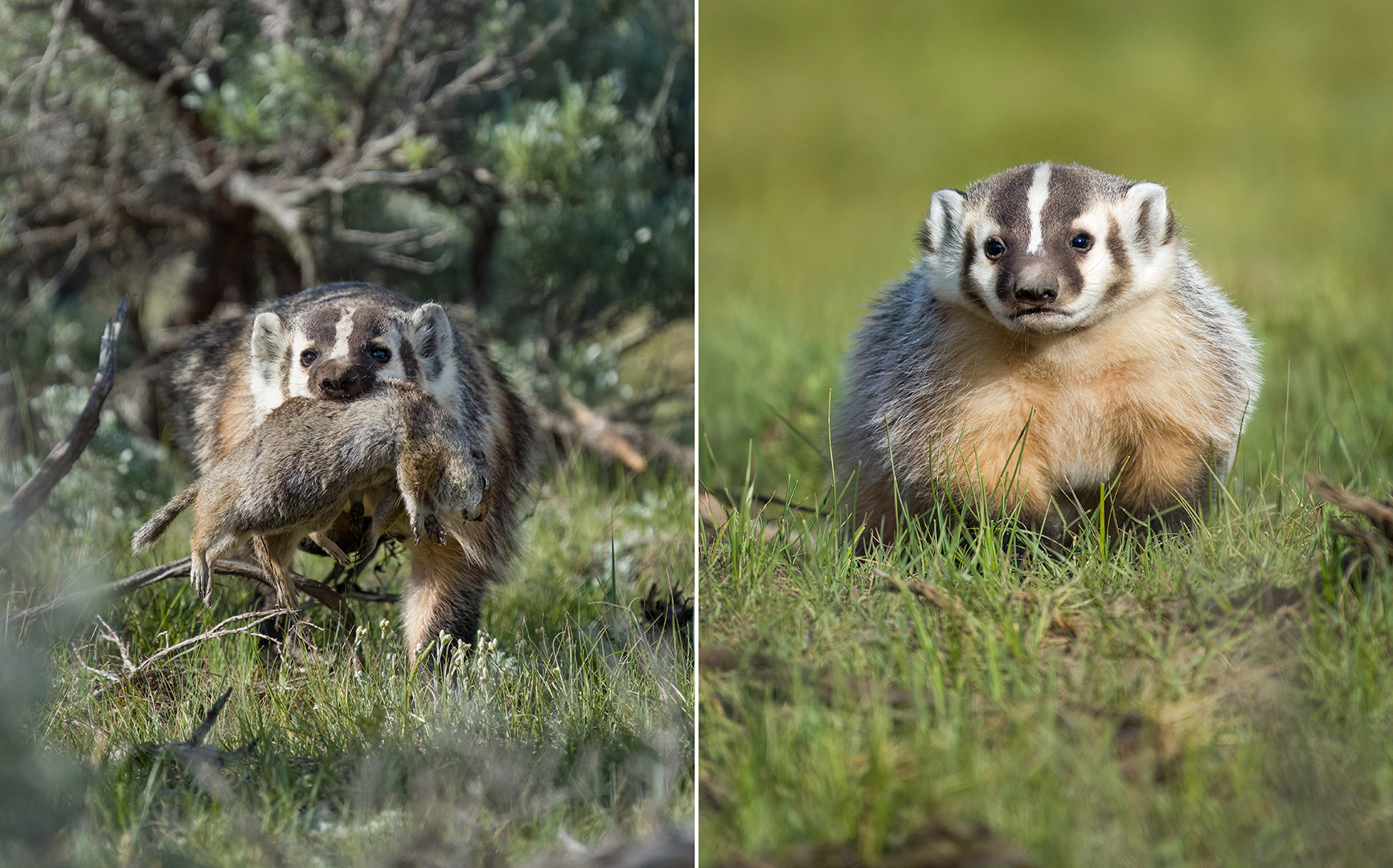
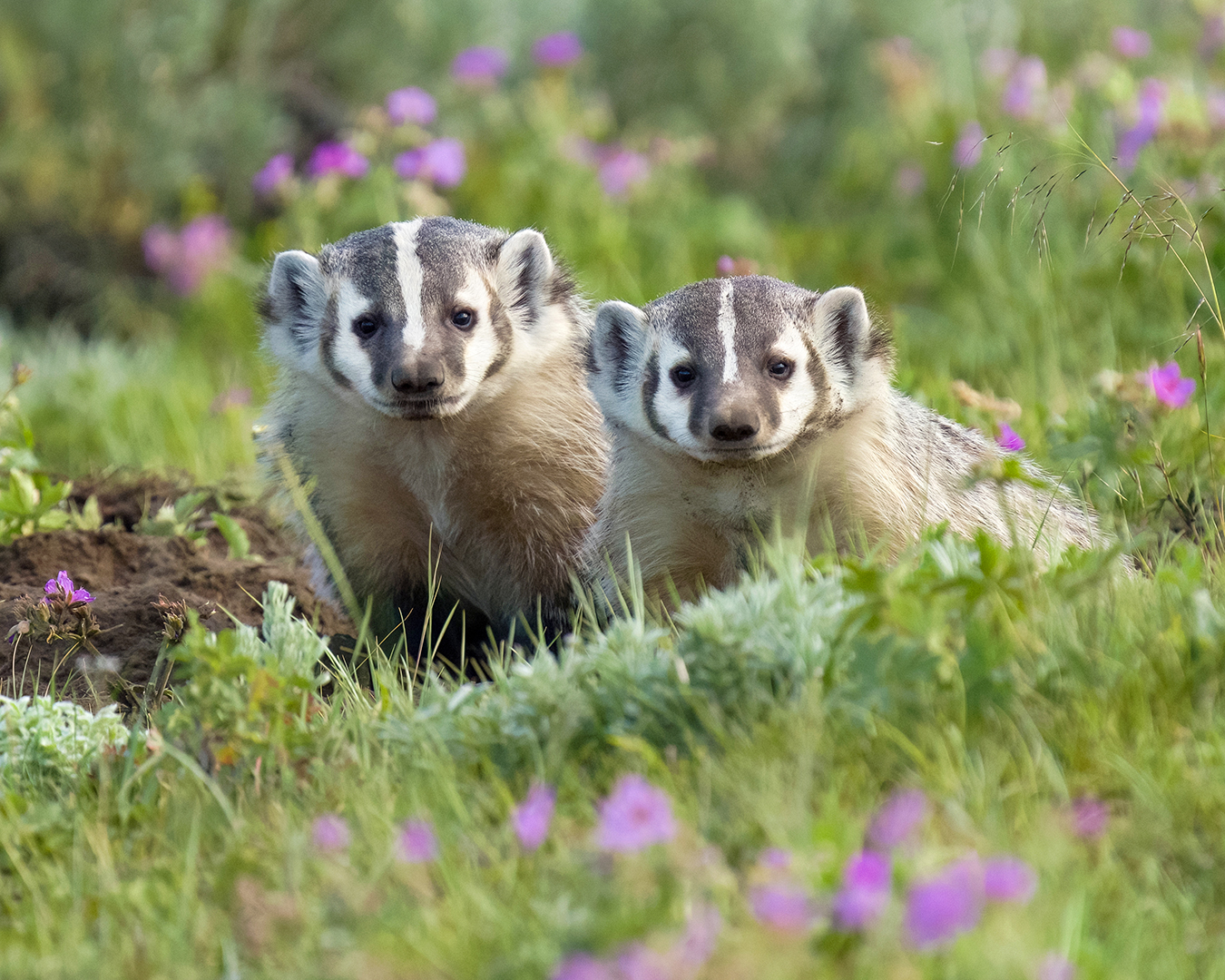
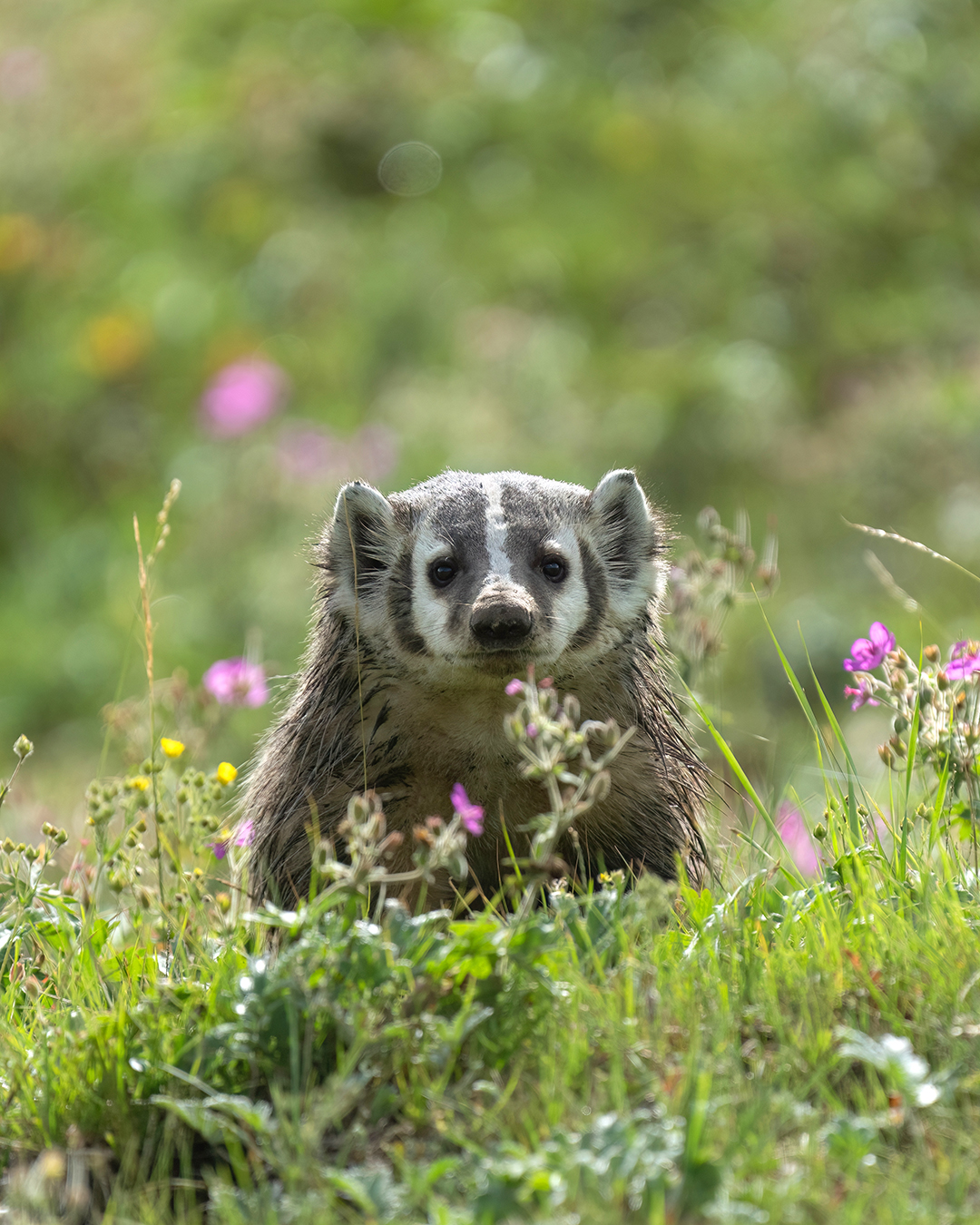
I never saw the Triplet Family all together in July, but early in the month I watched Triplet Mom catch a ground squirrel before vanishing into the sage on her way back to her cubs (I assume). And the next morning I found Large Triplet Cub and Small Triplet Cub looking healthy and happy at a burrow entrance surrounded by wildflowers.
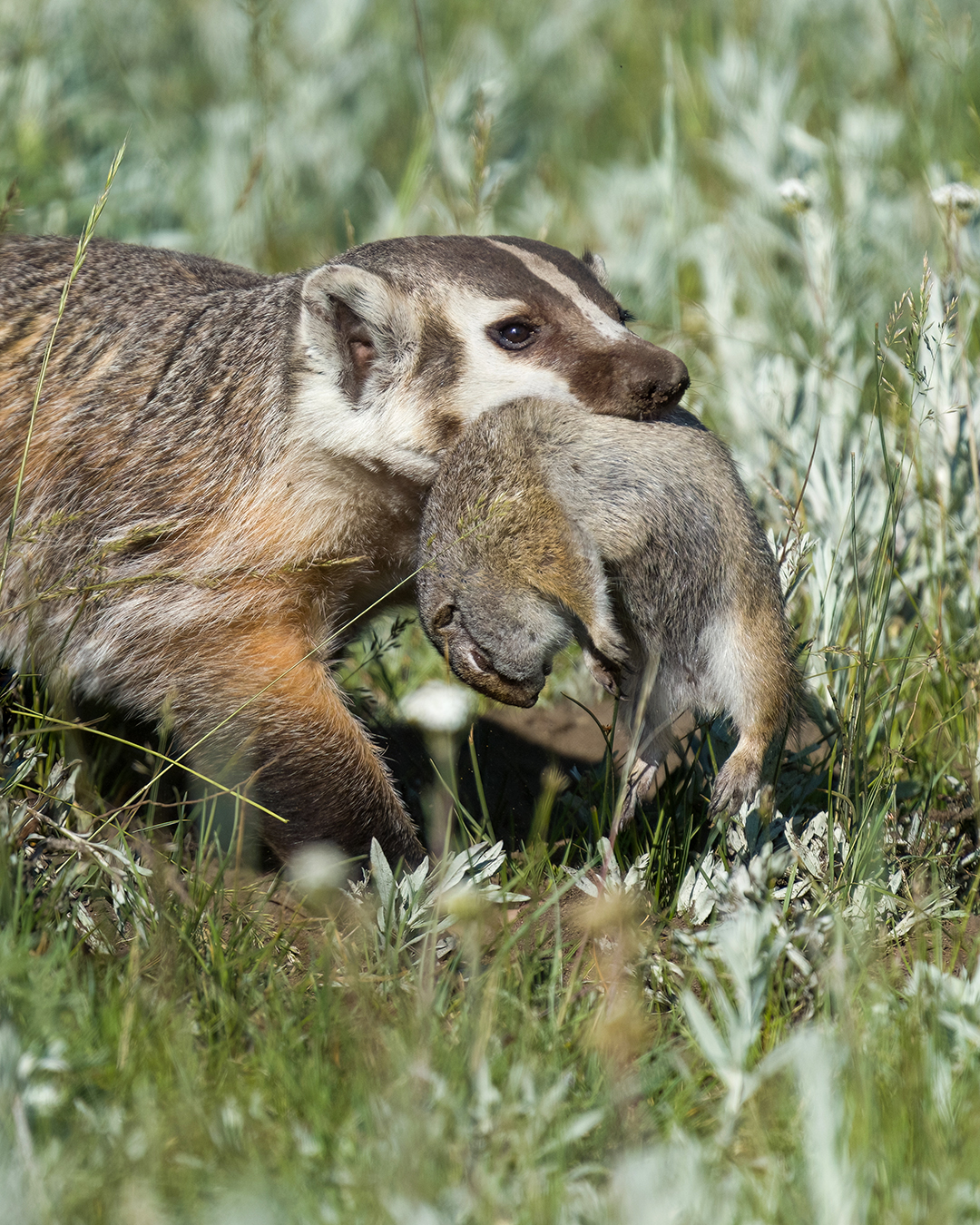
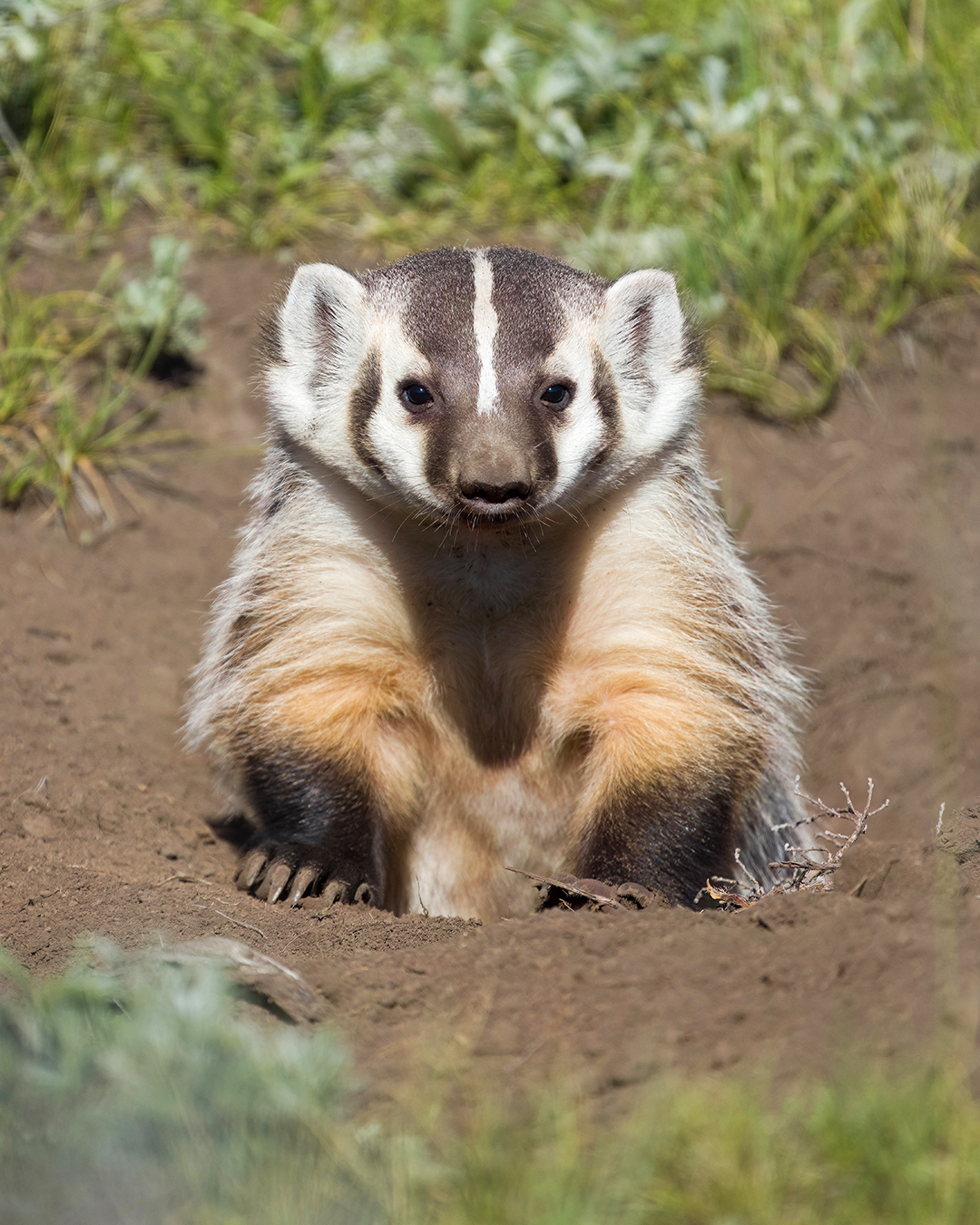
At the very start of July the Triplet 2 Family was all together at a burrow not far from the trailhead. The three cubs looked great, and for over an hour they play-fought each other while waiting for Mom to return with a ground squirrel.
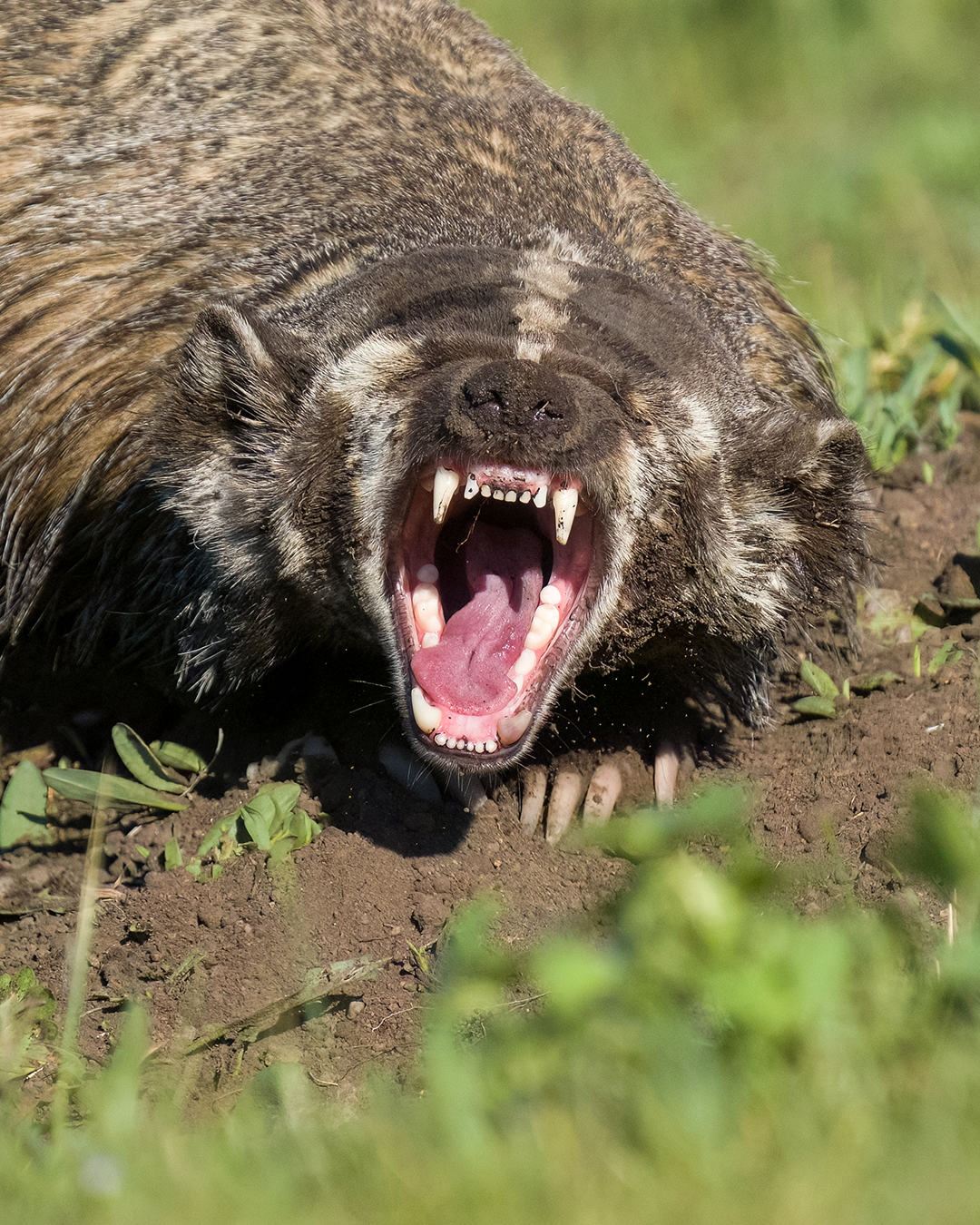
My next encounter with the Triplet 2 Family was more dramatic. In the second half of July I was watching an adult badger I didn’t recognize hunt in the sagebrush. Eventually it approached a hillside, where I noticed a badger cub’s little black and white head peeking out from a burrow. Assuming I was about to witness the happy return of a mom to her cub, I was surprised when the adult badger screeched in rage and plunged into the burrow like a maniac. Awful sounds – a cross between a catfight and the squeals of an angry pig – poured out of the burrow for a full fifteen minutes. Finally the adult forced the enraged cub to the surface and then took its place in the burrow. When the still-seething cub noticed me watching, it snarled and hissed, something I’d never seen a badger do before. I tried not to take it personally – the little fella was pretty riled up. A few minutes later two more badgers joined the cub, and the three of them slowly moved off into the sage.
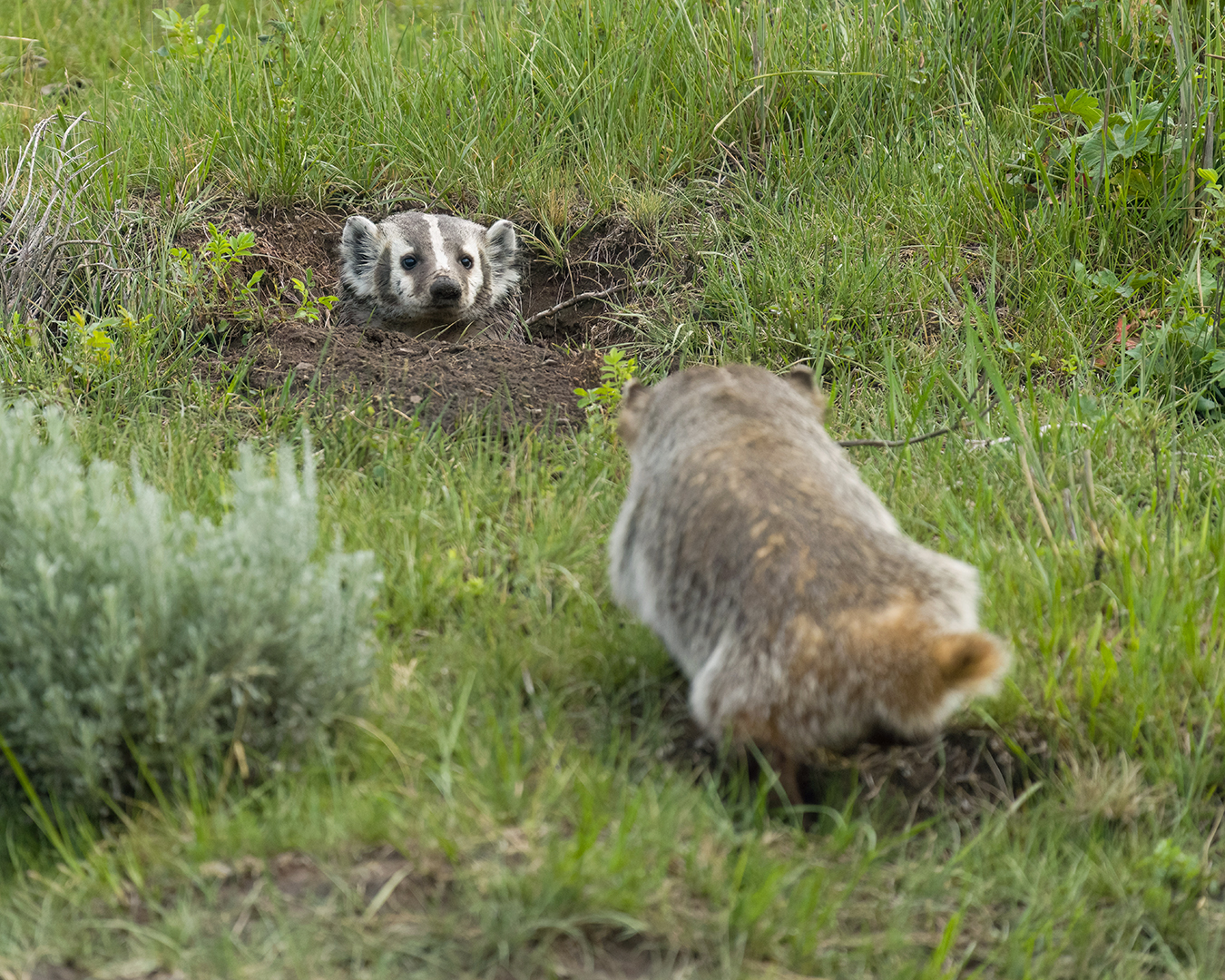
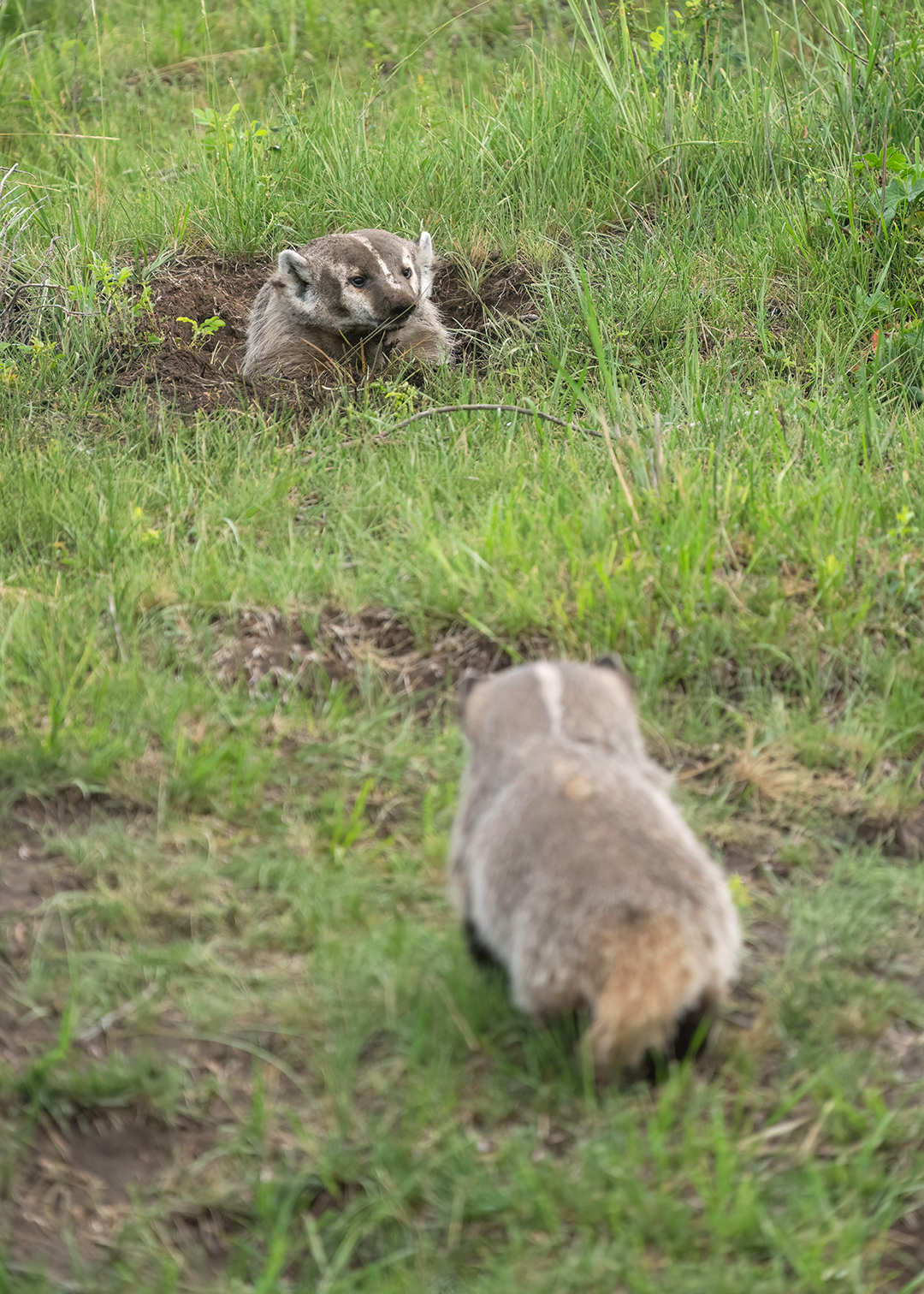
What had I just witnessed? The mug shots identified the older badger as Single Adult 2, one that I hadn’t seen with cubs and suspected was a male. And the younger badger was Small Triplet 2 Cub. The cub, for some reason, had been hanging out in a burrow that the adult must have considered to be his. Single Adult 2, arriving home to find a neighbor kid squatting in his living room and refusing to leave, decided to take matters into his own claws/jaws. The other two badgers that showed up at the end appeared to be Small Triplet 2 Cub’s mom and a sibling, arriving to collect their wayward trouble-maker.
At the end of July I came across a badger lying on the ground, unconscious but still breathing, just across the trail from the Triplet Family’s natal den. Its eyes were ringed with a light crust, but I couldn’t see any obvious injuries. I tried, in vain, to think of something I could do to help. The park’s general rule is to let nature take its course. A suspicion that I knew which badger this was tightened itself into a cold pit in my stomach.
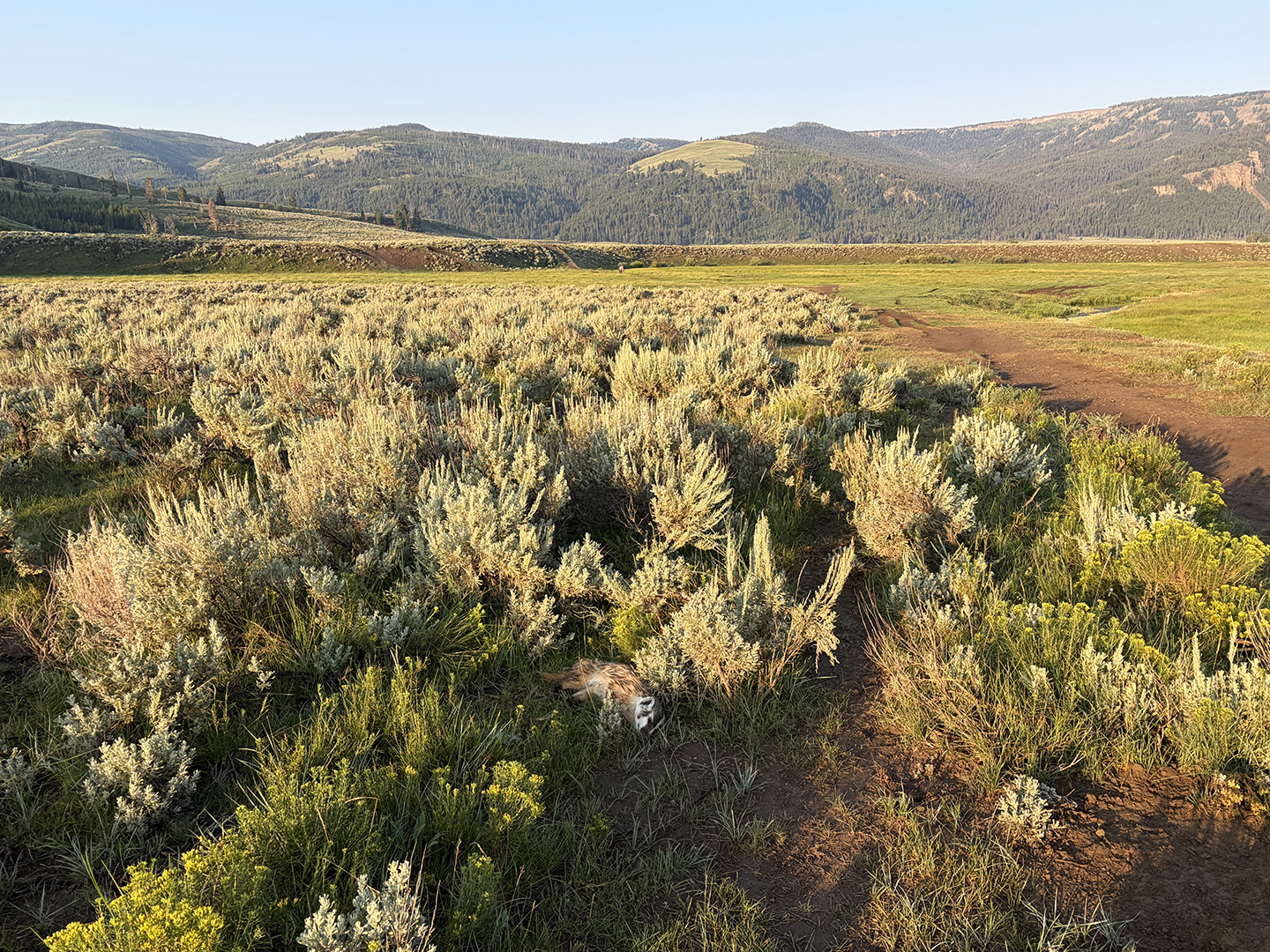
When I returned a couple hours later the badger had stopped breathing. A face stripe comparison confirmed my suspicion – this was Triplet Mom. Her death hit me hard. How many hours had I spent watching her? Later, searching back through old photos, I realized I’d been photographing Triplet Mom since at least 2024.
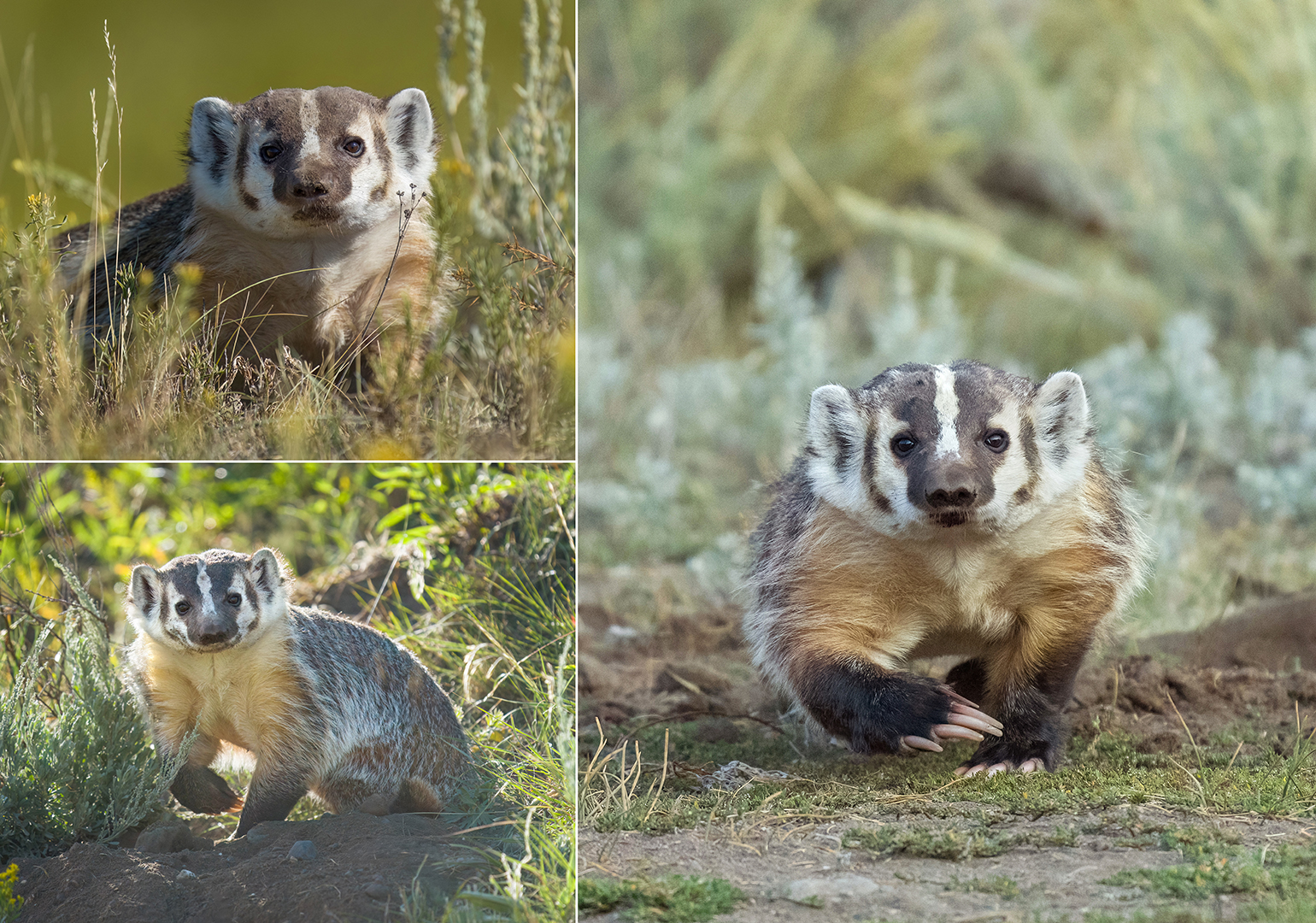
I tried to feel less sad by reminding myself that, while death is guaranteed to all living things, the gift of a full life is very much not, and Triplet Mom clearly led a full life. Most sources say the average life expectancy of a badger in the wild is about 4-5 years, and – based on the fact that I have photos of Triplet Mom as an adult in 2024 – she made it a minimum of 3 1/2 years, probably longer. She hunted as skillfully as any badger I’ve seen, she was remarkably adept at navigating an endless parade of poorly-behaved humans, and she brought at least three beautiful cubs into the world. I wondered if it was only a coincidence that Triplet Mom died just feet away from the den where she raised her cubs, the closest place she had to a home. I hadn’t seen her in that area for over a month.
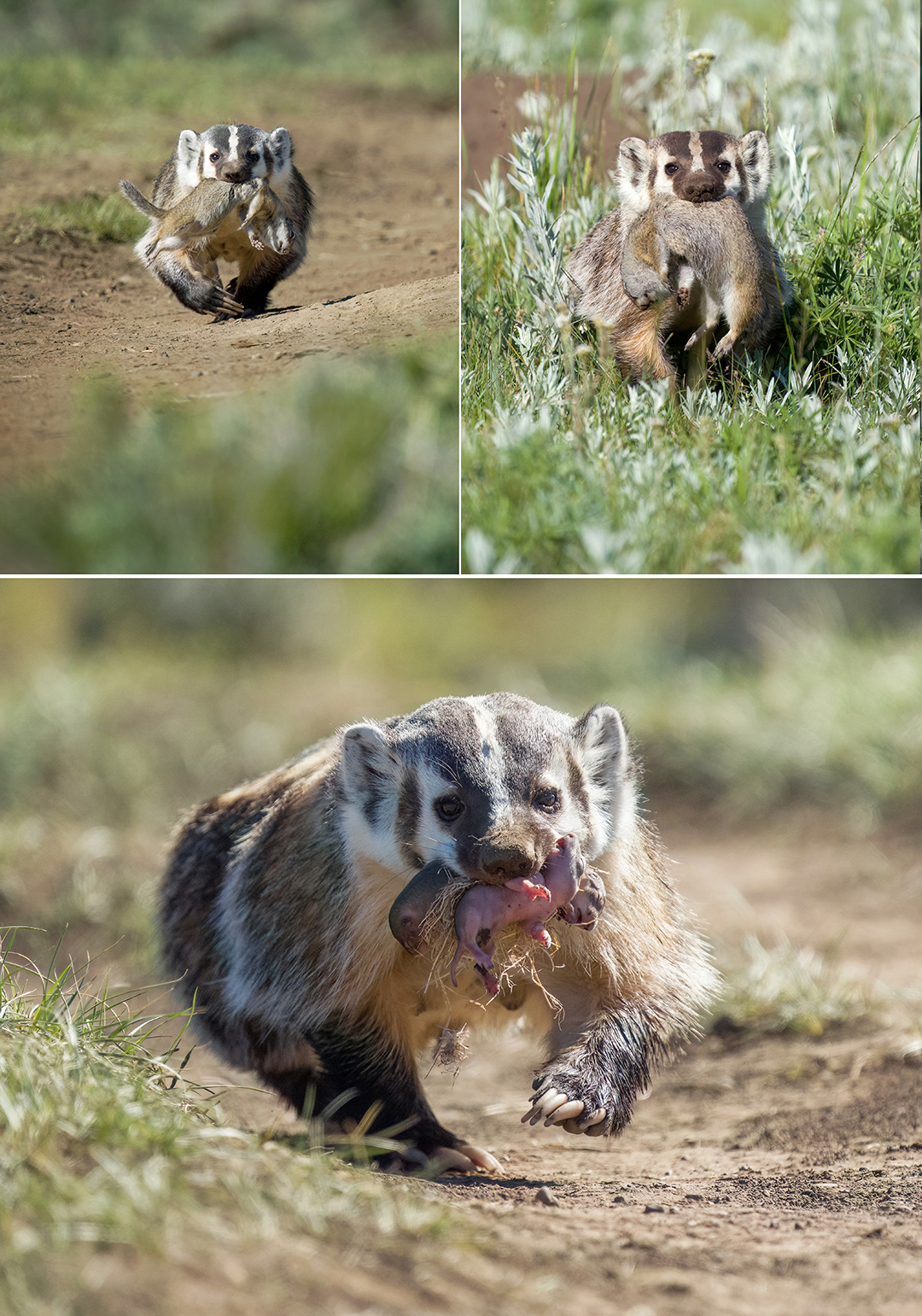
I don’t know what killed her. The absence of visible wounds doesn’t rule out internal injuries. Maybe she was hit by a car, or wounded in a fight with another badger or a predator. Maybe she succumbed to issues related to old age, or a disease. Apparently many Yellowstone carnivores, including badgers and other mustelids, are susceptible to Canine Distemper, a deadly virus that sometimes causes a crust to form around the animal’s eyes. It might have been any of those things.
I worried about Triplet Mom’s cubs, of course. From what I’ve read about badger cub development timelines, late July was too soon for them to be on their own, but only by a little. So my hope is that she was able to pass along enough of her knowledge for the cubs to be independent. I’ll be looking for them, my fingers crossed.
THE LONE CUB FAMILY
The badger family I watched the most in July was a mom with just one cub. I first saw the Lone Cub Family in mid-June, at what I think was their natal den, and – while they relocated to a new den pretty much every day in July – they generally didn’t move far, which made them a little easier to find each morning.
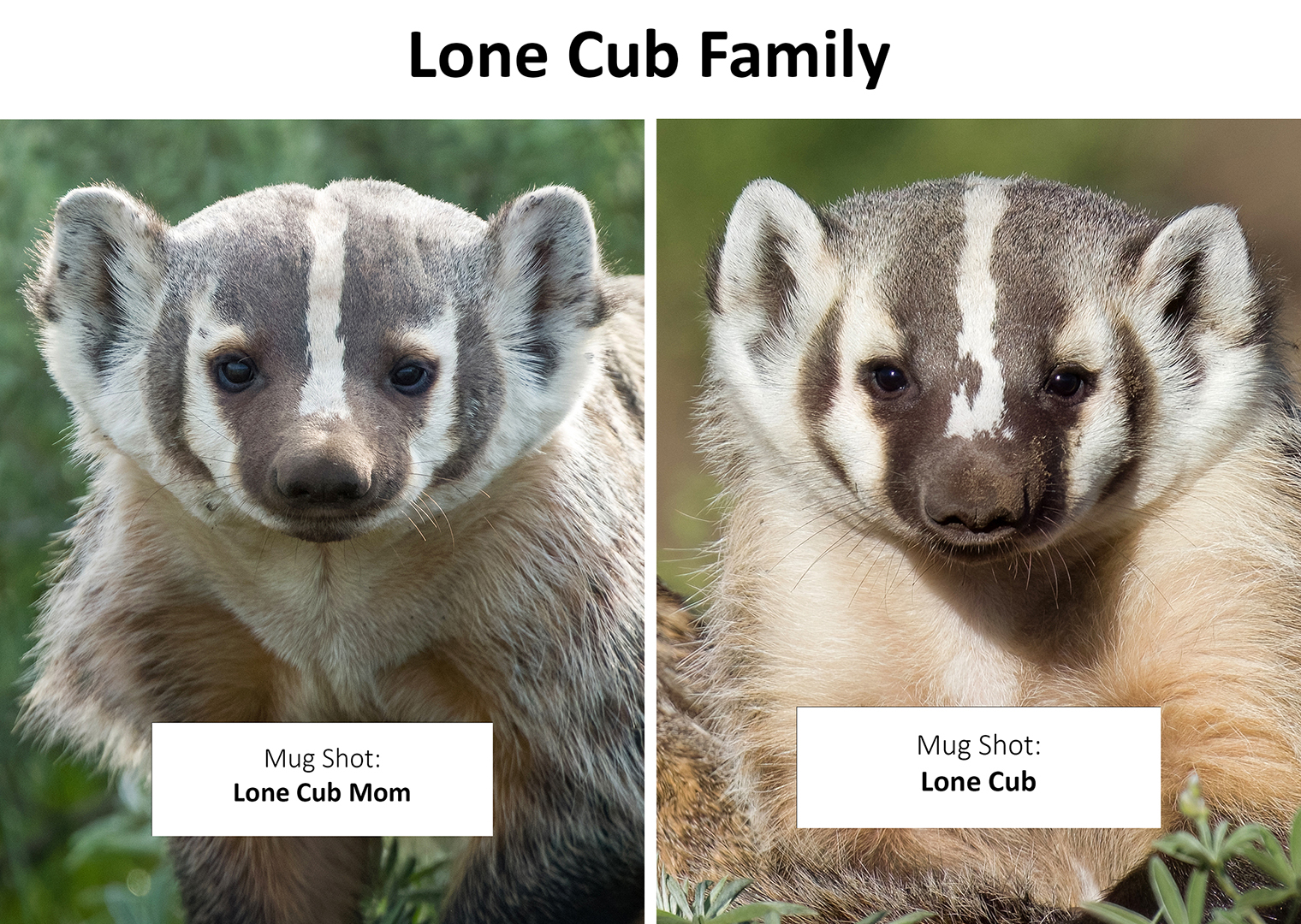
As I’ve mentioned before, Lone Cub’s only-child status meant that Lone Cub Mom was the sole option for playtime. And Lone Cub loved to play, which meant that Mom spent countless hours doing her best to entertain her energetic, relentless cub.
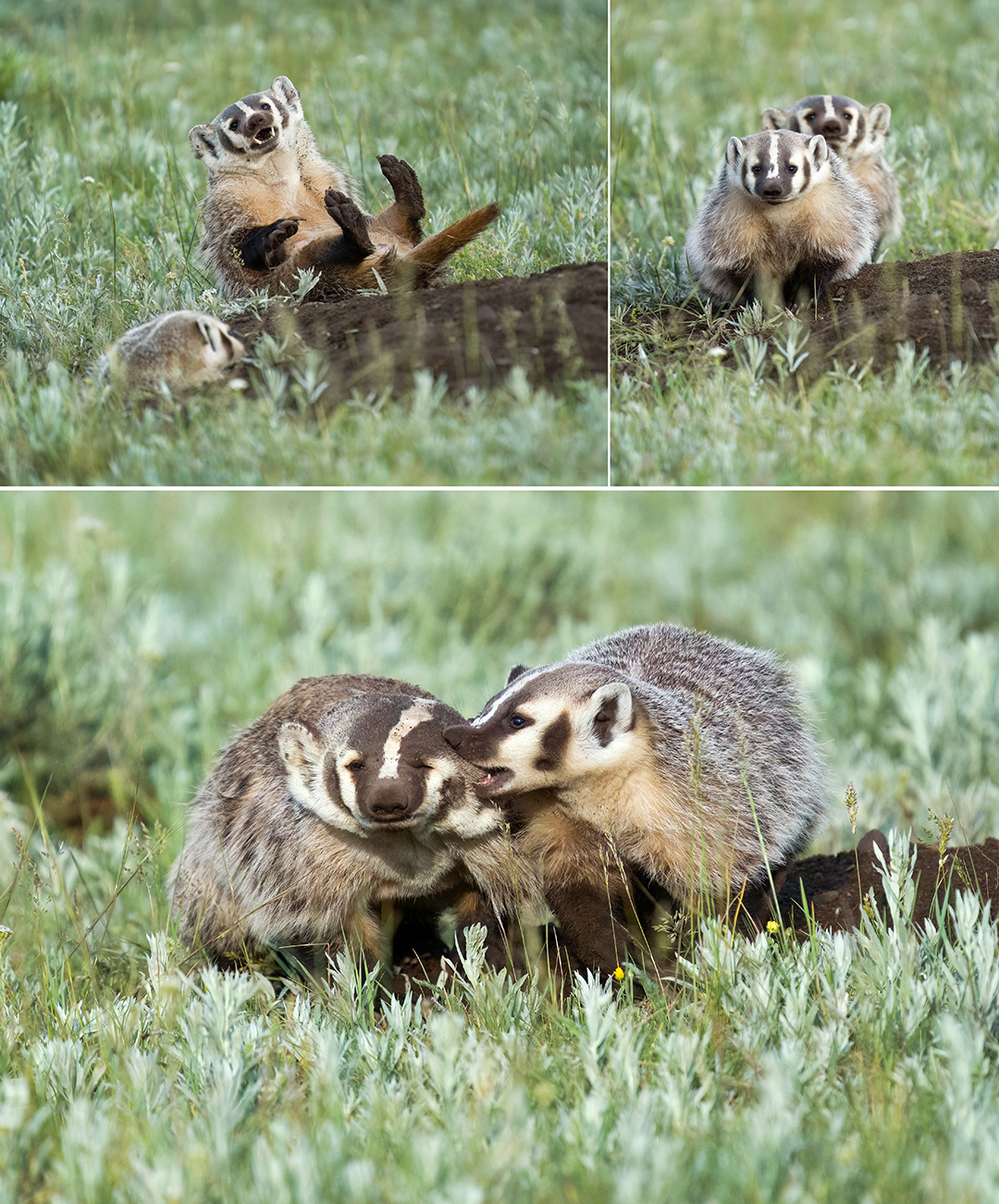
During the second week of July, Lone Cub Mom began taking her eager youngster out for some life lessons. From what I could tell, Mom started off with an overview of basic foraging before gradually working up to the more complex challenge of hunting ground squirrels.
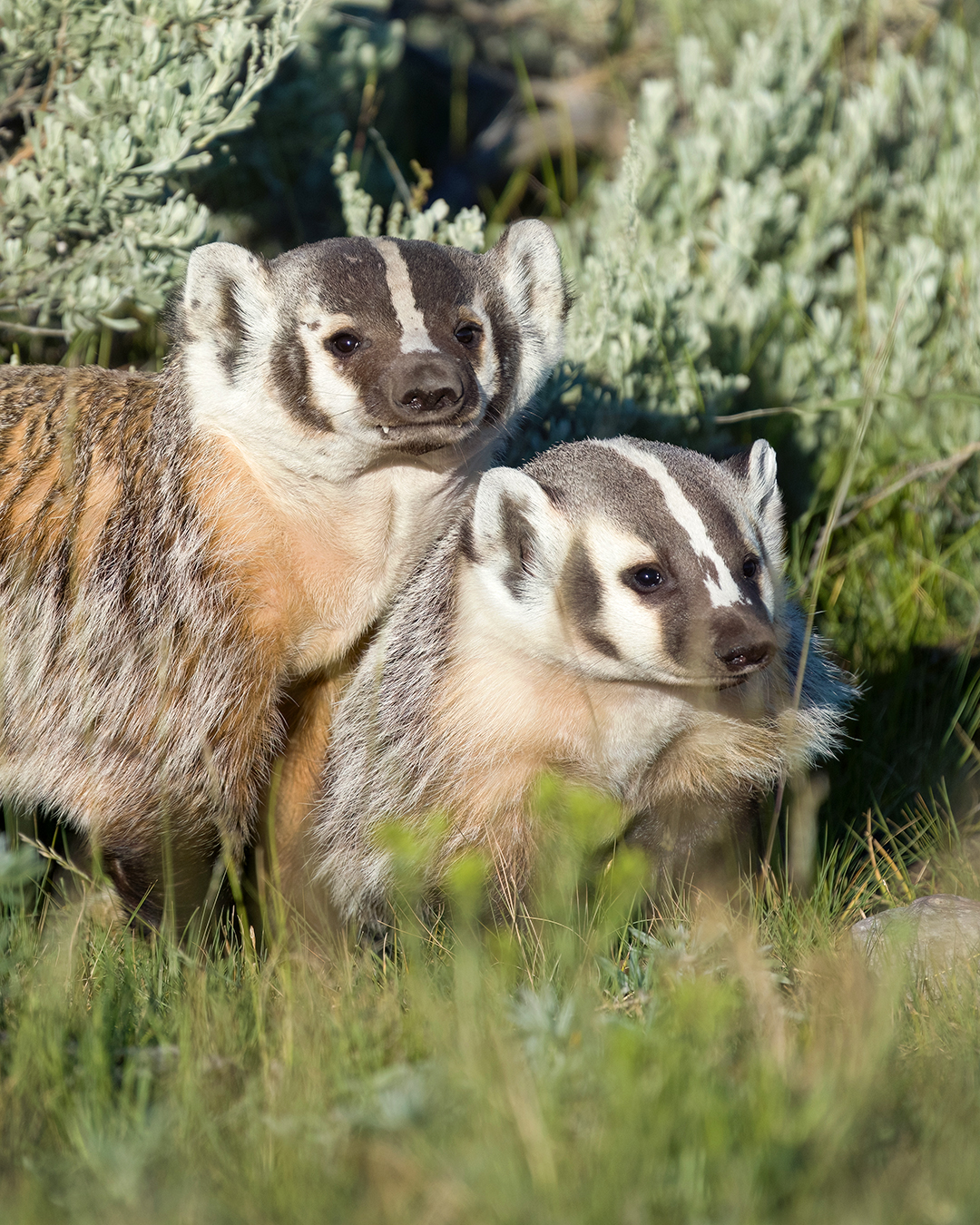
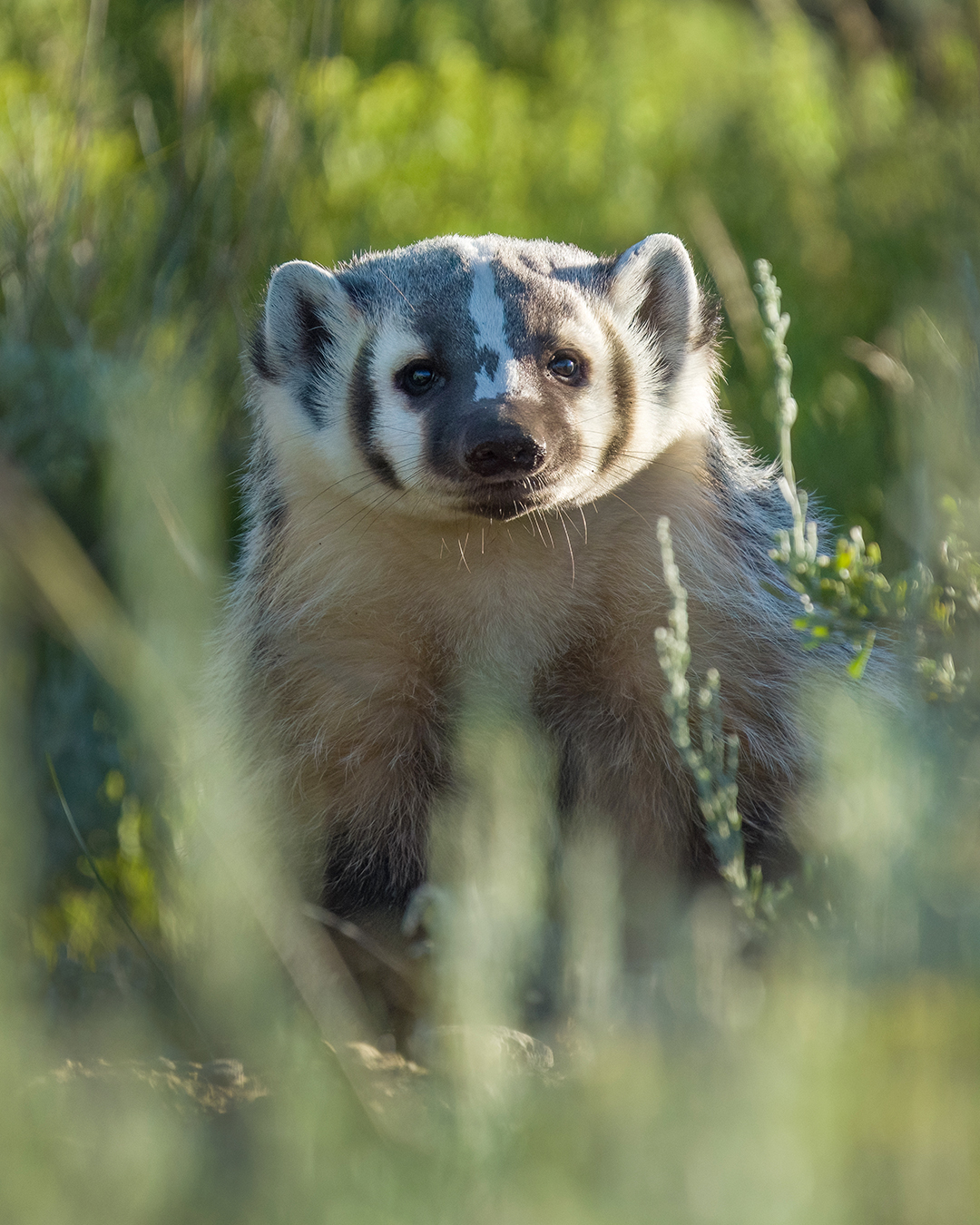
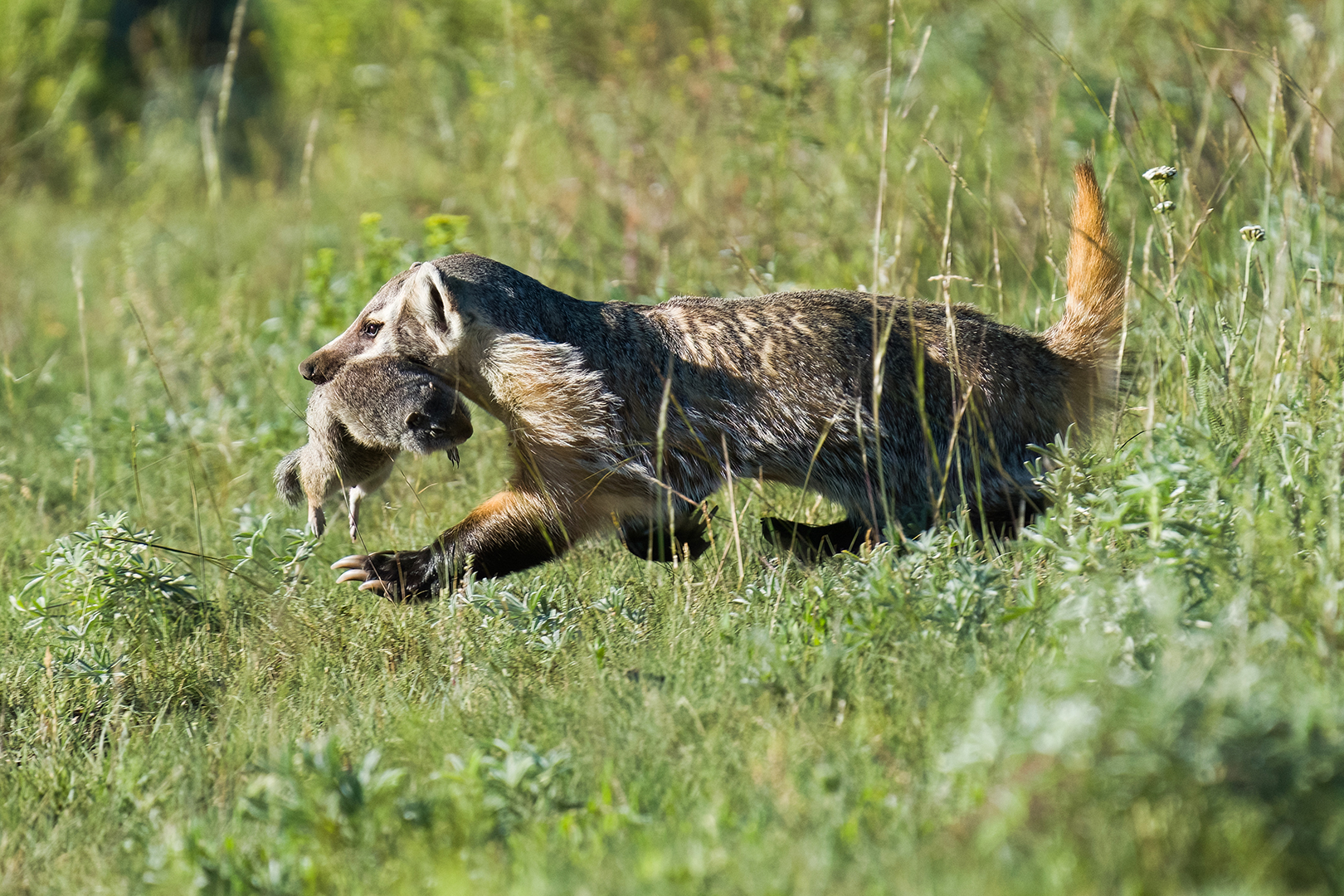
The Lone Cub Family was still together at the end of July, and the cub looked as big, if not even bigger, than Mom. I guessed that it wouldn’t be much longer before Lone Cub felt ready to strike out on his/her own.
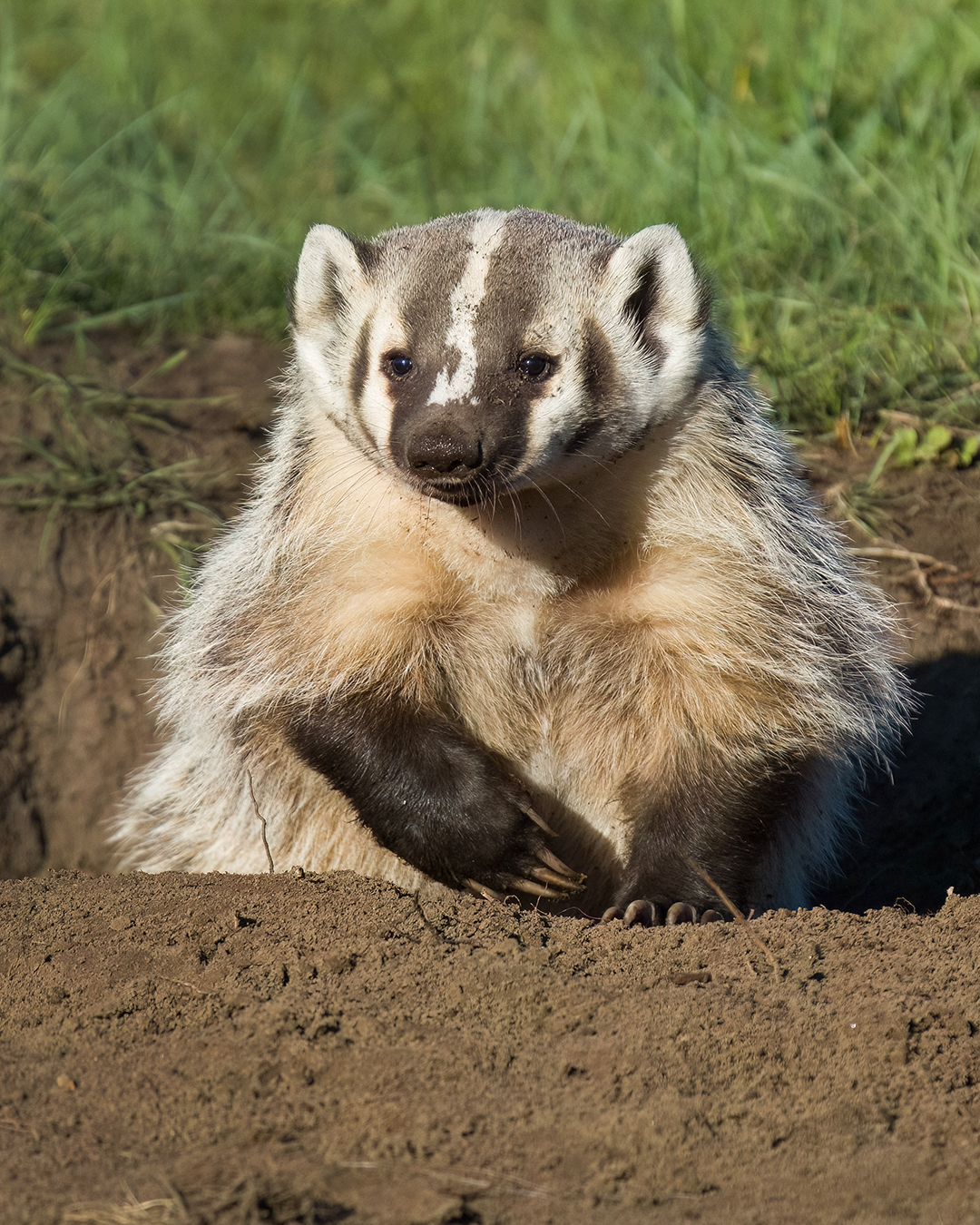
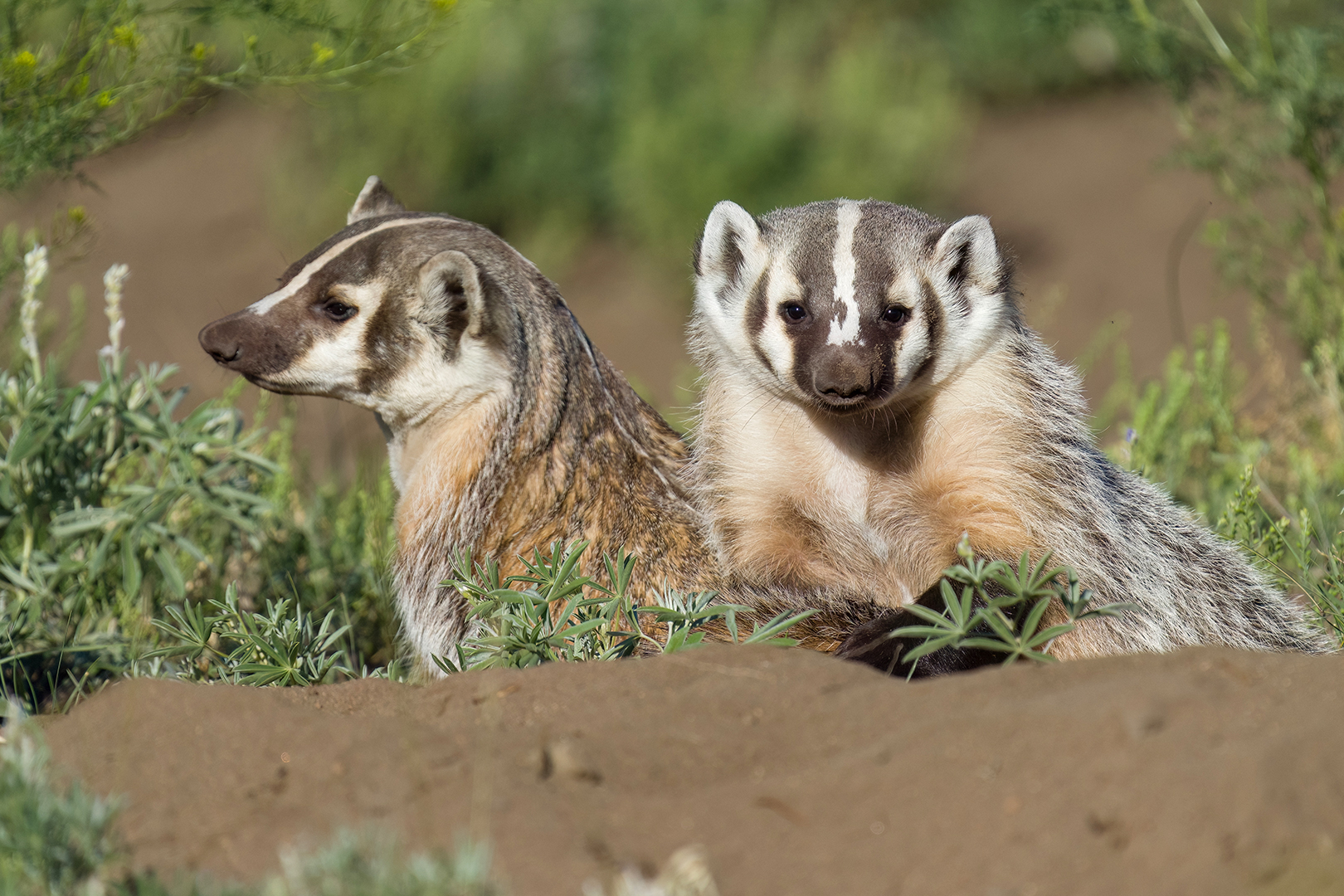
Thanks to my newfound identification ability, I learned that I’d photographed Lone Cub Mom back in 2024, when she appeared to be a cub. If that’s right, she was 2 1/2 years old this summer.
THE TWINS FAMILIES
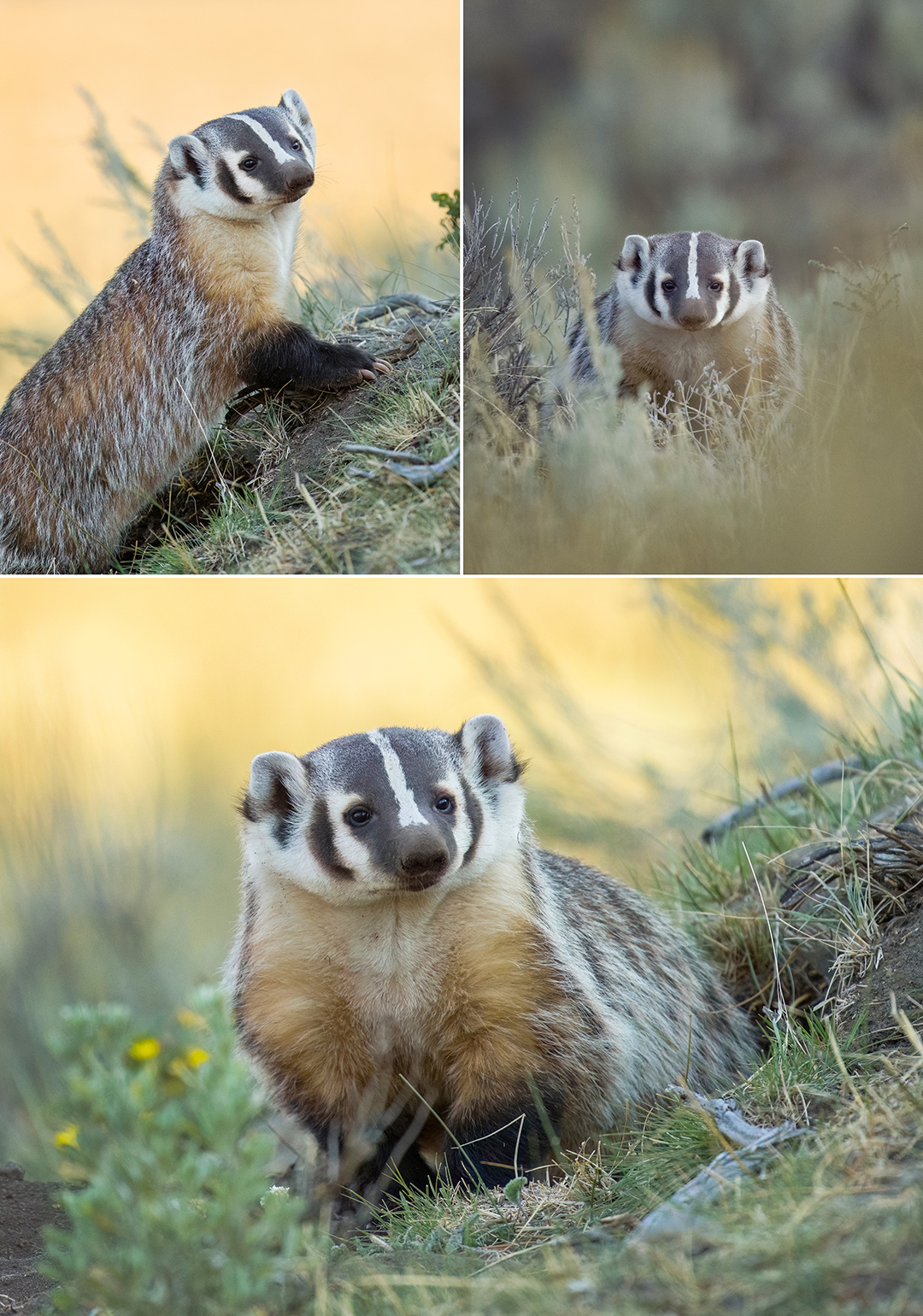
Over the course of July I found three different badger moms with twins, all of them out towards the far end of the area I’d been patrolling.
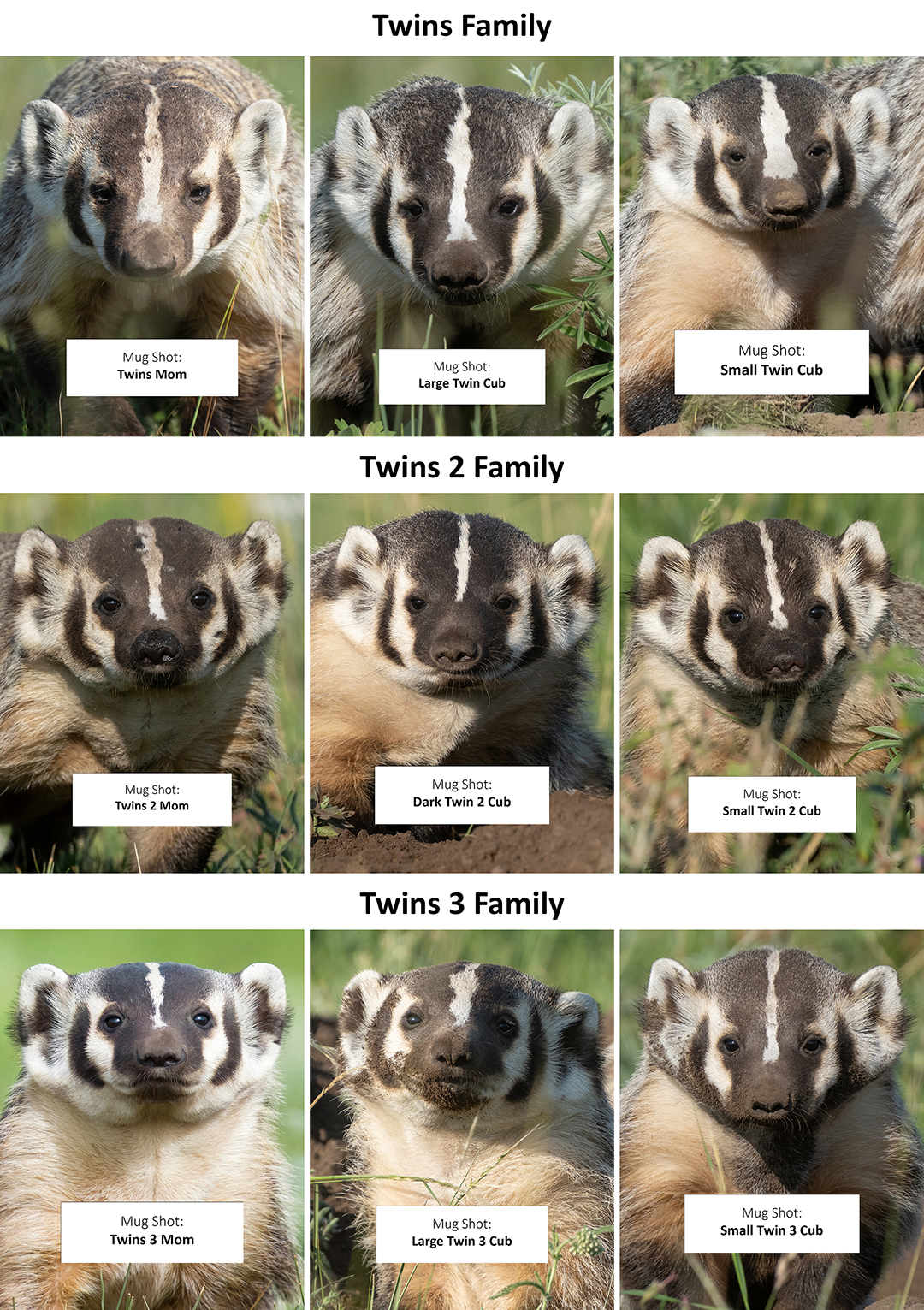
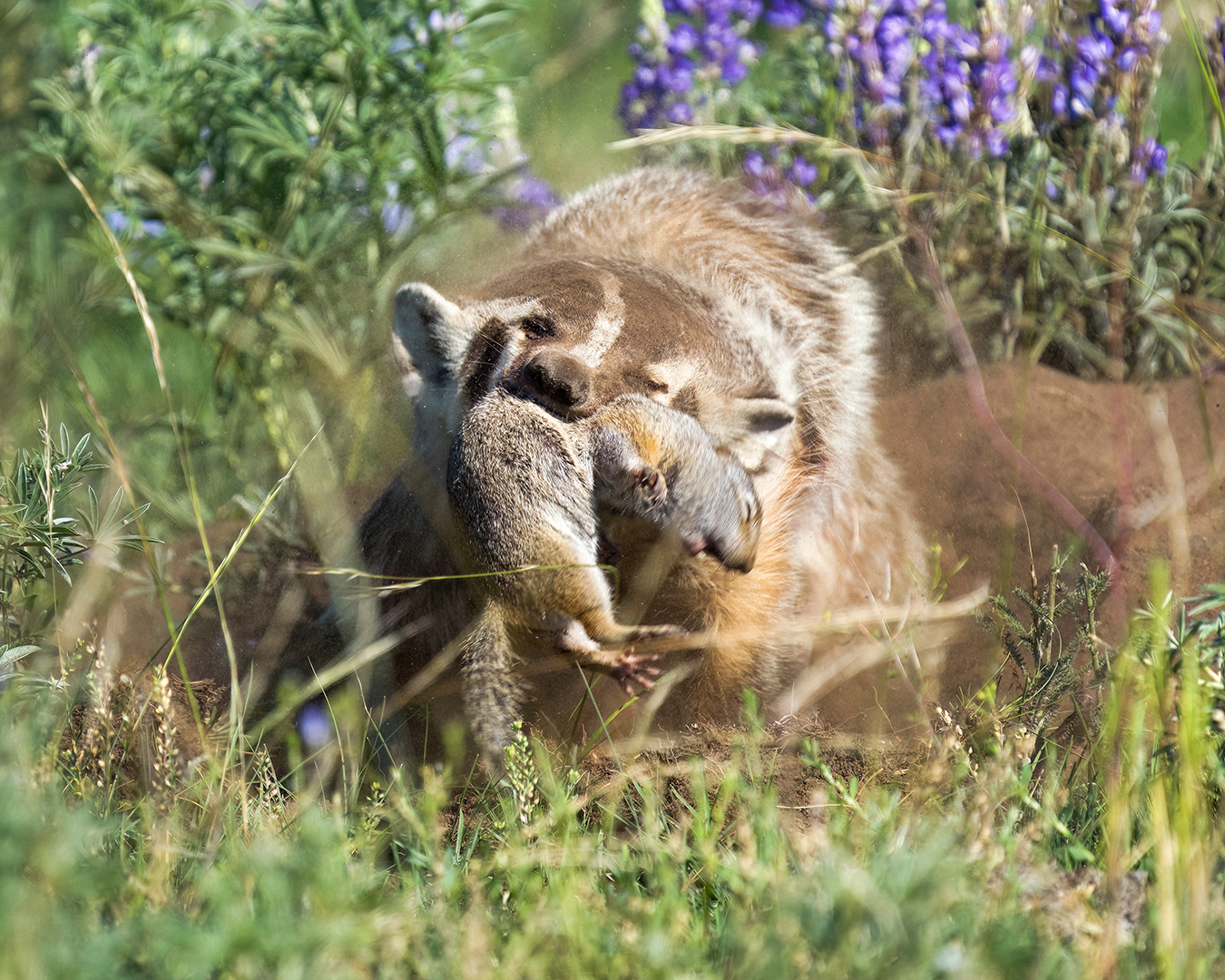
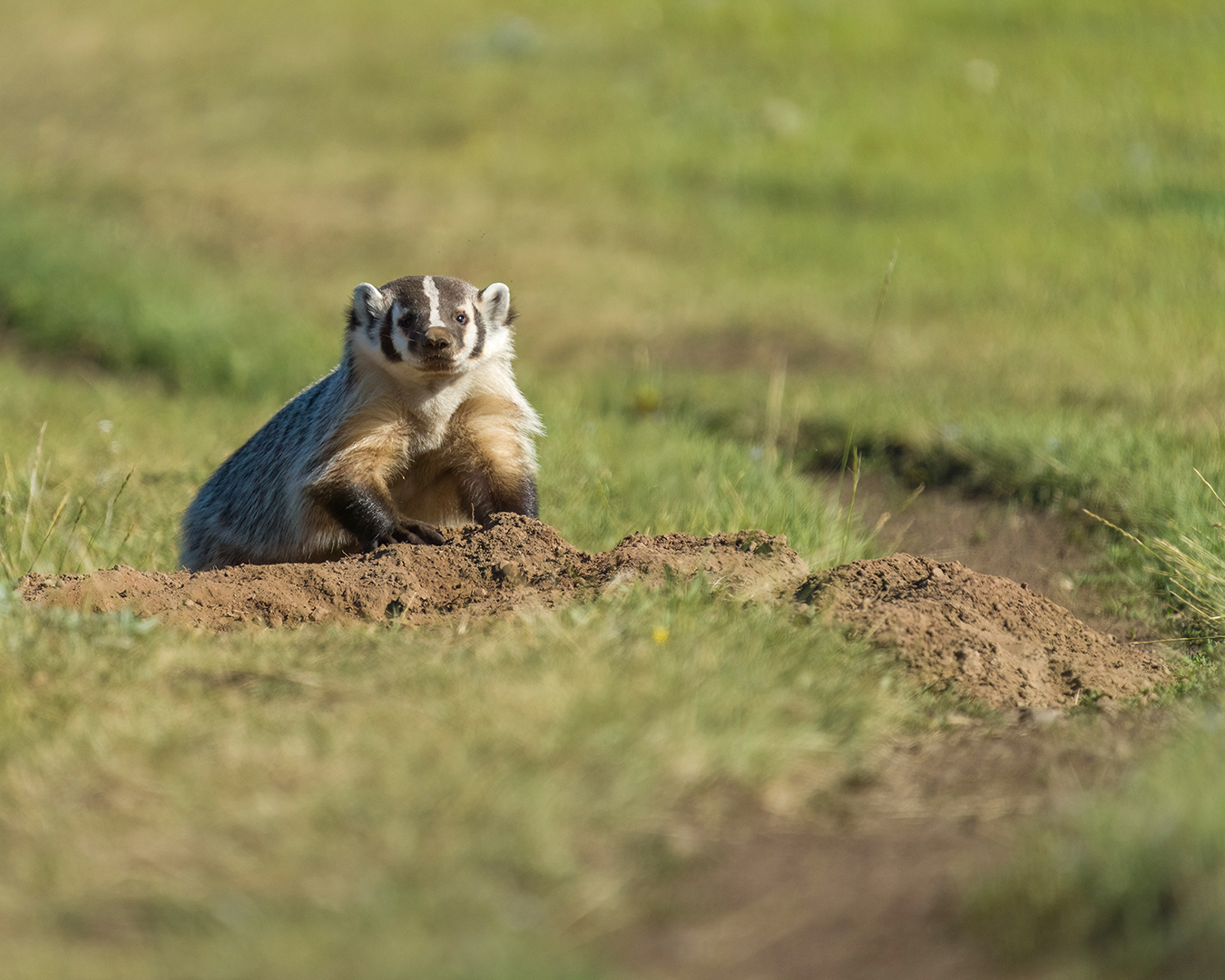
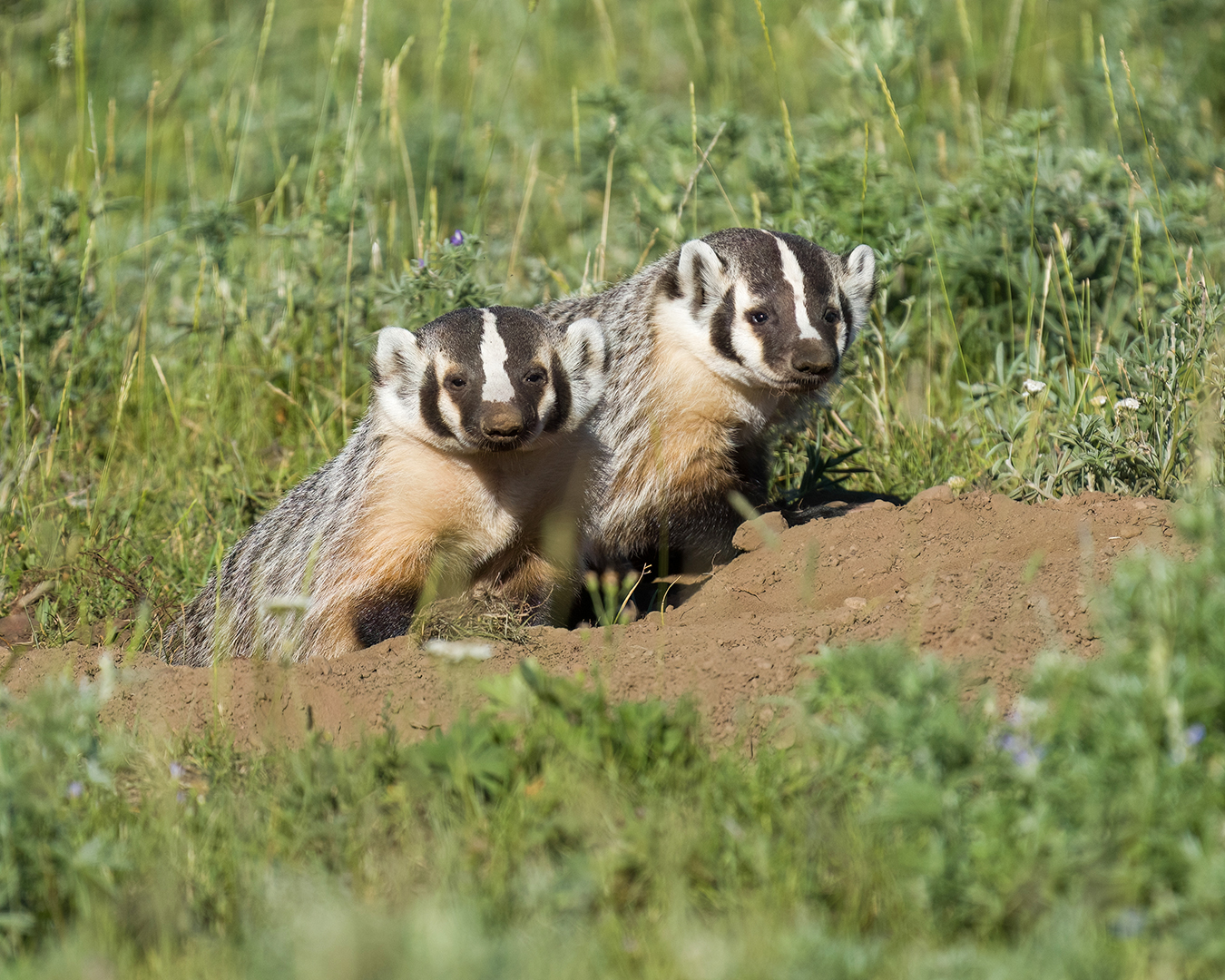
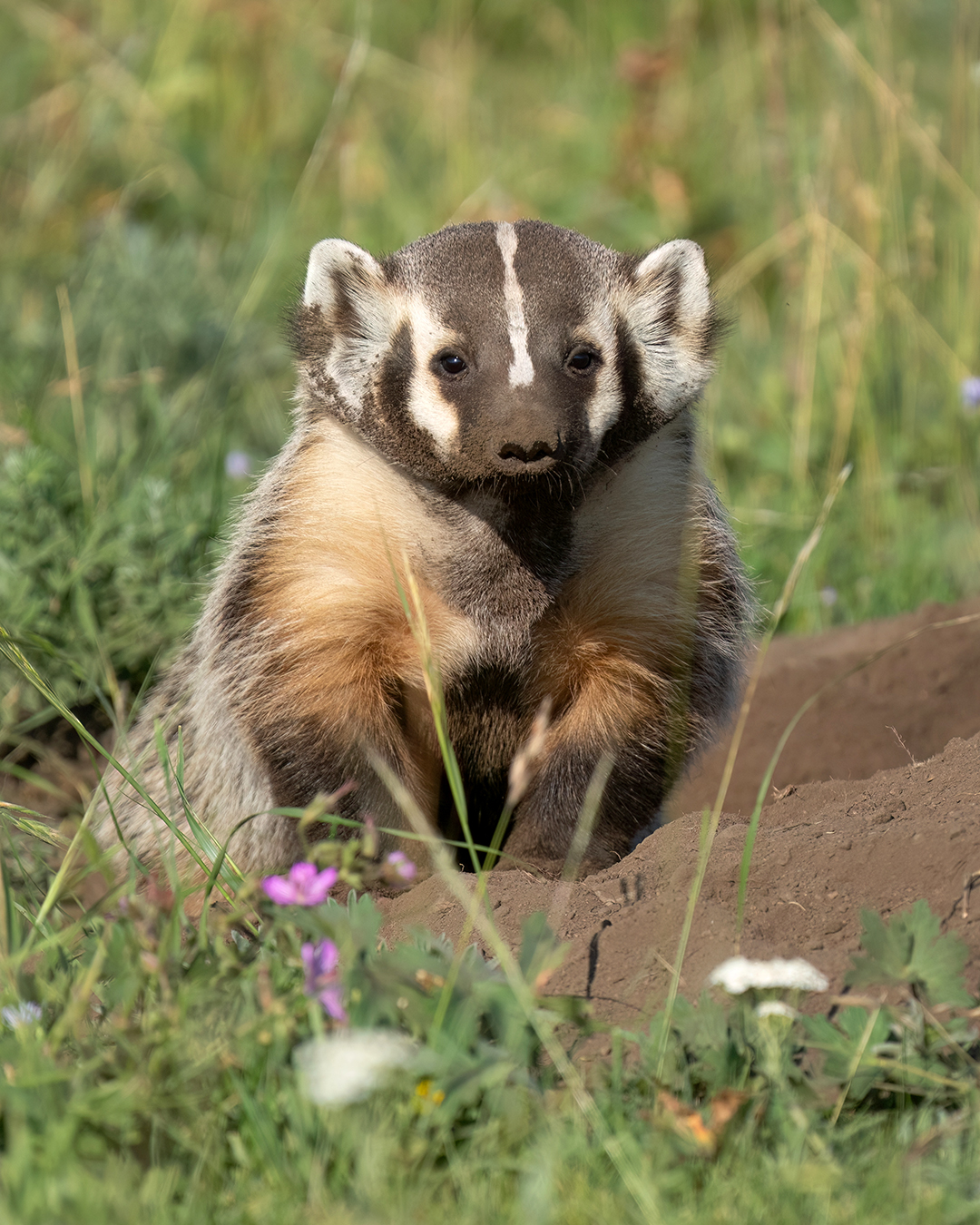
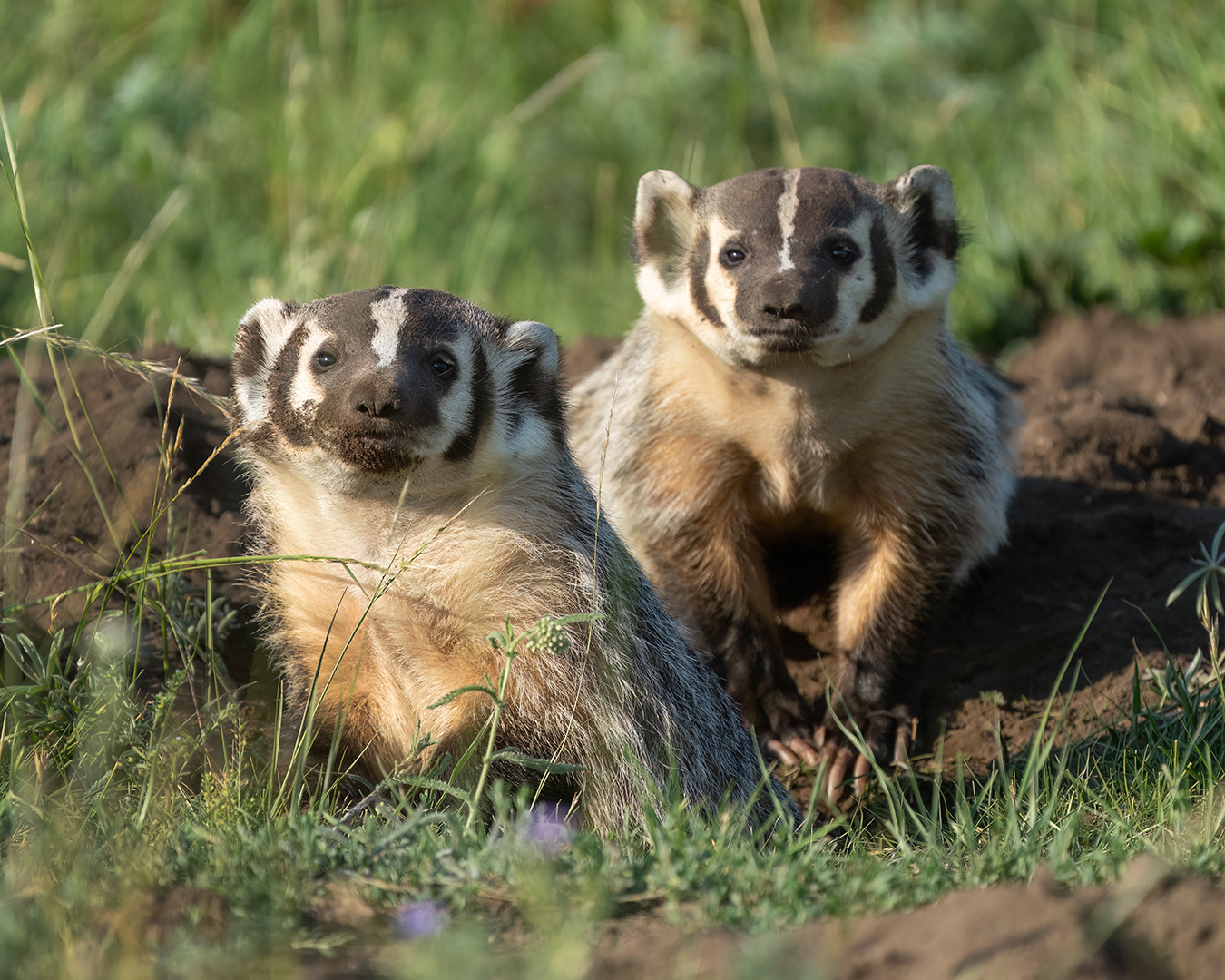
In total, from mid-May through July I identified 23 different badgers along a two mile stretch of eastern Lamar Valley – two moms with triplets, three moms with twins, one mom with a lone cub, and four single adults. I never would have expected to find so many badgers overlapping in such a relatively small area.
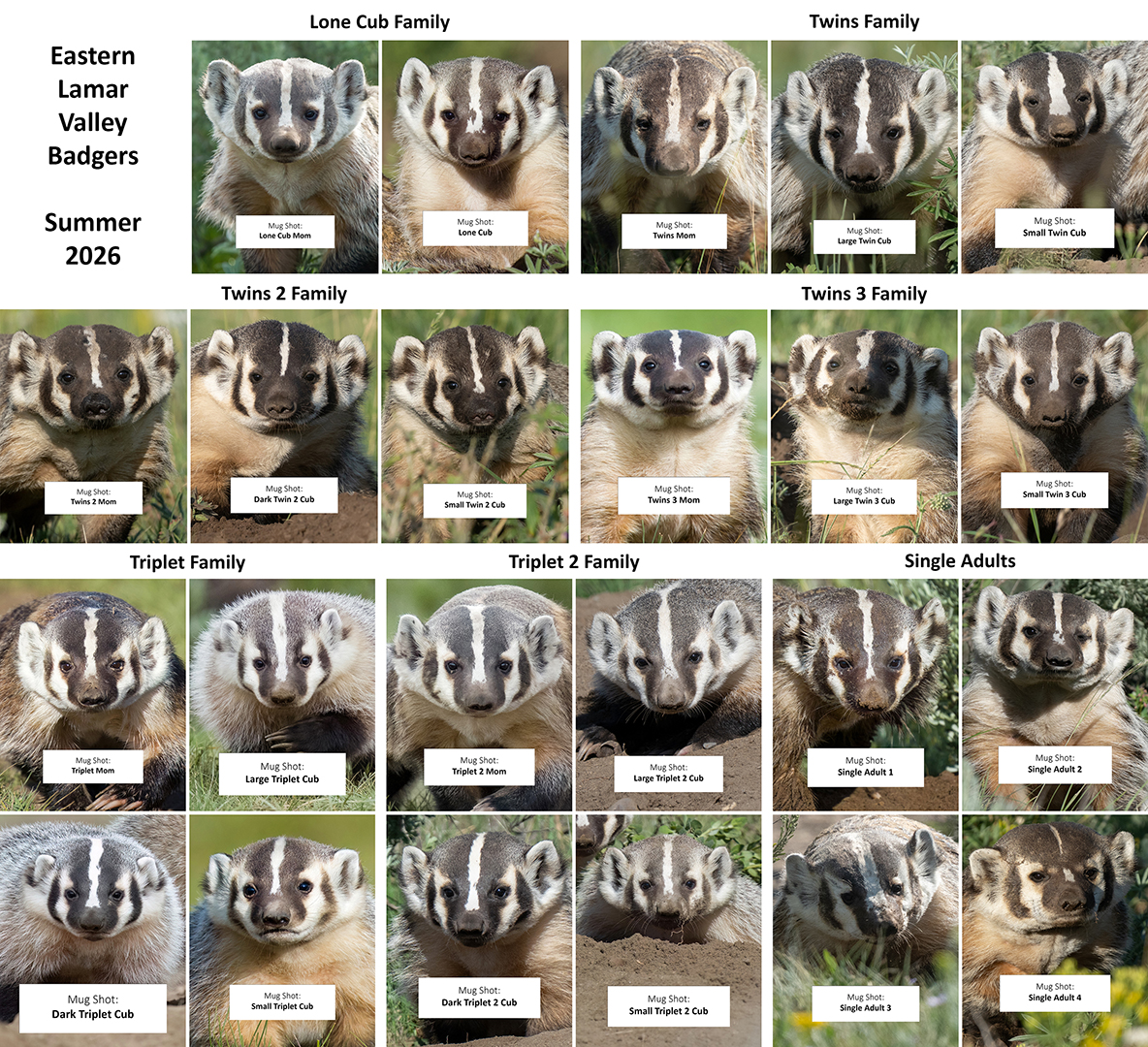
I realize that the naming convention I used for the mug shots is inadequate for a variety of reasons. The clinically descriptive names fail the Meerkat Manor cuteness test, for one thing, and they won’t work over multiple years (considering that the cubs will become adults and the moms may or may not have the same number of cubs again). Next year I’ll switch to using numbers, or more generic nicknames, or some combination of the two.
Some fun (work with me here) facts and open questions:
Solitary nomads. Adult badgers are solitary, which means they only hang out with other badgers when they’re mating or raising cubs. And when badgers aren’t raising cubs, they tend move around a lot (within their territory) and change burrows daily. I started watching the original Triplet Family at their natal den in mid-May, when they’d likely already been using that den for many weeks. They left the natal den at the end of May and then spent 2-3 nights at each of their next few dens before starting to relocate daily.
Size. Adult male badgers weigh about 15-25 pounds, and adult females are somewhat smaller at 14-20 pounds. When I saw Triplet Mom after she died, stripped of the vitality and spirit that must have affected my perception of her, I couldn’t believe how small she actually was – not much bigger than a house cat.
Gender. Other than assessing size, seeing a mom taking care of cubs, or performing an undercarriage examination that would almost certainly be poorly received, there aren’t many ways to determine a badger’s gender. Some sources say that male badgers tend to have broader faces than females, but that still leaves you guessing.
Gender roles. The only contribution male badgers make to the continuation of their species is the act of mating itself. Female badgers raise their cubs without any help.
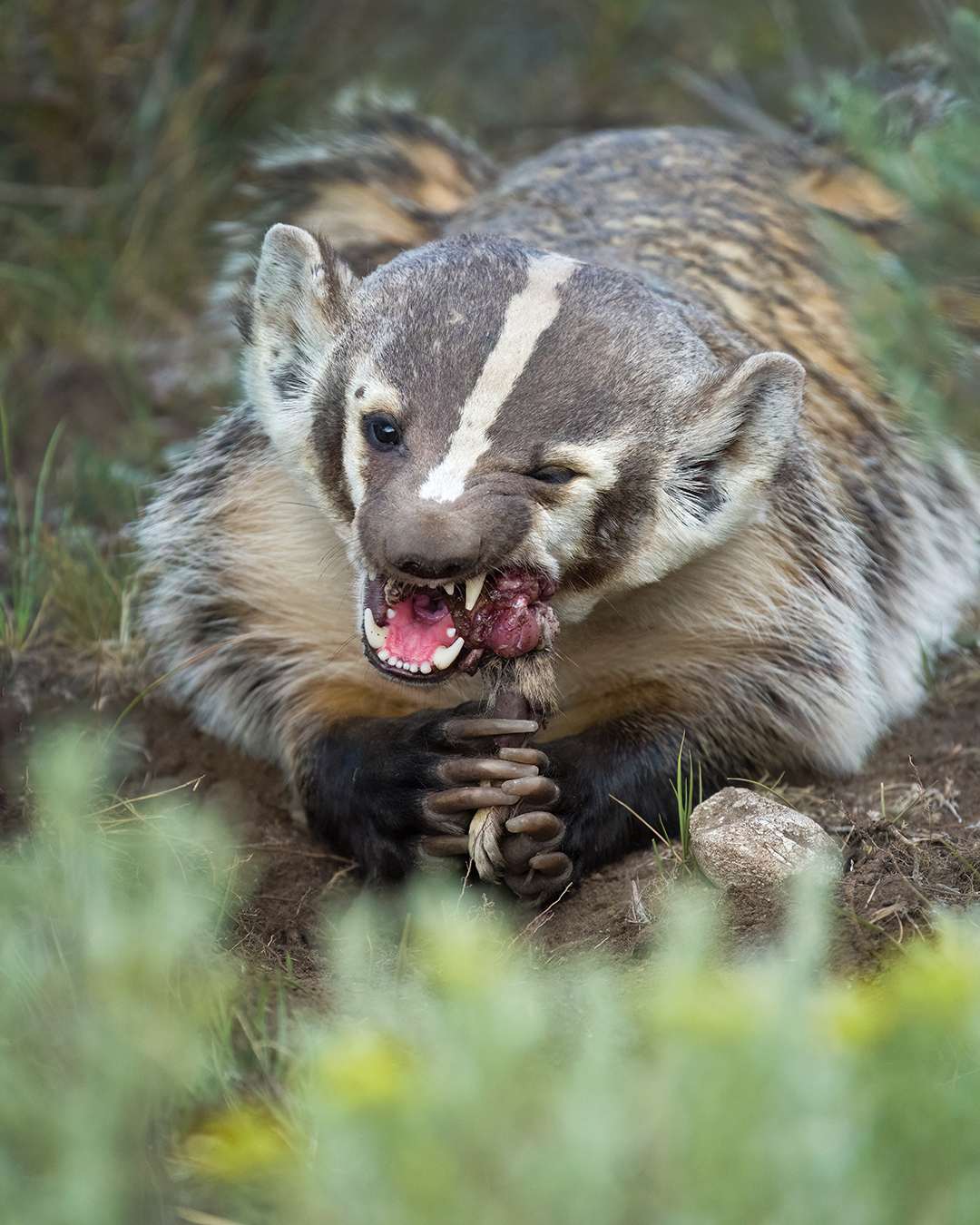
Diet. American badgers are carnivores that eat rodents, snakes, birds, insects, and – less often – plants. The badgers in Lamar Valley mostly prey on Uinta ground squirrels, but not exclusively. Towards the end of July it seemed to me that the badgers were spending less time hunting squirrels and more time catching insects, especially grasshoppers and Mormon crickets.
Predators. Not too many creatures are tough enough to mess with a badger. Bears, wolves, and mountain lions will sometimes prey on adult badgers, but it’s uncommon. Badger cubs are more vulnerable, and their predators can also include coyotes, bobcats, and golden eagles. I once saw Triplet Mom race back to her natal den when she spotted a coyote headed in that general direction. It was the only time I saw her look genuinely worried.
Senses. Everything I’ve read says that badgers have a highly developed sense of smell and exceptional hearing, but assessments of their vision vary. Most sources say badgers’ eyes are adapted to the darkness of their burrows, which leaves them with below-average sight in daylight. But others claim that badgers have keen eyesight, even when it’s bright. Which is right? Often when I’ve been watching a badger from far away, the badger will stop periodically and look directly at me for a second or two, a quick check to make sure I’m still behaving. Maybe they’re only seeing a blurry blob, but it seems to me that badgers’ eyes work pretty well, even in sunlight.
Lifespan. Wild badgers apparently live an average of 4-5 years, but that number is significantly reduced by the mortality rate of cubs, which might be higher than 50%. It sounds like wild badgers that survive their first year have a life expectancy closer to 9-10 years.
Diel cycle. Everything I’ve read about American badgers says that they’re primarily nocturnal. Some sources suggest that badgers may be more active during the day in remote areas (which I guess would include Yellowstone?), and that badger moms may hunt more during the day in order to be with their cubs at night. From May through July, there was a lot of badger activity in Lamar Valley during the day – was there even more happening at night? Given that I’ve mostly seen moms and cubs this year, are the adult males and cub-less adult females throwing big badger jamborees when the sun goes down?
Cooperative hunting. Even people who don’t care about badgers seem to really enjoy the fact that badgers will sometimes hunt cooperatively with coyotes. I’ve heard two different slants on how this benefits both parties when they hunt prey like ground squirrels. The first is that ground squirrel burrows generally have multiple openings, which means that if a badger can dig into opening #1 while a coyote is guarding opening #2, then one of them has a good chance of getting a meal. The second slant is that ground squirrels can outrun badgers above ground more easily than they can outrun coyotes, so when badgers and coyotes hunt together it forces ground squirrels to choose between two bad options – if they hide in their burrow the badger will dig them out, and if they run for it the coyote will catch them.
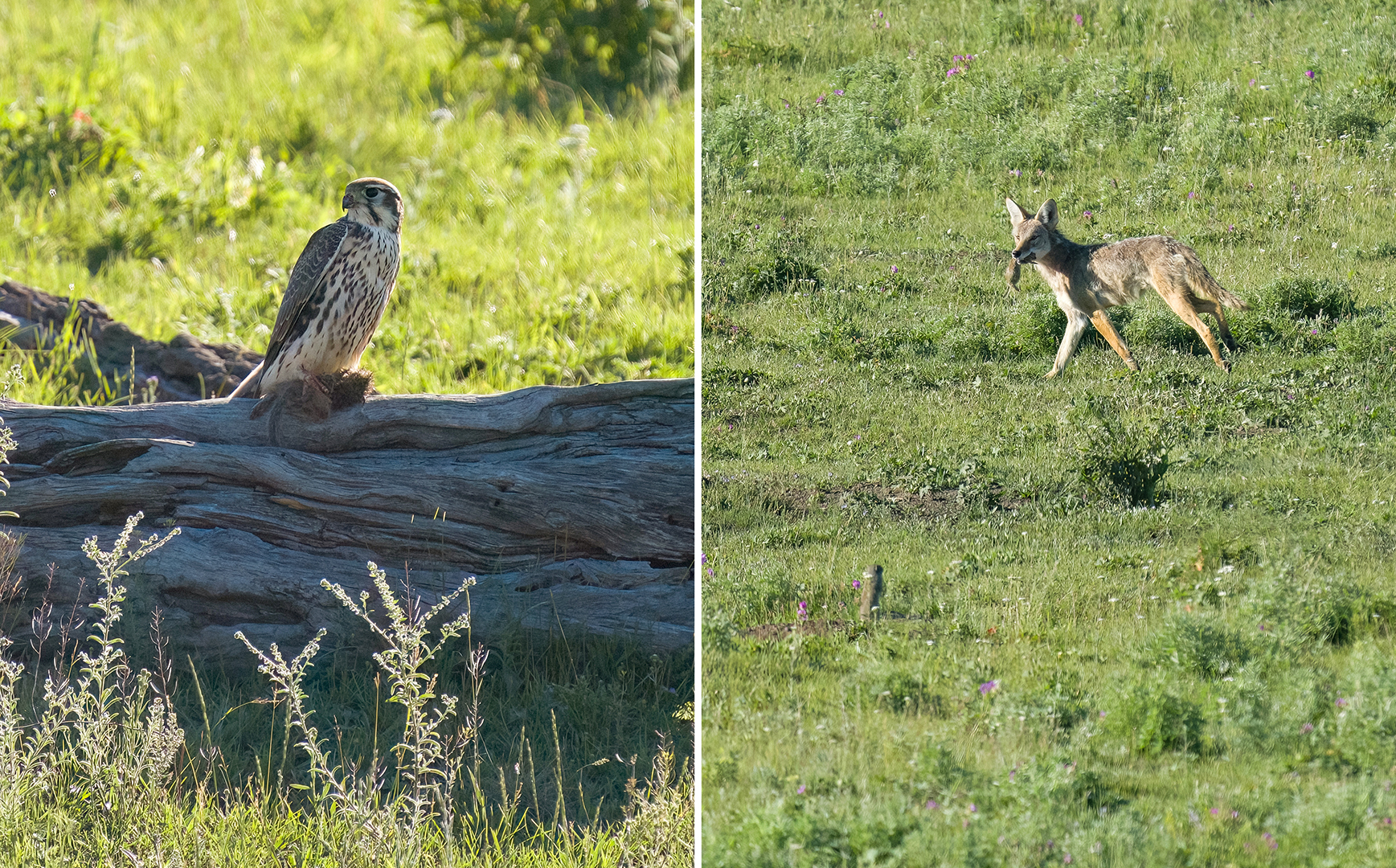
I’ve never seen a badger hunt cooperatively, which has been frustrating. Twice I’ve seen a badger and a coyote hanging out in the same area, but – even though I was a long way away – the coyote bolted as soon as it saw me. One morning in July I did watch a coyote grab a ground squirrel while running full speed, and soon after that a prairie falcon swooped down and snatched a ground squirrel that couldn’t dive into its burrow fast enough. Lamar Valley is a tough neighborhood for ground squirrels.
Badger vocalizations. I’ve read that badgers make a wide range of noises – barking, growling, wailing, etc. But I’ve only heard them make a few different sounds: a soft trilling (described by some as purring, used by badger moms to communicate with their cubs), a cat howl crossed with a pig squeal (when they fight), and a hiss (like the one Small Triplet 2 Cub directed at me after being evicted from Single Adult 2’s burrow).
Ground squirrel vocalizations. Uinta ground squirrels frequently make a variety of chirping sounds, and I used to not pay much attention to them. But over the past few months I’ve learned to do a better job of deciphering their vocalizations to help locate badgers. I noticed, for example, that the ground squirrel alarm cry for aerial predators is different than the one for land-based predators. When a red-tailed hawk or prairie falcon swoops low, the squirrels fire off 2-4 agitated chirps. But when a badger or coyote is actively hunting nearby, the squirrels use a sound that some describe as a churr – basically a long string of chirps repeated so quickly that they blend together. (I found a 1960s research paper on Uinta ground squirrel vocalizations that accurately describes what I’ve heard so far.)
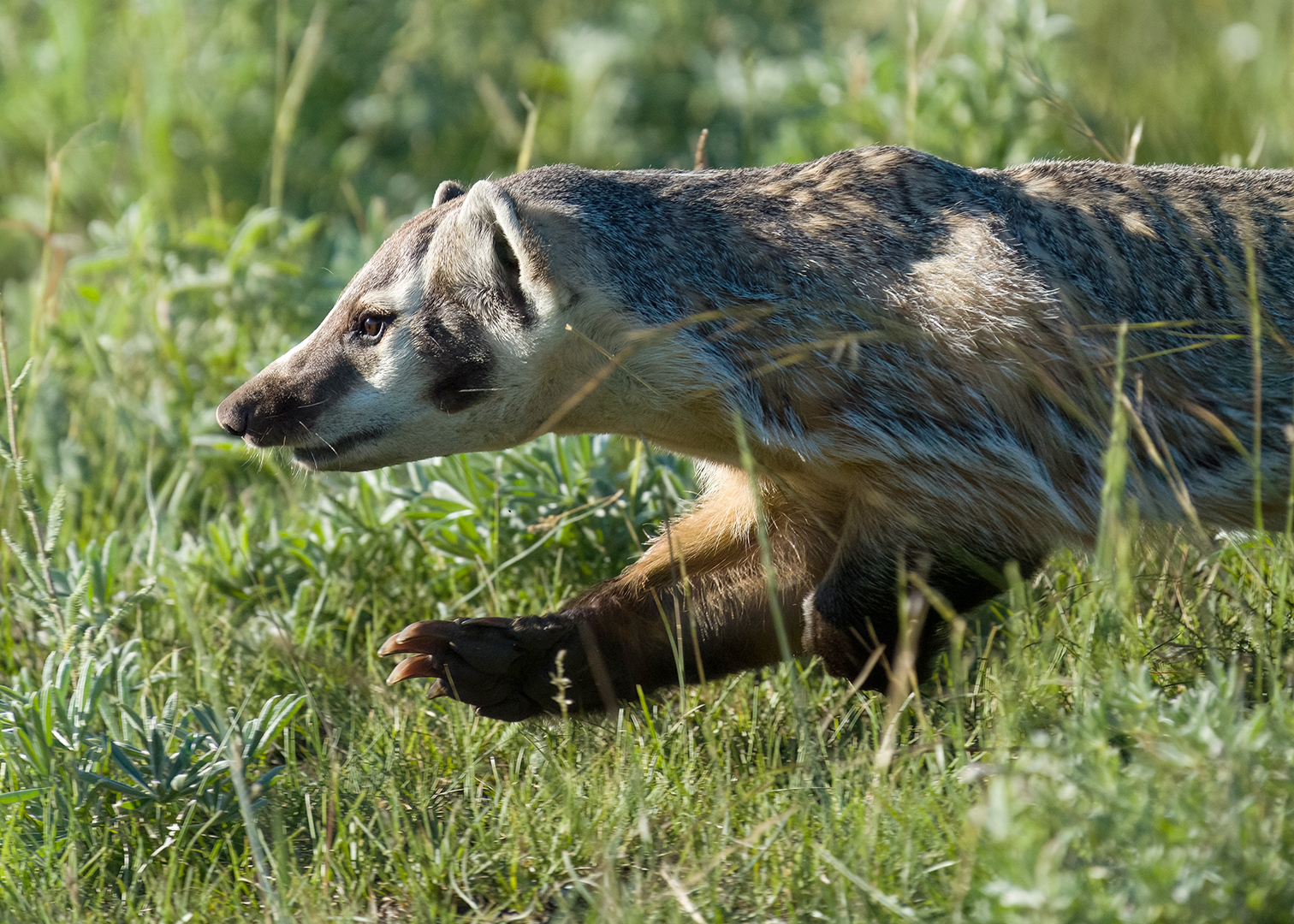
Digging. Badgers are considered fossorial, which means they’re adapted for digging and living underground. With two-inch claws, a flat body, muscular forelimbs, partially webbed toes, nictitating membranes that protect their eyes, and a loose hide that makes it easier to maneuver in burrows, badgers are one of nature’s most efficient digging machines. They can tunnel through dirt as fast as three feet per minute, and they’ve been known to bore right through pavement and concrete.
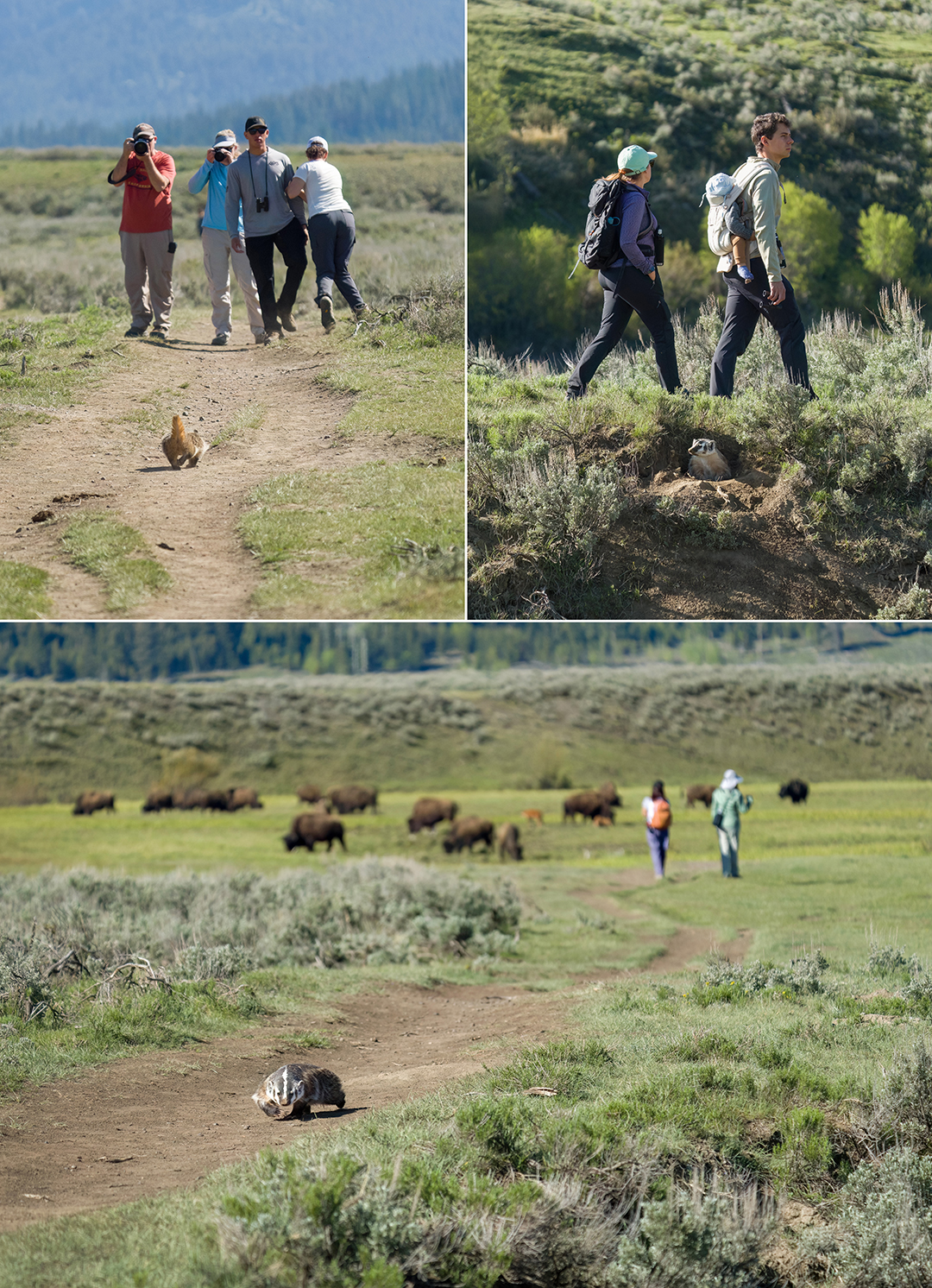
Aggression. Badgers are often described as being vicious, which doesn’t fit my impressions at all. The badgers I’ve watched have been amazingly tolerant. No adult has ever acted aggressively towards me, even when I accidentally got too close. Once they understand that you’re trying to maintain a respectful distance and aren’t a threat, they just go about their business. Don’t get me wrong – I think it would be a very bad idea to corner or otherwise harass a badger. They certainly have the tools and temperament to defend themselves successfully against much larger creatures. But I have yet to see a badger act any more aggressively than other wild carnivores.
Water. I was surprised to learn that badgers are good swimmers. I’ve noticed that on rainy mornings they generally prefer to stay in their burrows, but apparently that’s just good sense and not an aversion to water. I hadn’t seen a badger swim until the end of July, when, from a distance, I watched a badger cross Soda Butte Creek in a matter of seconds.
Bonus fun fact. Oddly, I’ve never once seen a badger poop. Make of that what you will. Are they so prim and modest that they prefer to conduct their business underground?
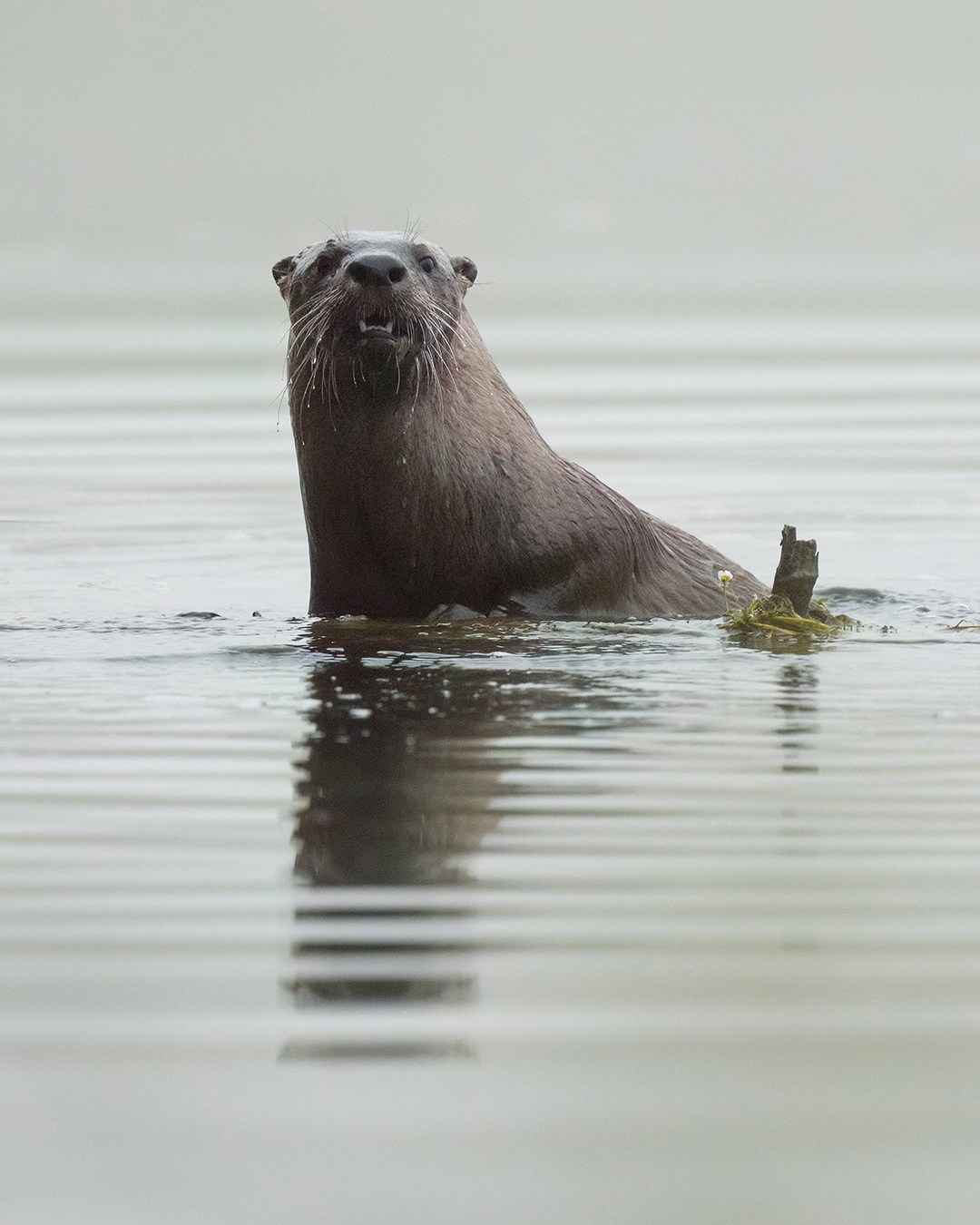
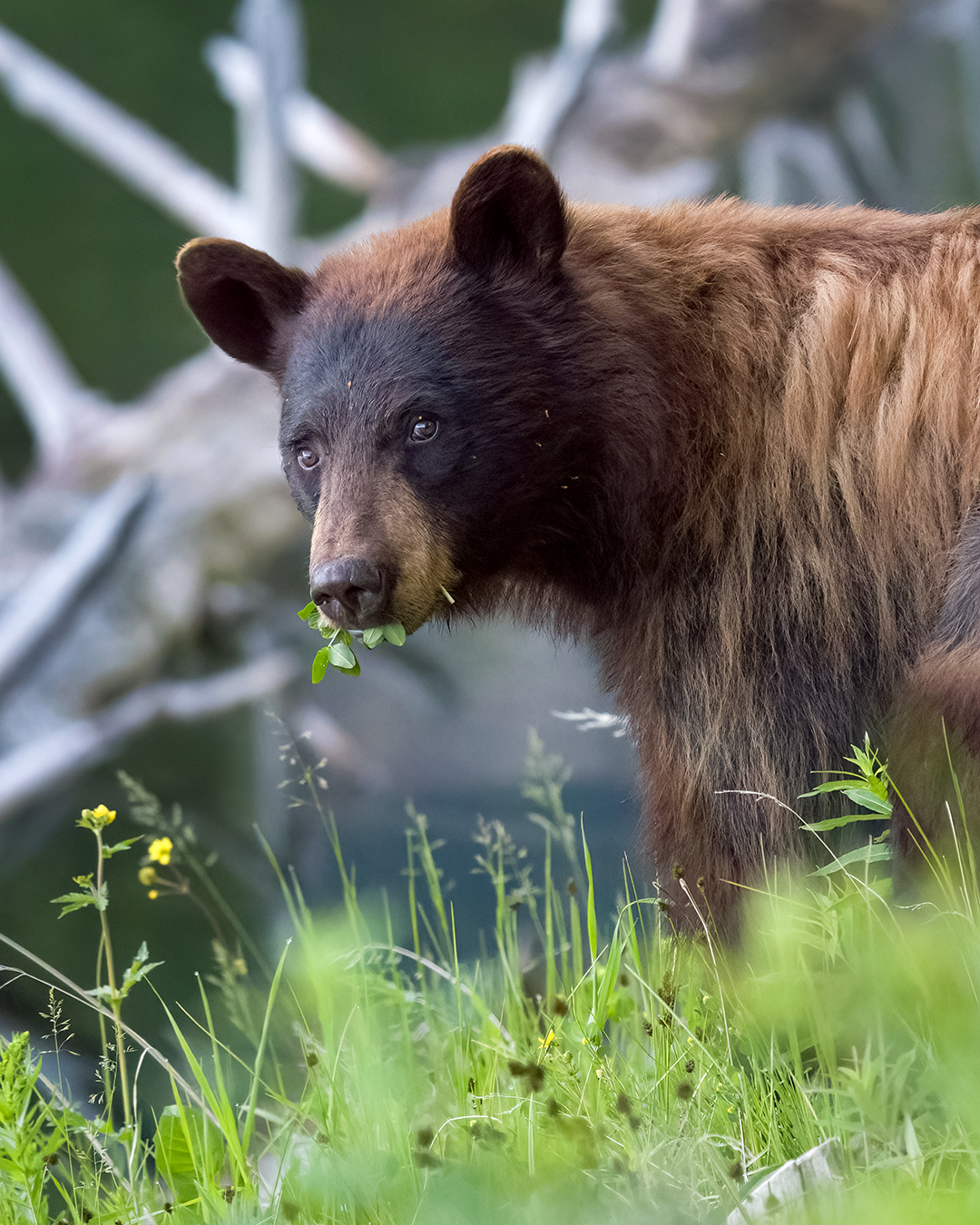
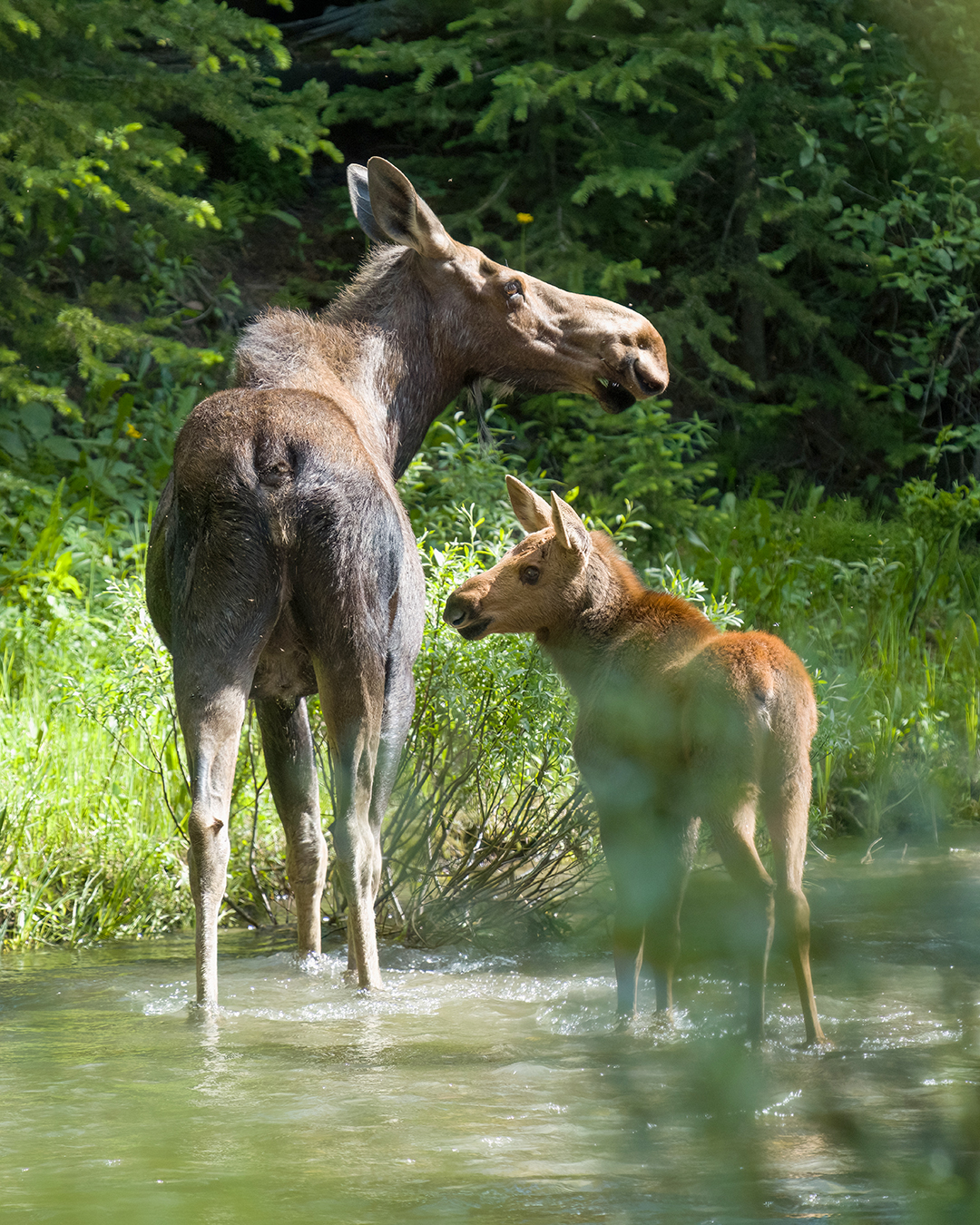
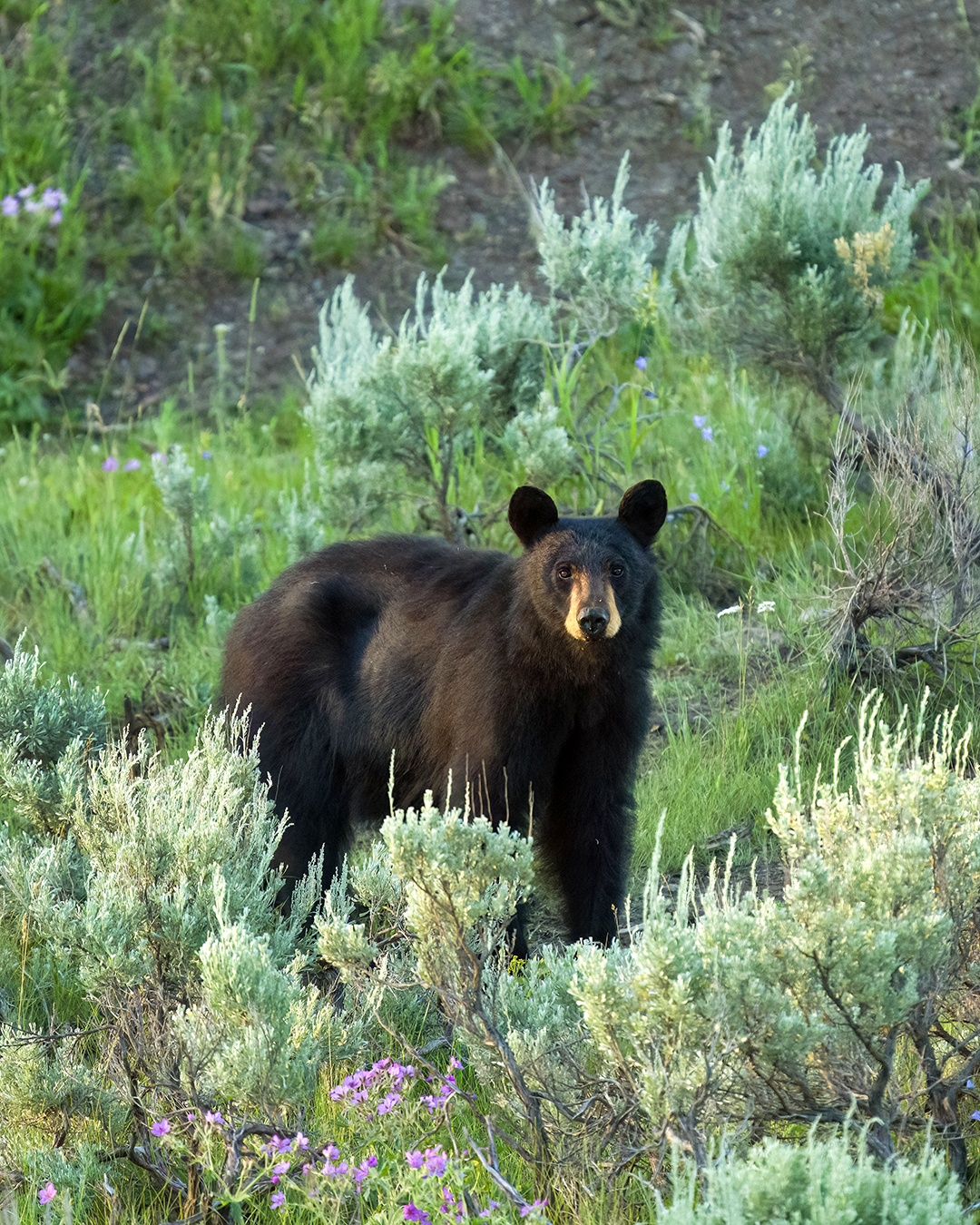
Badger-watching in Lamar Valley was far and away my wildlife highlight of the spring and summer, but throughout July I continued my habit of kicking off almost every morning with a quick trip to Trout Lake. Otter sightings there have been rare this year, but once I did briefly see a lone otter. I regularly found moose at the lake (and in our yard in Silver Gate), and one morning I had an unexpectedly close encounter with a black bear.
Hot Badger Summer will inevitably wind down in August. Uinta ground squirrels usually start hibernating in mid-August – which always seems weirdly early to me – and, if previous experience is any guide, once the ground squirrels go down the badgers will become more difficult to find. On top of that, the badger cubs will likely begin leaving their moms to establish their own territories.
I’m already getting excited for next spring. I’ve learned so much about badgers over the past few months, and – now that I can identify almost two dozen – I wonder how many of them I’ll be able to find again in 2027. Thinking even longer-term, I’m hoping I can track some of their genealogies over multiple years.
My excitement, unfortunately, has not proven to be contagious. Marie still doesn’t seem to care much about badgers. “How would you describe your level of interest in badgers these days?” I asked her. “I could use a good quote for the end of my blog post.”
“Stop badgering me,” she replied.


NOW I care about badgers. Really great research and observations. Are the universities calling and asking for your help with their upstanding of the fauna of the world?Thanks again for your interesting work. JeffSent from my iPhoneOn Aug 23, 2026,
LikeLiked by 1 person
Ha, thanks Jeff!
LikeLike