

When Marie and I saw that our flight back home from Madagascar stopped in Nairobi, Kenya, we realized we’d be committing travel malpractice if we didn’t use that as an excuse to visit the Masai Mara. I’d been to the Masai Mara before (most recently in 2020, just as COVID started shutting down travel), but it would be Marie’s first time.
Our two-week tour of Madagascar – amazing as it was – left us both worn out, and I was still battling the stomach issue I’d picked up in Andasibe. It didn’t help that our heavily-delayed flight out of Madagascar arrived in Nairobi at 2am, leaving us only a few hours of sleep before our guide, Dixon, picked us up for the six-hour drive to the Masai Mara. We felt much better as soon as we traded Nairobi’s urban sprawl for our first view of the Great Rift Valley.

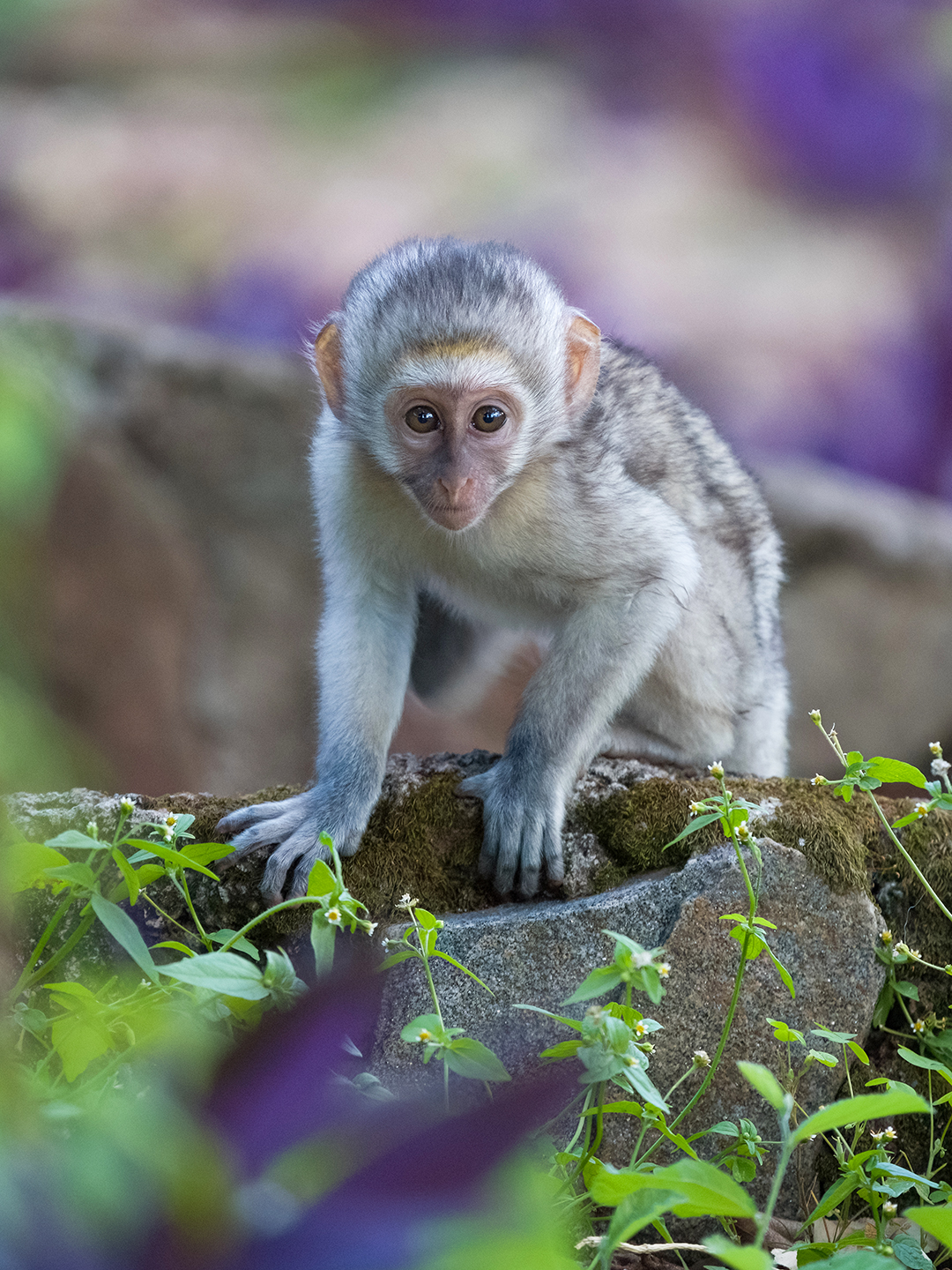
We arrived at the Masai Mara in the afternoon and checked into our lodge, which bordered the reserve. Over the course of our stay we saw zebras, vervet monkeys, and warthogs right outside our room. I was delighted by all the nearby wildlife, of course, but Marie has a long history of being pursued by roving troops of monkeys, and this trip was no exception. I missed the incident, unfortunately, but Marie described it as a harrowing escape.

The Masai Mara – basically the part of the Serengeti that extends across the northern border of Tanzania – is Kenya’s best-known game reserve, home to the Big Five (elephants, rhinos, lions, African buffalos, and leopards) and lots of other iconic African wildlife. We’d arranged a four-day tour that included two full days in the reserve, plus shorter game drives on the afternoon of our arrival and the morning of our departure.
I couldn’t wait to get into the Masai Mara that first afternoon. More than anything I wanted to see a leopard. Despite all the time I’d spent in the reserve, leopards had always eluded me there. Safari guides are quick to explain that game reserves are not zoos, and that there’s no guarantee you’ll find any particular animal, but I wanted to make sure Dixon had leopard-spotting on his mind.
“I understand that this isn’t a zoo,” I said to Dixon, “and I know that there’s no guarantee that we’ll see any particular animal. But I’m really hoping we can find a leopard at some point.”
“The Masai Mara is not a zoo,” Dixon replied reflexively. “We will try, but there is no guarantee.”
When we passed through the entrance gate I watched Marie absorb her first impression of the Masai Mara’s sweeping savannahs and gently rolling hills. Herds of antelope, zebras, and wildebeest grazed in the pale late afternoon light. “I get it now why people sometimes call Lamar Valley ‘the Serengeti of North America,’” Marie said, referencing an area of Yellowstone National Park close to our house. Lamar Valley is much smaller (and usually much colder) than the Masai Mara, but there are unmistakable similarities – grassy plains stretching to the horizon, scattered herds of big herbivores, dangerous predators lurking in the distance. Wild ecosystems with all those elements intact are rare these days.
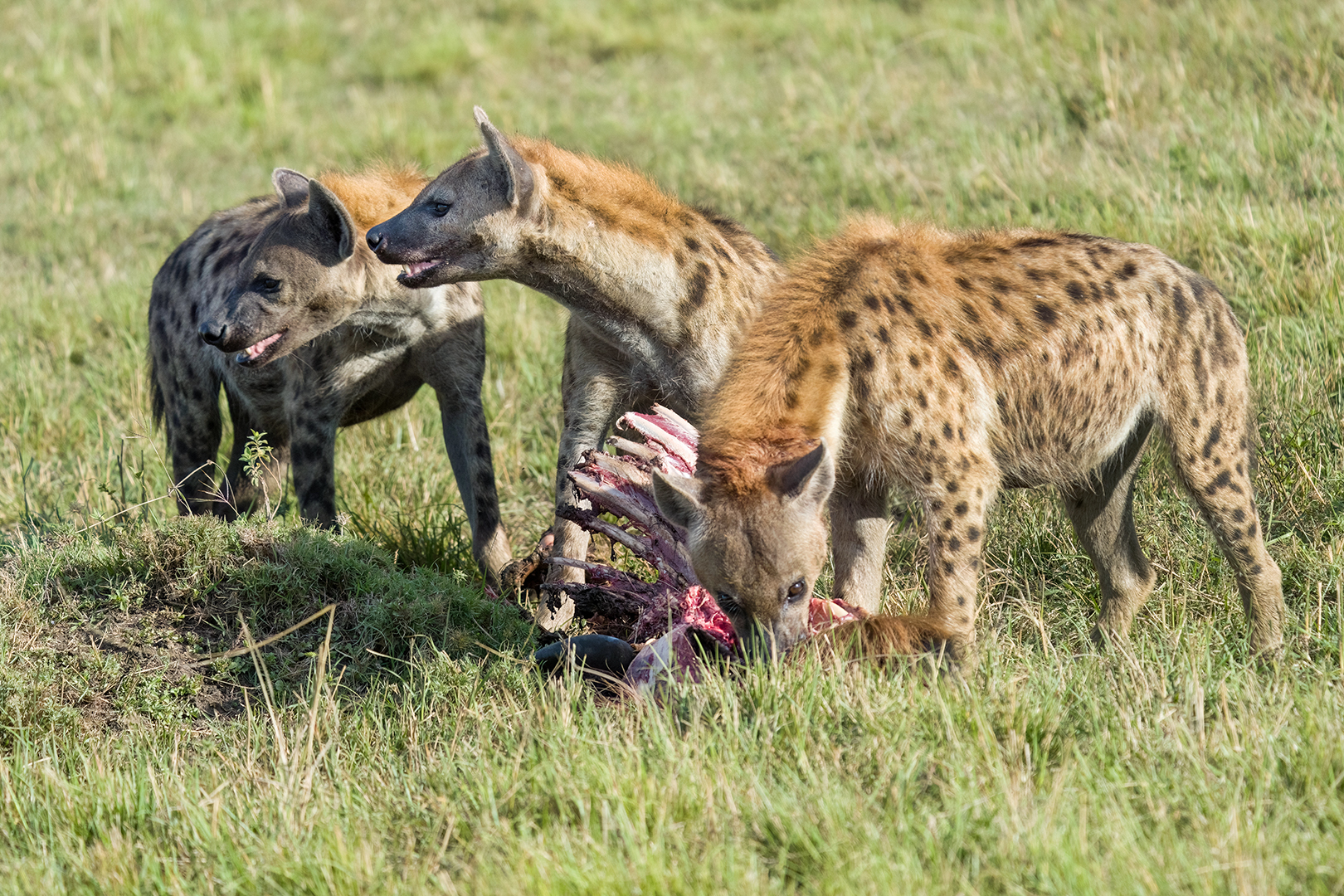
We’d only been in the reserve for 10 minutes when a lone hyena appeared by the road.


I noticed two big changes in the Masai Mara since my last visit. The first change made me happy: guides weren’t swarming the best wildlife sightings the same way they did before. Apparently the reserve is now stricter about limiting the amount of time you can spend with an animal that’s attracting a crowd. It was frustrating to have to leave a great sighting after just a few minutes, but it felt good to be giving the animals more space.
The second change made me unhappy: cell coverage seemed much better. Dixon was constantly on his phone. “Do guides mostly now use phones instead of the radio to share sightings?” I asked.
“Yes, mostly phones now,” Dixon confirmed. But the vast majority of his calls were from a woman who yelled loudly enough that I could hear her from the back of the jeep. Dixon was so focused on his phone that he didn’t seem to be looking for wildlife.
“I think maybe Dixon isn’t the best guide,” I whispered to Marie.
“He seems fine,” she said dismissively.


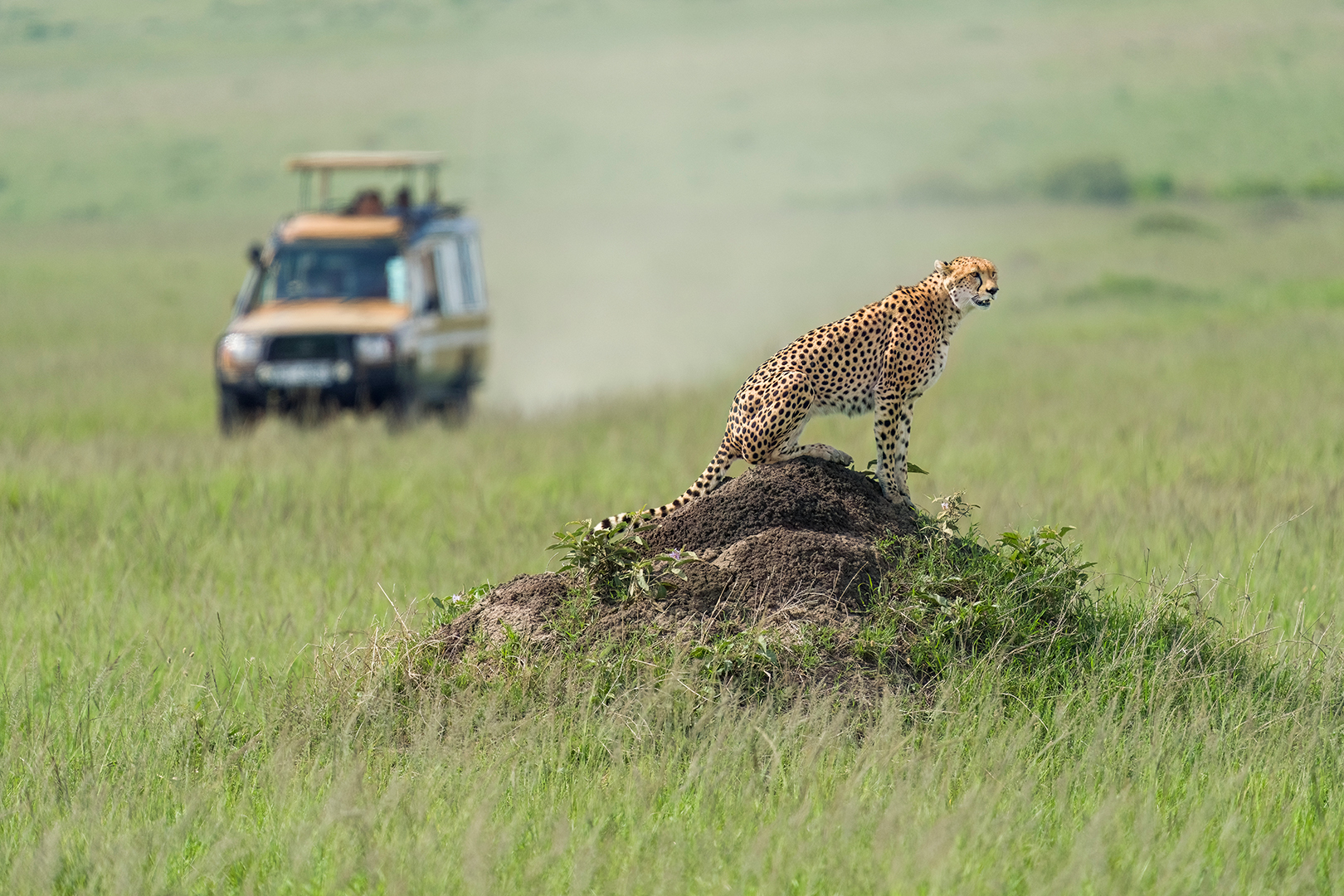
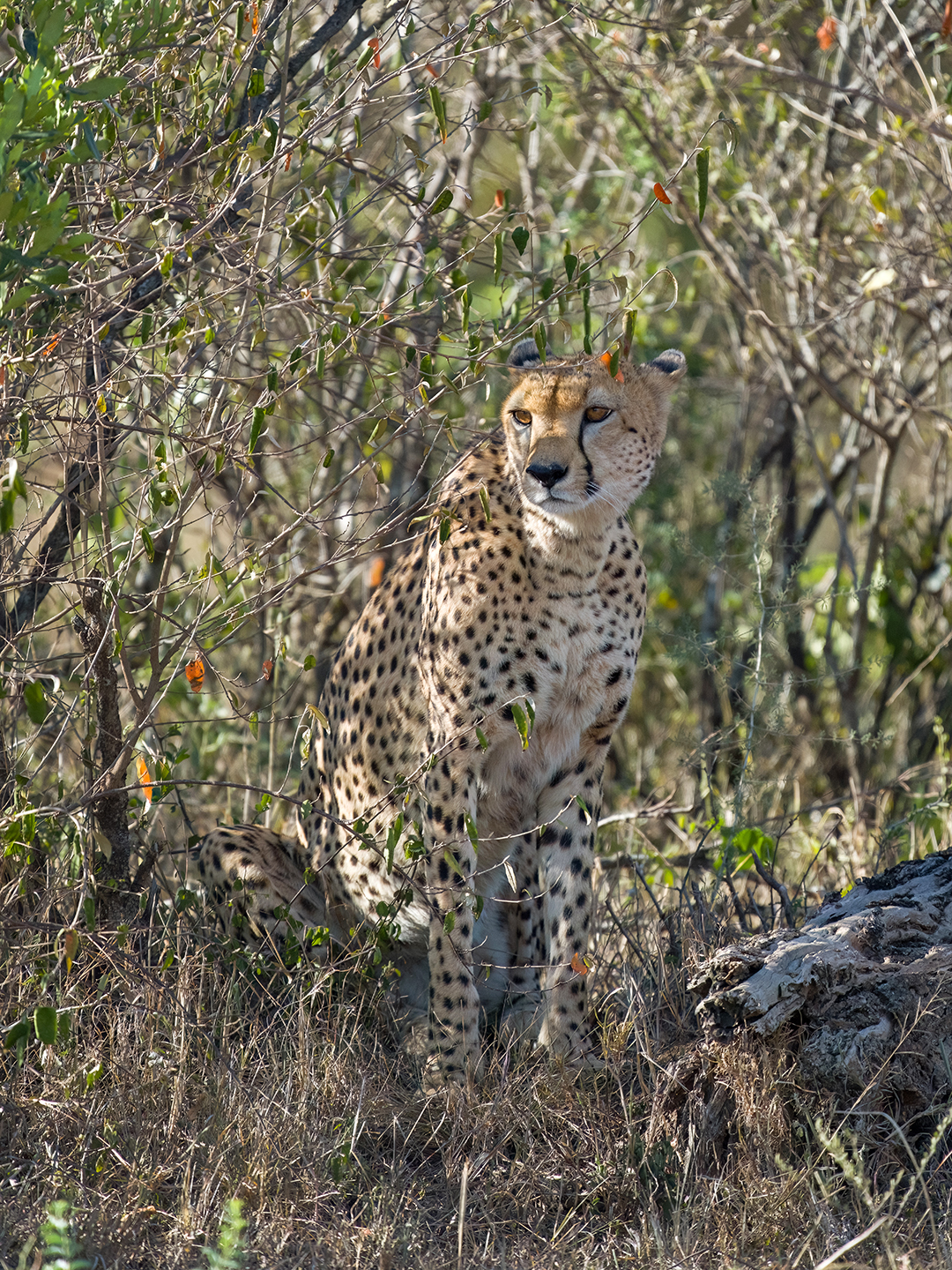
We spent the whole next day in the reserve. The highlight of the morning was finding a family of five cheetahs. Dixon identified them as a mated pair with three almost-grown cubs, but we learned later that it was a mother with four cubs. At one point the cubs began chasing a baby warthog at full speed. The little warthog escaped without a scratch, but the cheetah mom looked proud that her kids put in a solid effort.



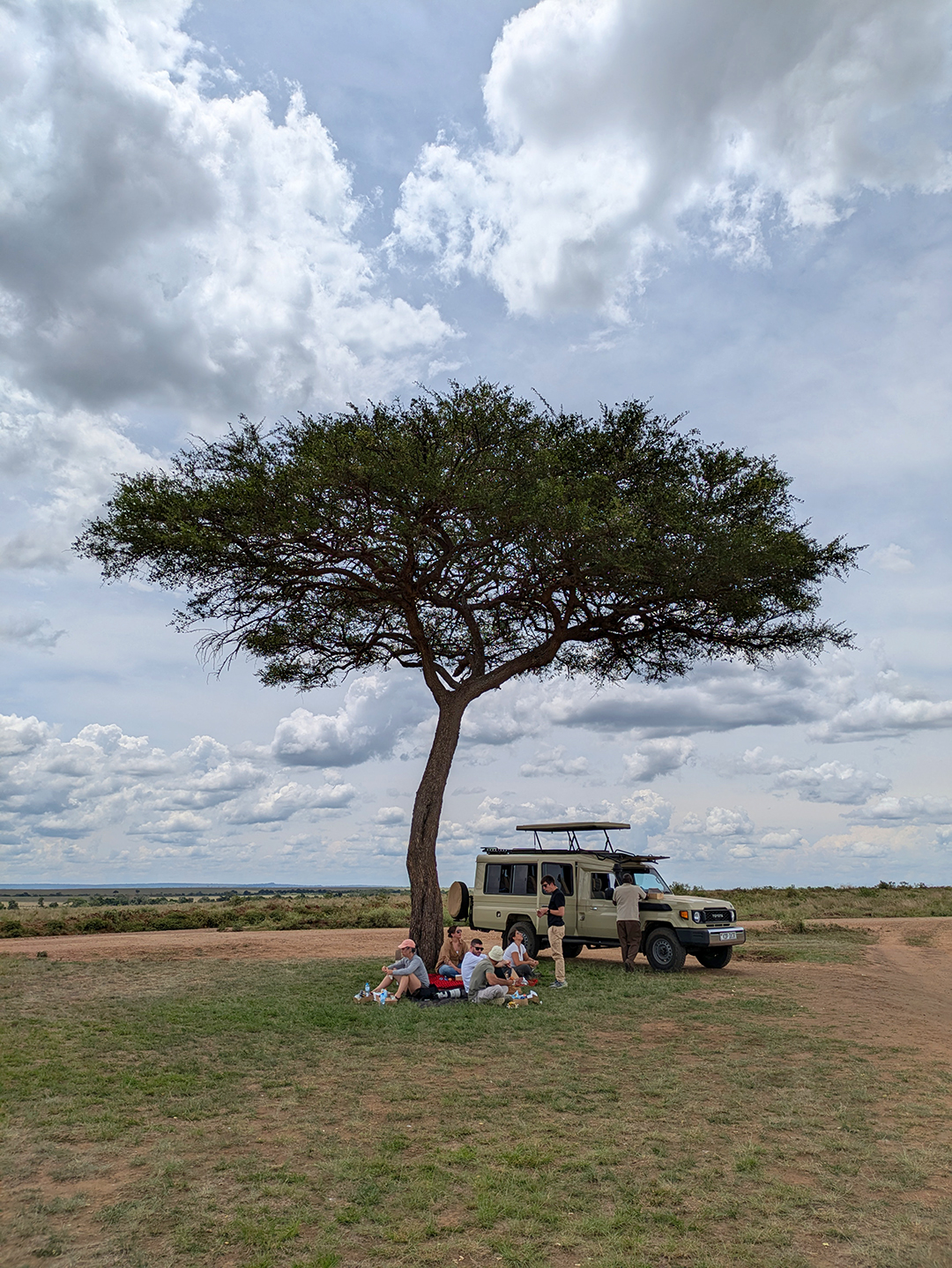


That afternoon I noticed a feline shape to the right of the road. It must have just crossed in front of us, but Dixon, busy talking on his phone, saw nothing. “Stop! Stop! Stop!” I yelled. “What’s that on the right?”
“Ah,” Dixon said casually as he brought the jeep to a slow stop, “a serval cat.”
What?! I didn’t even know there were serval cats in the Masai Mara! I’d never seen one anywhere in the wild before. It had to be the rarest sighting of our whole visit. By the time we stopped, the cat was pretty far in the distance and facing away from us. I tracked it with my camera, hoping desperately that it would pause and look around – which, thankfully, it finally did.

A little later Marie spotted a lion family that Dixon had completely missed. Then a huge bird of prey flew over us. “What kind of bird is that?” we asked Dixon.
“I don’t know, I can’t see it,” Dixon said, apparently unwilling to put down his cell phone and turn his head.
“I think maybe Dixon isn’t the best guide,” Marie whispered to me.


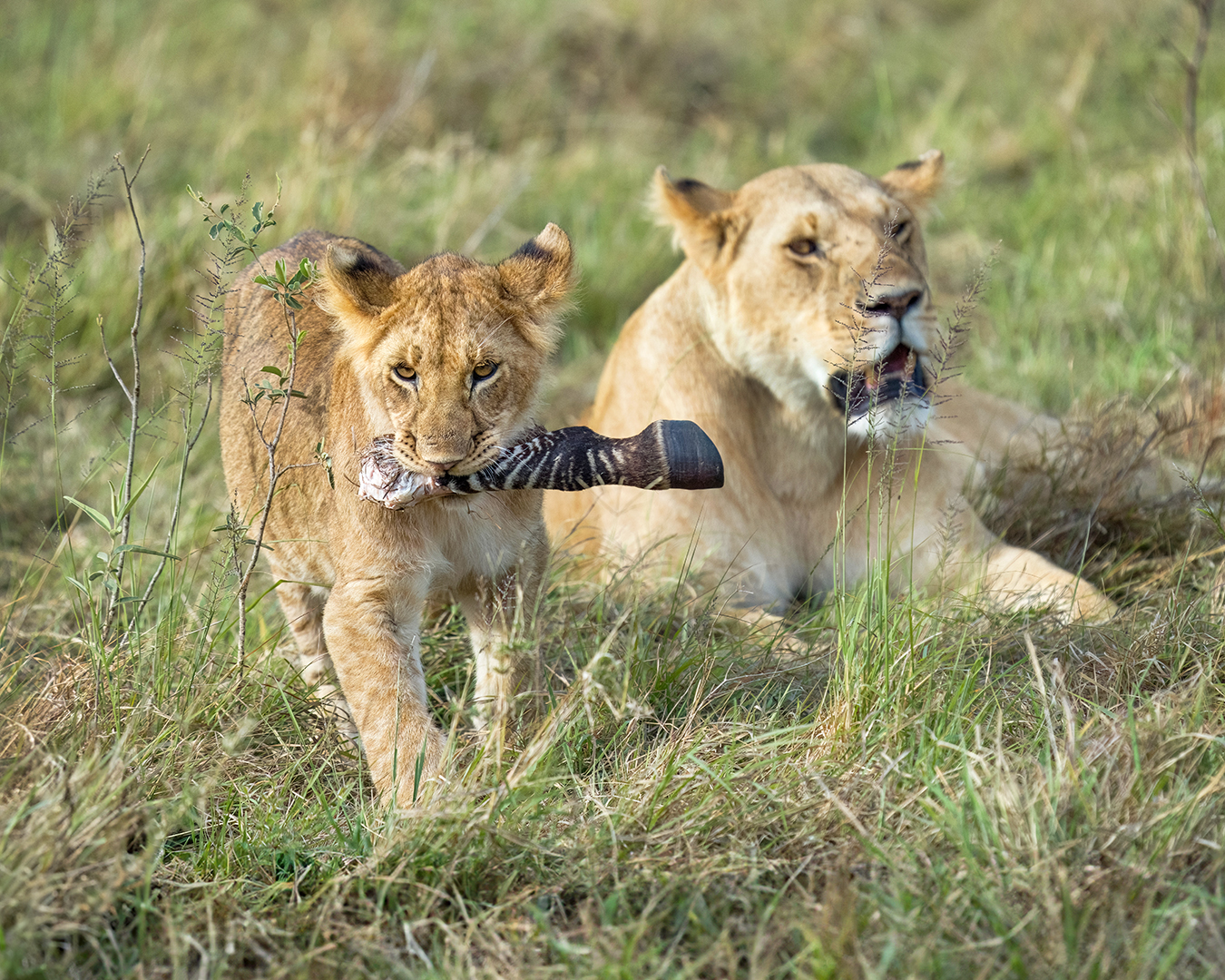
The next day, mercifully, we had a new guide. Joshua was a clear upgrade. He made an effort to spot wildlife, and the information he provided seemed like it might actually be true. Soon after we entered the reserve we found a lion family finishing off a zebra they’d killed the day before. One of the cubs was carrying a zebra hoof around like a chew toy.


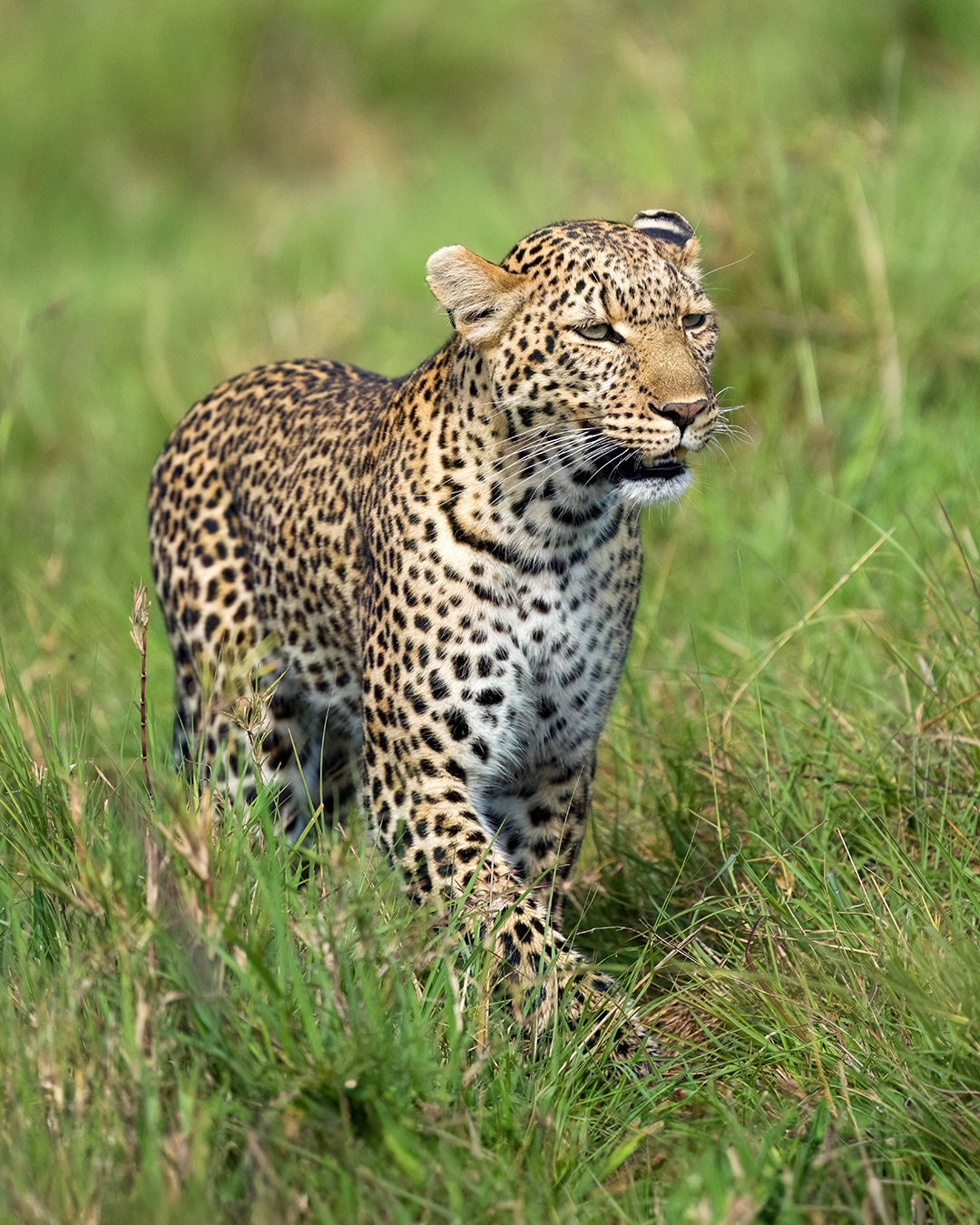
Around mid-morning Joshua heard something on the radio that caused him to slam on the brakes and zoom off in a different direction. “There may be a leopard,” he said, “but we have to hurry.” I’d only ever seen one leopard in the wild before, far up a tree. This one was prowling along the edge of a small stream, and Joshua was able to position our jeep so that it walked right towards us. We had a truly incredible view as the leopard slipped in and out of the tall grass. Amazing! What an experience!

The other tourists in our jeep – a pleasant, friendly British couple with two young boys – didn’t seem very impressed by the leopard, or, as far as I could tell, anything else we’d seen. The kids expressed mild interest in ostriches, and the wife paid attention the first time we saw an elephant, but that was about it. If you don’t care about wildlife, why spend your time and money visiting the Masai Mara? They served as a good reminder that it’s much more fun to be around people who have something – anything – that they get excited about.


During our final game drive the next morning we tried, unsuccessfully, to find a rhino before heading back to Nairobi.
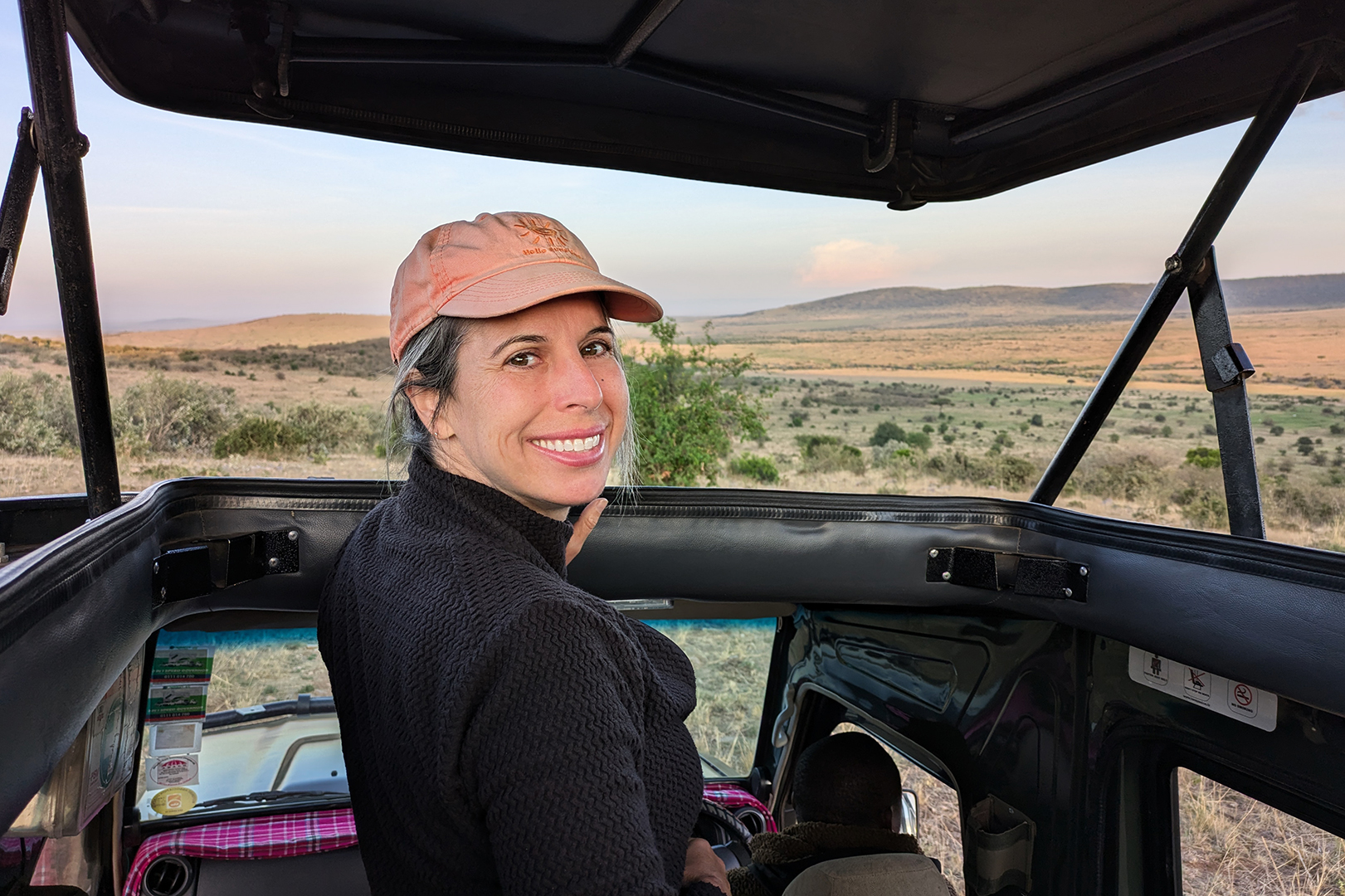
Marie had never been anywhere in Africa before our recent trips to Morocco, Madagascar, and Kenya. Morocco and Madagascar weren’t the kind of places she’d want to revisit, and after those two countries she was ready to write off the whole continent. But Kenya really turned things around. Marie loved it. A big factor, I suspected, was that we stayed at much nicer hotels in Nairobi and the Masai Mara, but – regardless of the reason – I was thrilled that our time in Kenya left her wanting to take longer trips in eastern and southern Africa.
Our return home was rough. Marie and I both had sore throats, caused – we thought – by all the dust we inhaled while driving around the Masai Mara. By the time we made it back to my mom’s place in Denver we were exhausted and jetlagged. We only spent one night in Denver before driving back to Silver Gate, where Marie began to wonder if our sore throats might be due to more than dusty air. Sure enough, Marie tested positive (twice) for COVID. My mom avoided it, thankfully, but Marie and I coughed, shivered, and suffered for over a week. In some ways it was a lucky break – far better to catch COVID at the very end of a trip than the start!
 endlessloopphotography.com
Wonderful scenery
LikeLiked by 1 person
You were so fortunate to see a leopard, and such great shots, fabulous!! The lion cub with the zebra hoof and the cheetah chasing the warthog are brilliant too, thank goodness you decided to make that Masai Mara trip
LikeLiked by 1 person