
At the end of January I headed to the Galapagos Islands for two weeks. It was my sixth visit. Sixth! Yes, that definitely counts as excessive, greedy, way-more-than-my-fair-share, whatever you want to call it. But it’s one of my favorite places in the whole world.
When people find out I’ve been to the Galapagos so frequently, they tend to furrow their brow and give me a puzzled look. Why keep going to a once-in-a-lifetime destination again and again? To me it’s pretty simple. If you’re lucky enough to find an experience that reliably brings you profound joy, why wouldn’t you try to have that experience as often as reasonably possible? Visiting the Galapagos brings me so much joy that when I’m there I almost expect some kind of official to tap me on the shoulder and kick me out for exceeding my limit.
Marie, unfortunately but understandably, opted out of this trip, given that we’d just spent a month in the Galapagos in 2023 and she wasn’t quite ready for another round yet. She also reasoned that when she does feel ready for the Galapagos again, it will not be difficult to talk me into a seventh visit, which is of course true.
I flew out of Bozeman on a cold winter morning and stepped off a plane the next afternoon into a wave of tropical humidity. Every time I set foot in the Galapagos I feel like a little kid on Christmas morning. My plan for this trip had two parts: first I’d spend a week at an airbnb in Puerto Ayora (the largest city in the Galapagos), and then I’d spend a week visiting different islands on a boat.
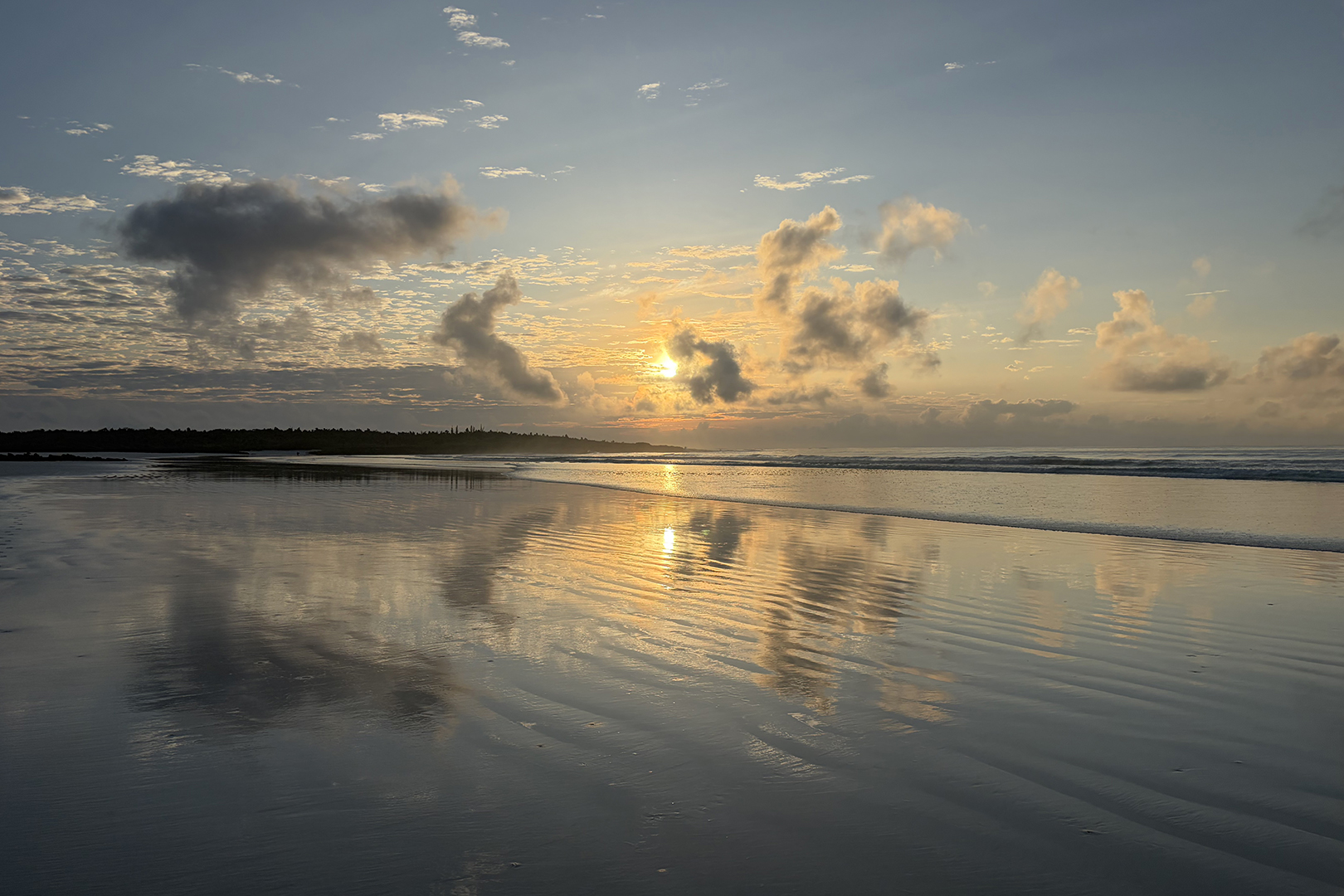
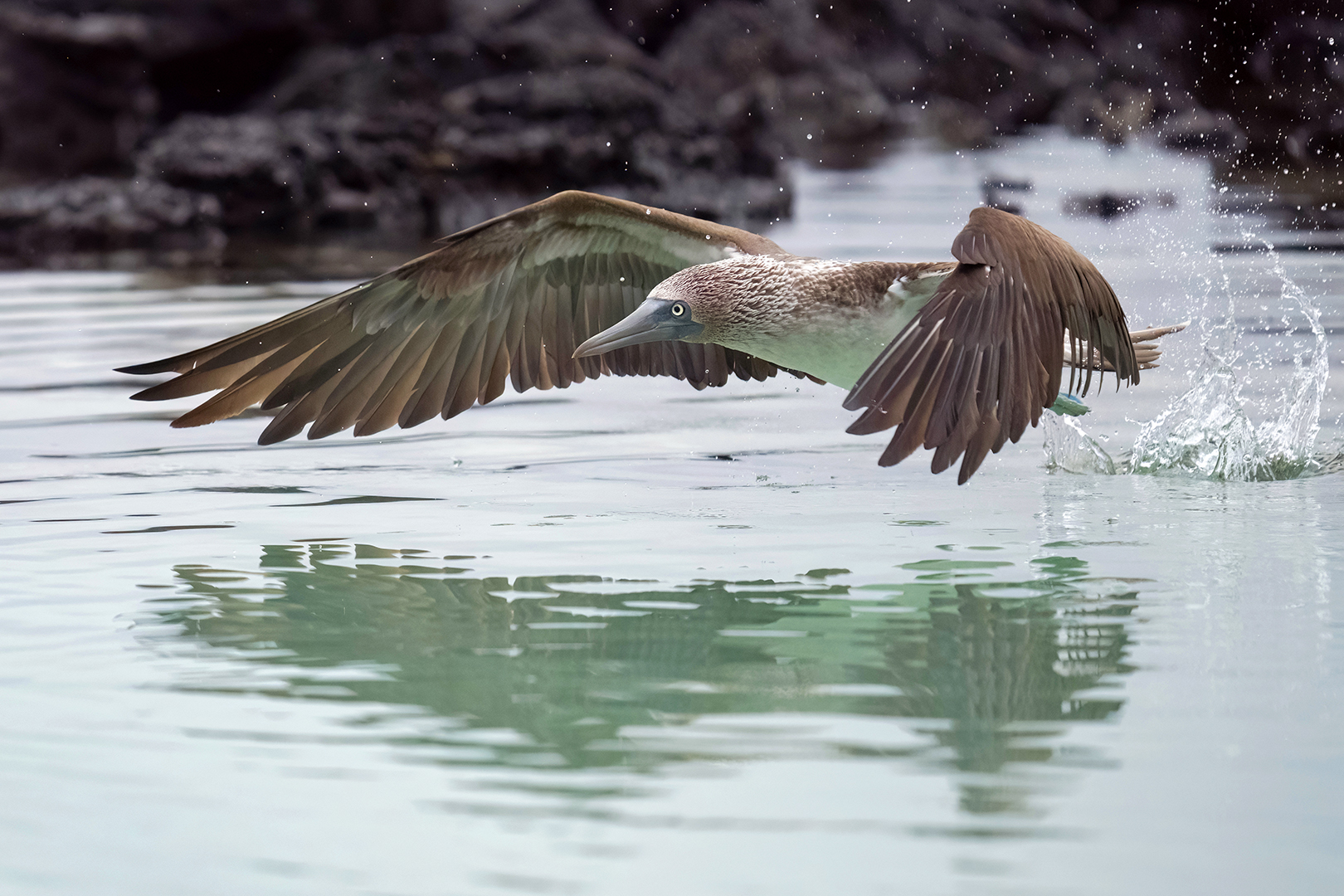
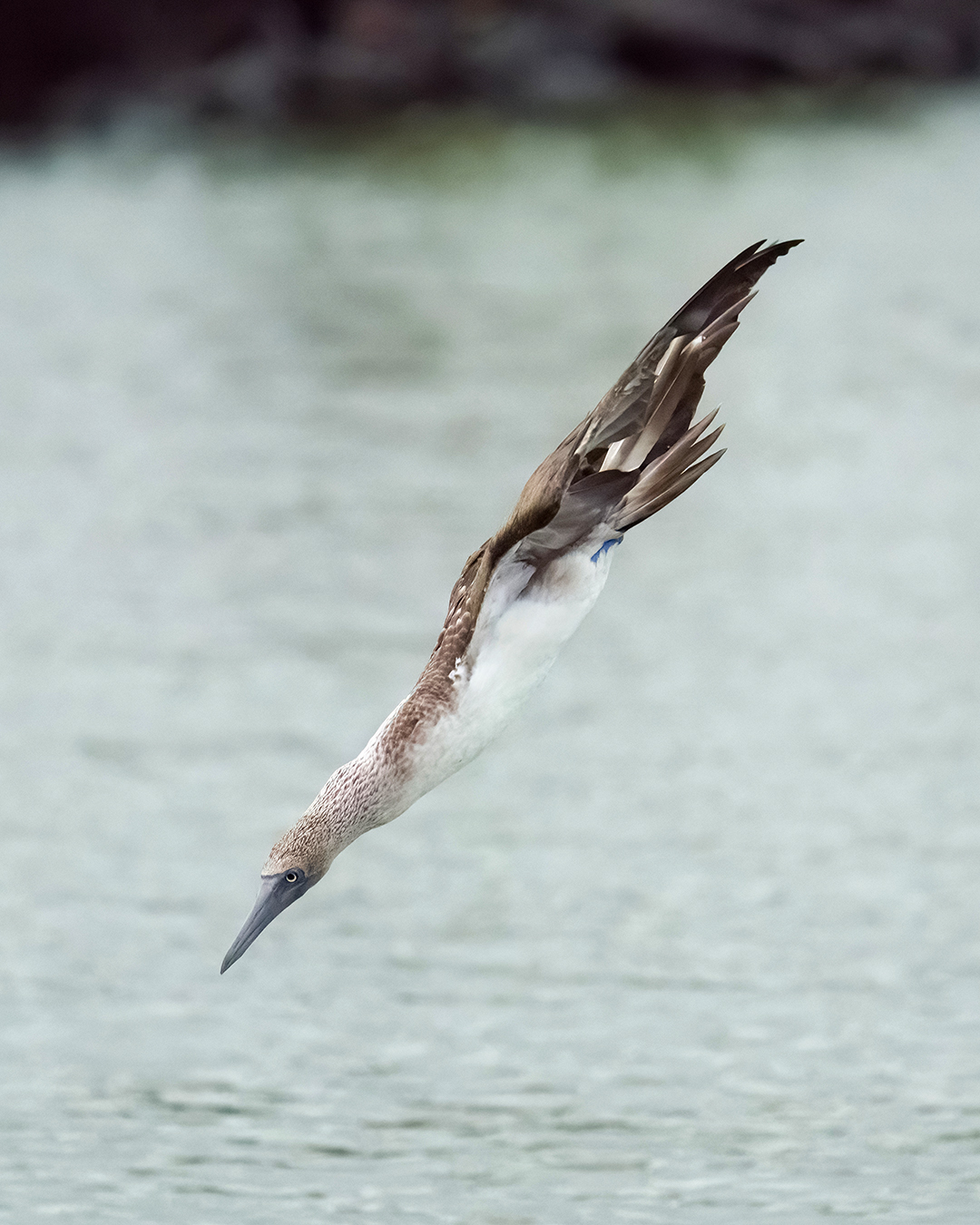
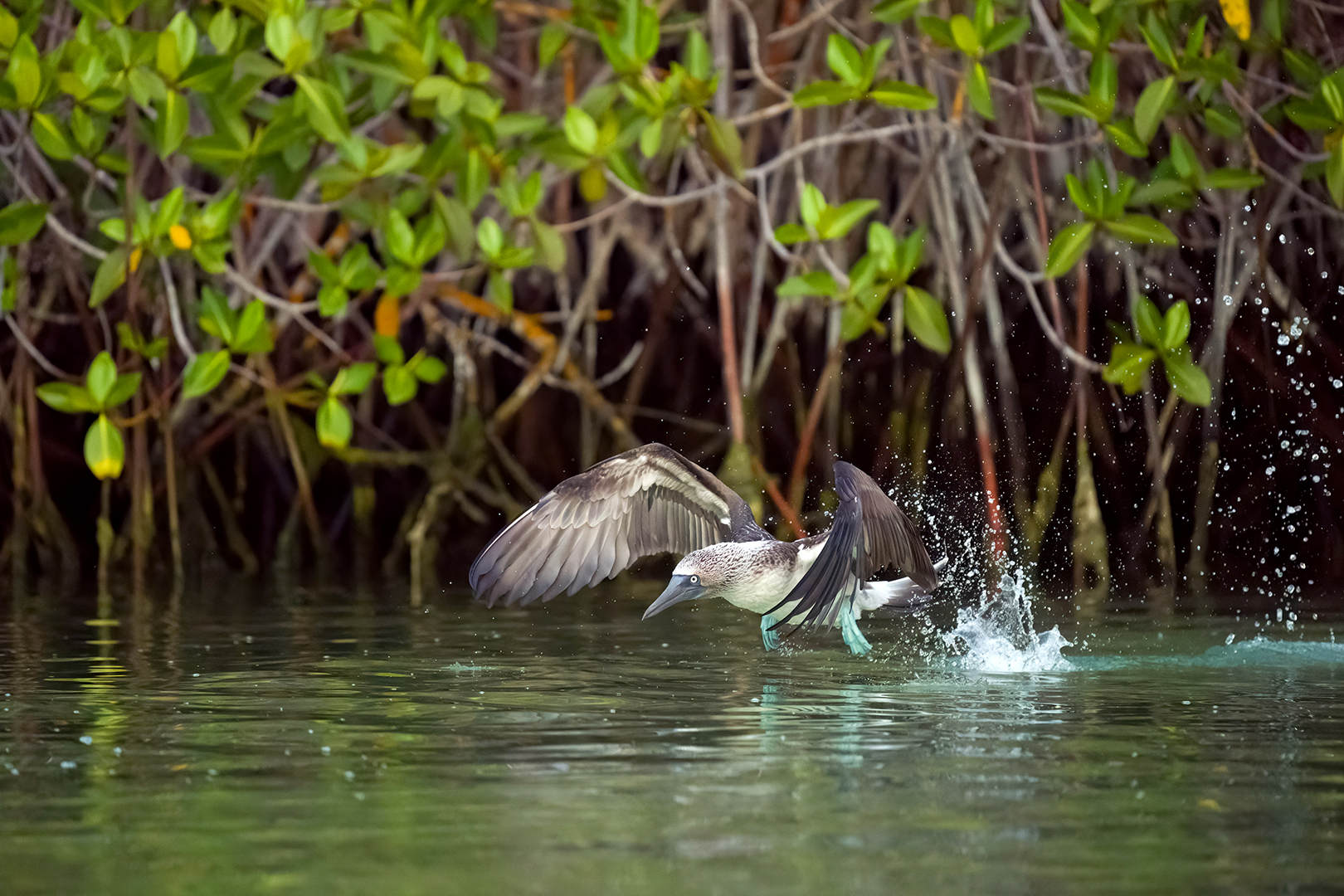
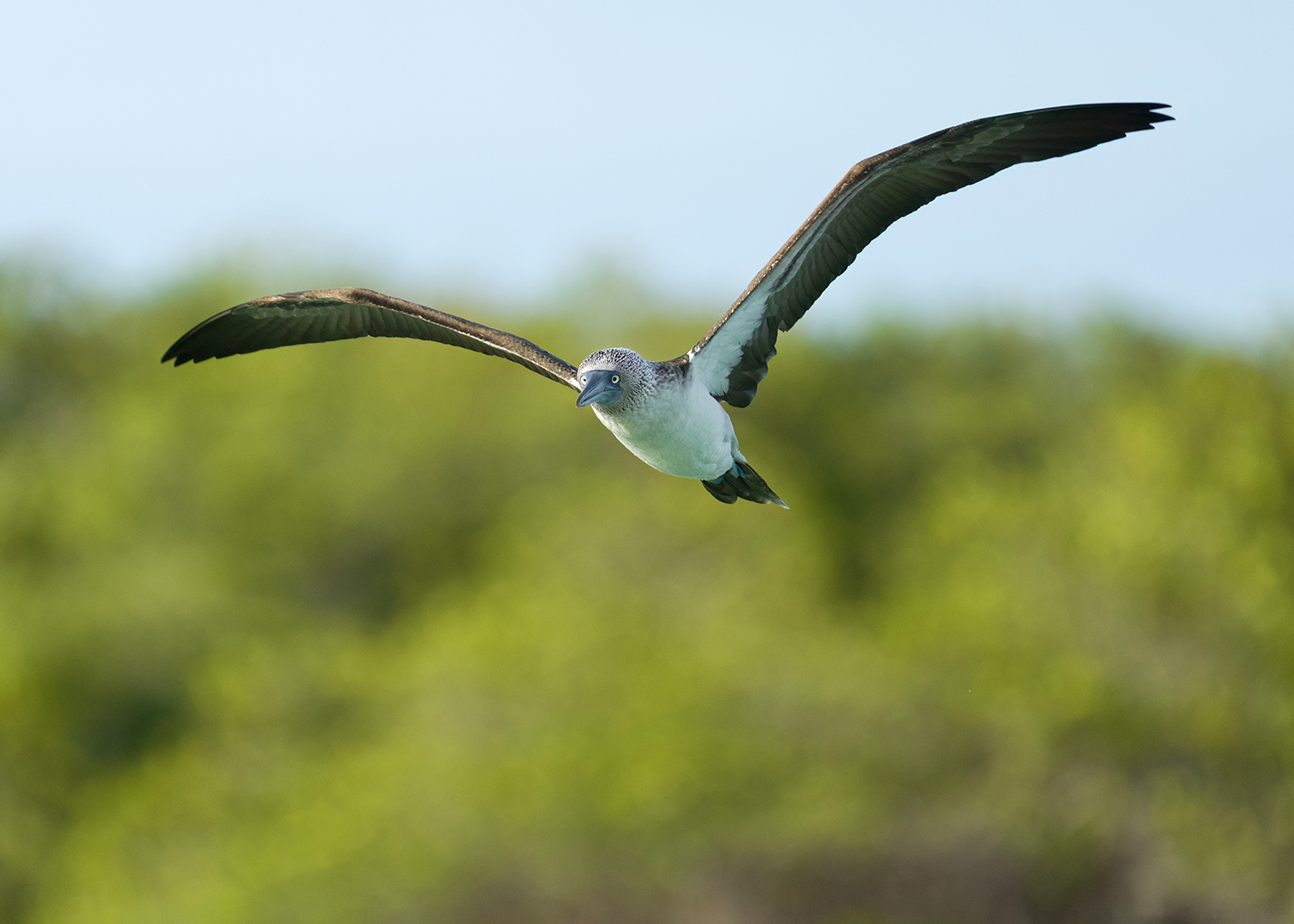
The airbnb I chose was right next to the trail to Tortuga Bay, a beautiful white-sand beach southwest of Puerto Ayora. Back during my visit in 2023, I walked to Tortuga Bay every morning and fell in love with it. There are actually two different beaches there – Playa Brava and Playa Mansa. Playa Brava is a big sandy strip with strong currents, and Playa Mansa is a short crescent of beach bordering a tranquil lagoon. Along those two beaches you can find most of the iconic wildlife that people associate with the Galapagos – blue-footed boobies, marine iguanas, Sally Lightfoot crabs, turtles, sharks, rays, and much more.
By mid-morning Tortuga Bay becomes oppressively hot and crowded, but if you arrive early enough – from sunrise until about 9am – it’s magical. My routine for the week was to walk there in the pre-dawn dark, spend a few hours watching and photographing the wildlife, and then take off when hordes of other people began showing up. And even though I’d already been there a lot, I ended up stumbling across something I’d never seen before almost every morning. Here’s how it went:
Saturday, January 31. The trail to Tortuga Bay is part of the experience – a 2.5km path through dense vegetation, paved with tiles of rust-colored lava stone (which might as well be yellow bricks leading to my Galapagos Oz). On my last visit I was surprised one morning by the sudden appearance of a barn owl while walking along the trail, a favorite memory from the trip. That taught me to keep my eyes on the trees, although I doubted I’d be so lucky a second time.
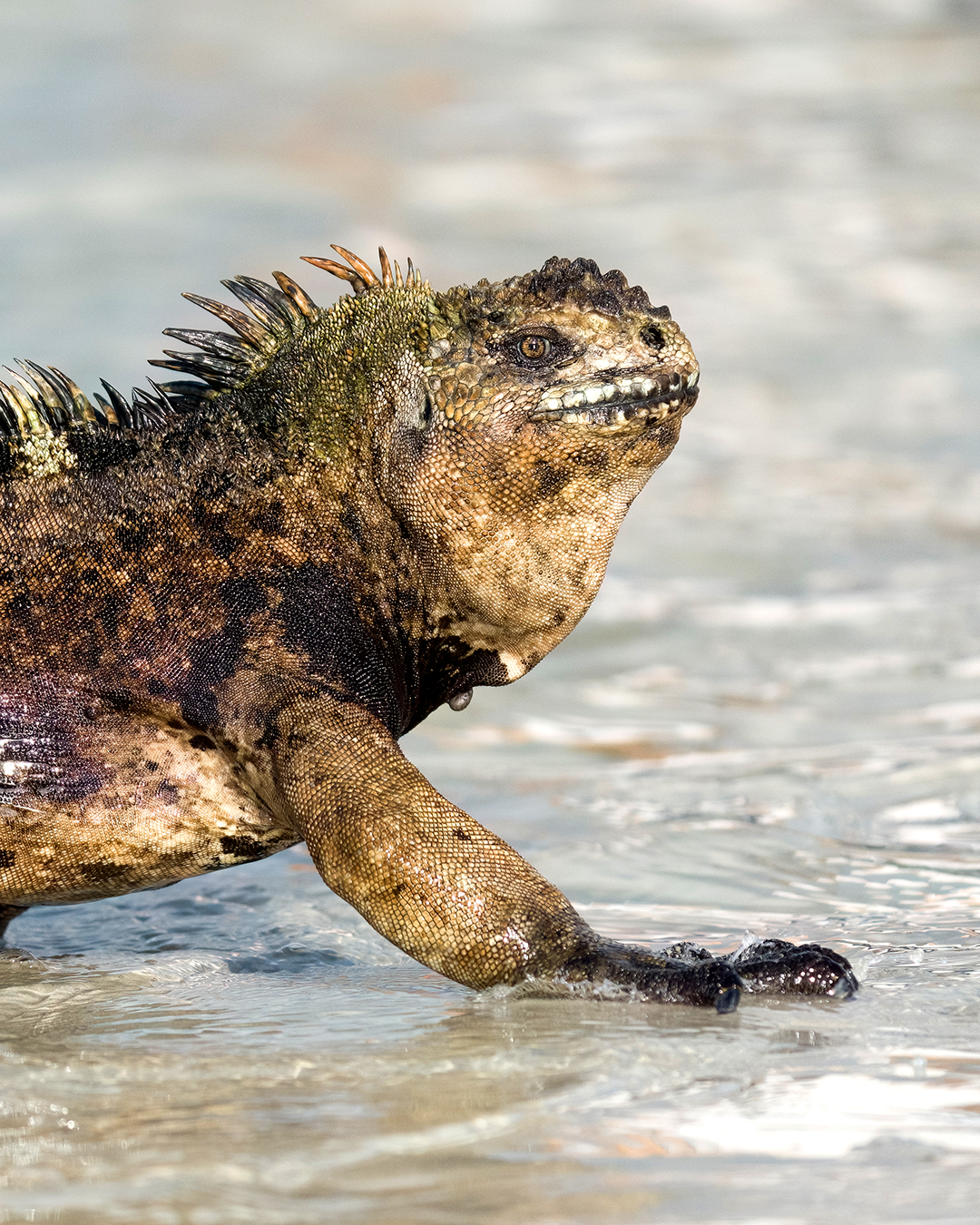
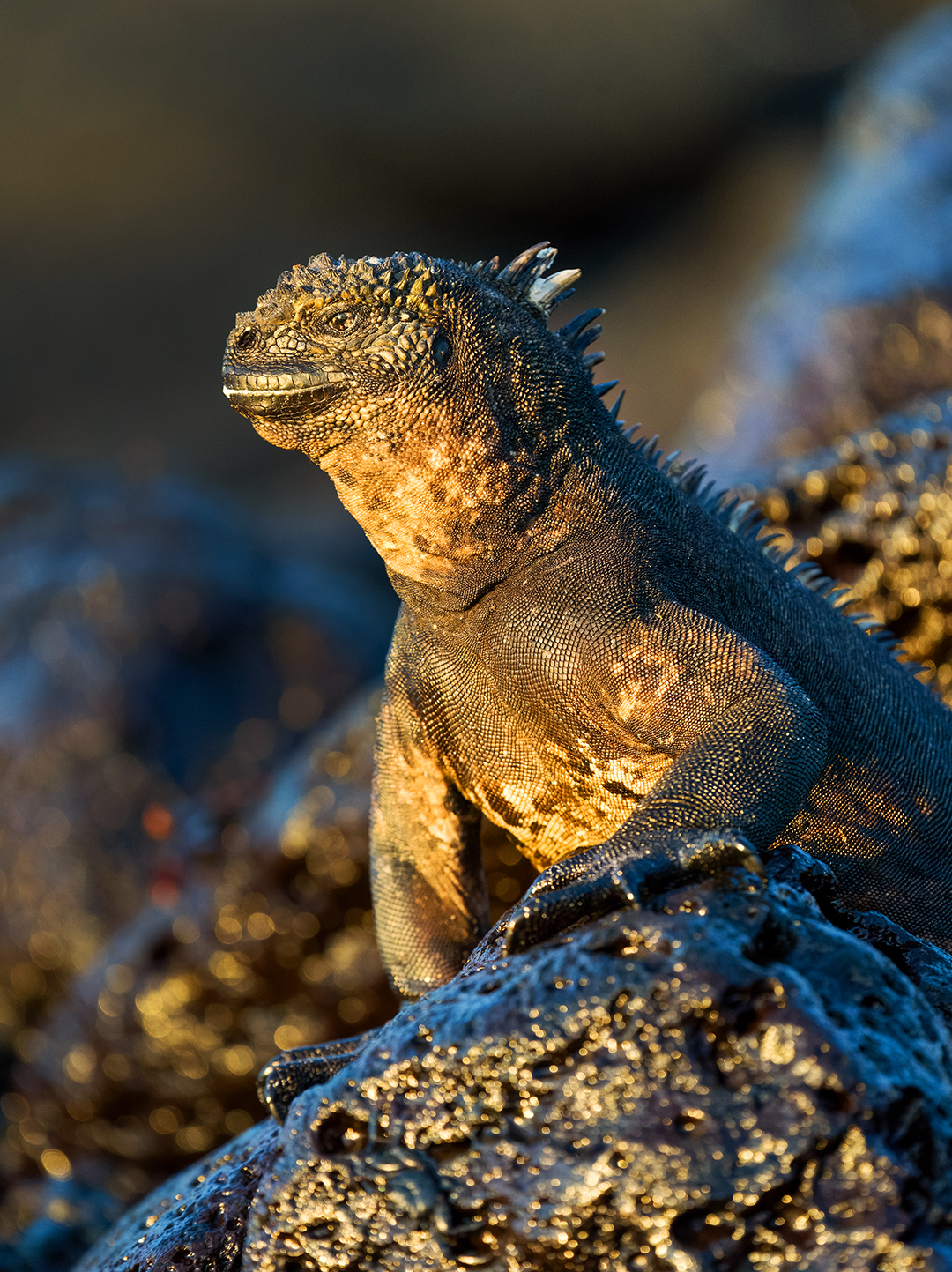
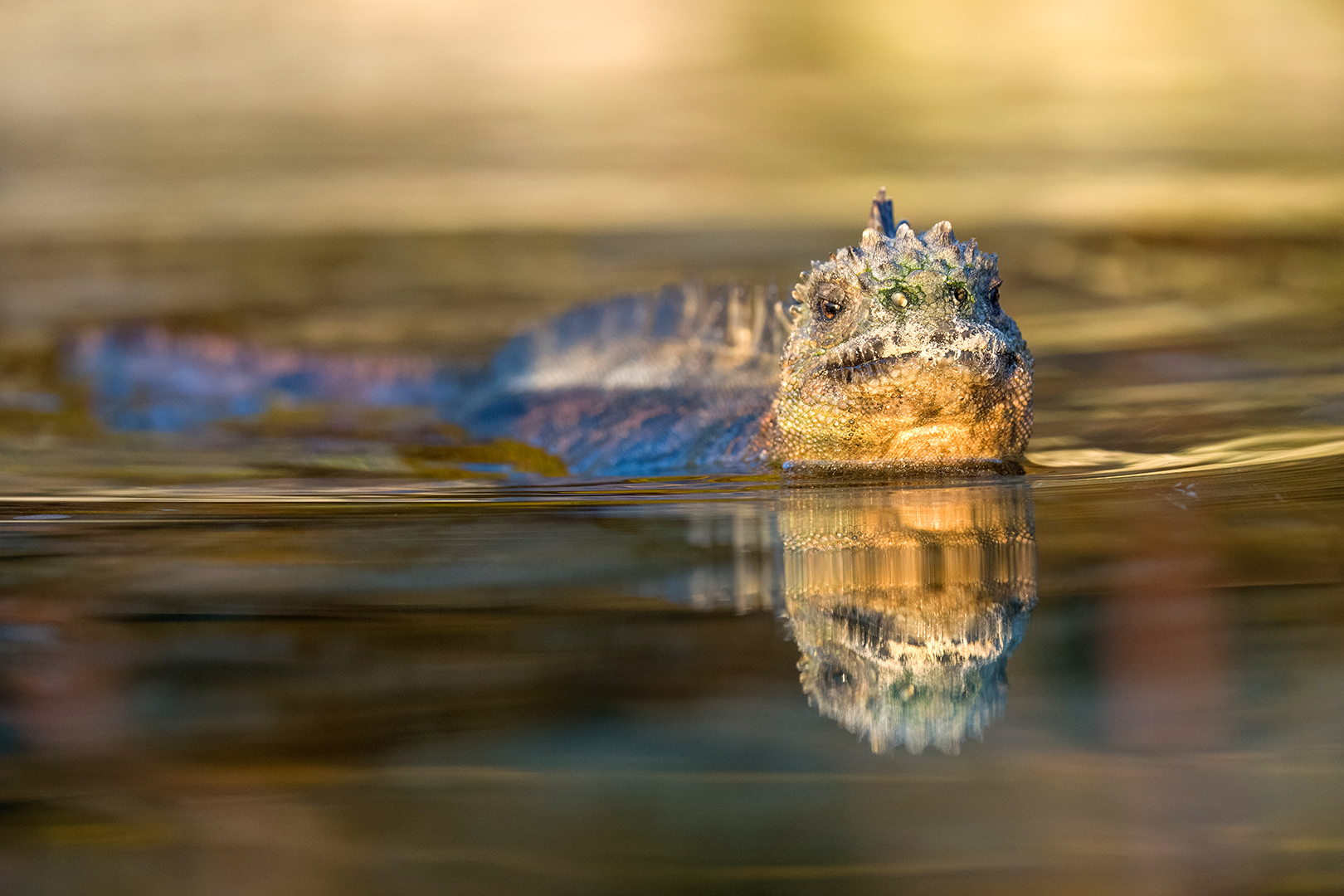
I arrived at Playa Brava just as the sun peeked up from the horizon. It was every bit as beautiful as I remembered. I took advantage of the golden sunrise light to get some shots of marine iguanas and local birds.
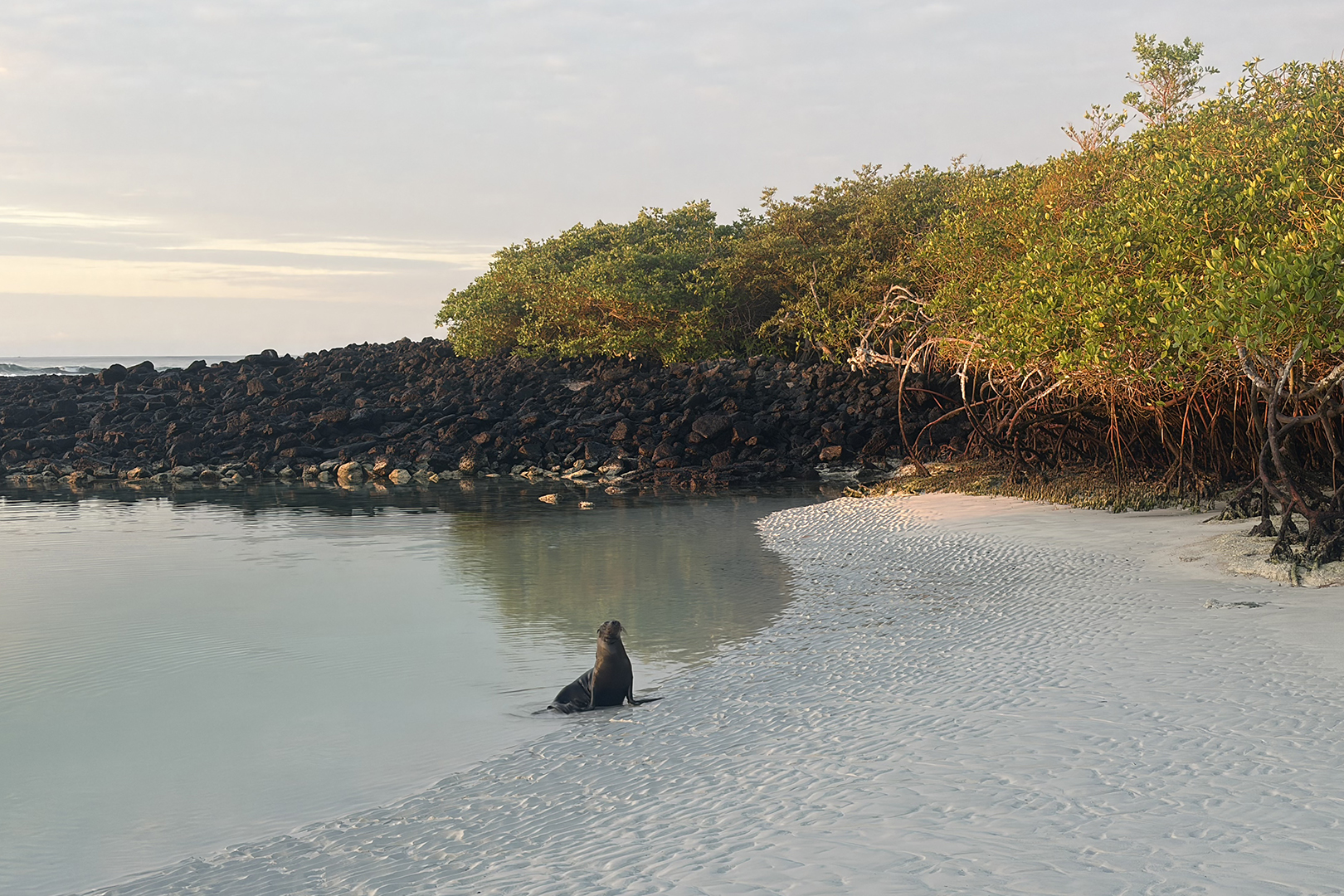
Sunday, February 1. A nearly-full moon lit the trail before sunrise. Arriving at the big tide pool at the end of Playa Brava, I was happy to find a young sea lion floating in the water, characteristically (for the Galapagos) unbothered by the proximity of a human.
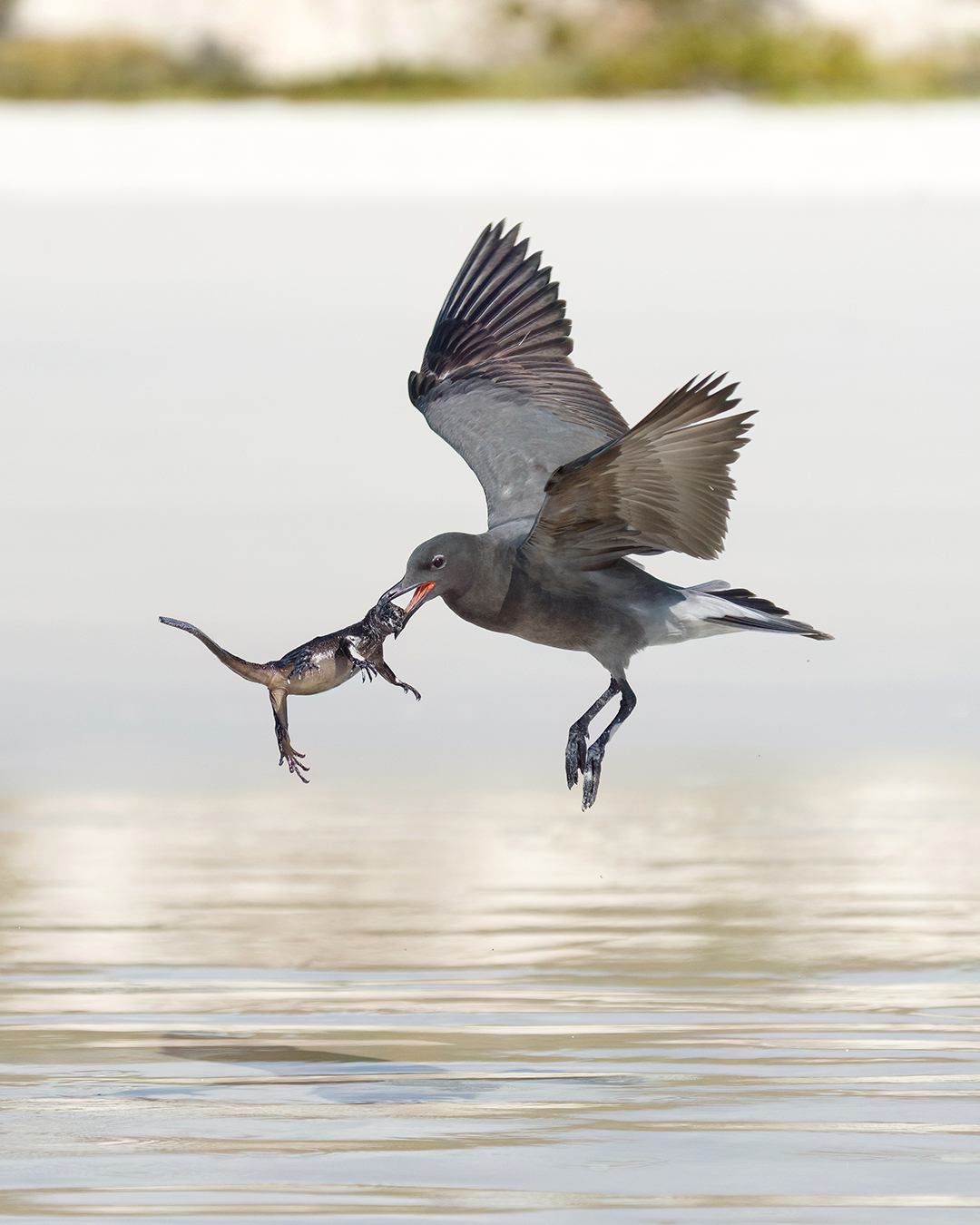
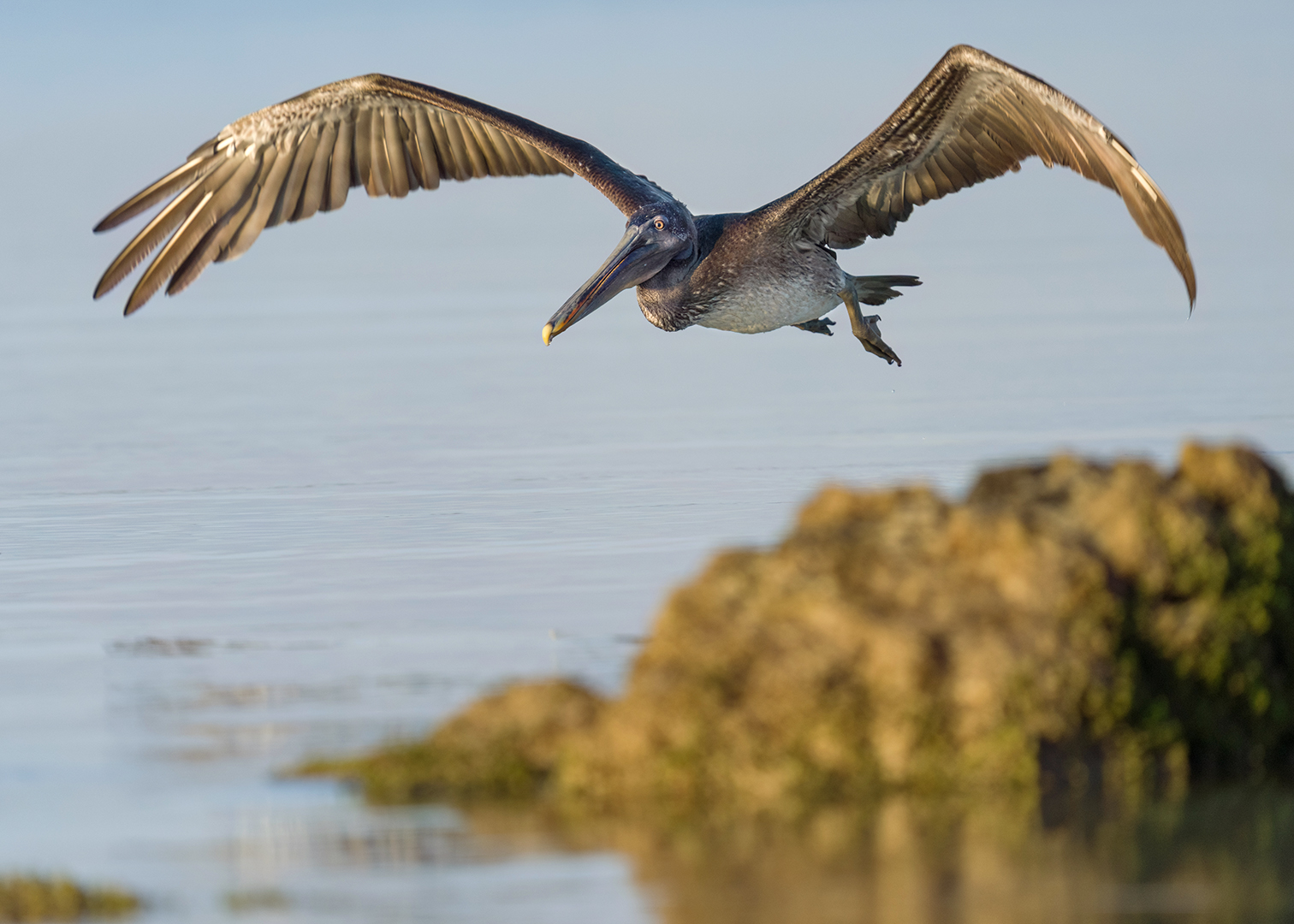
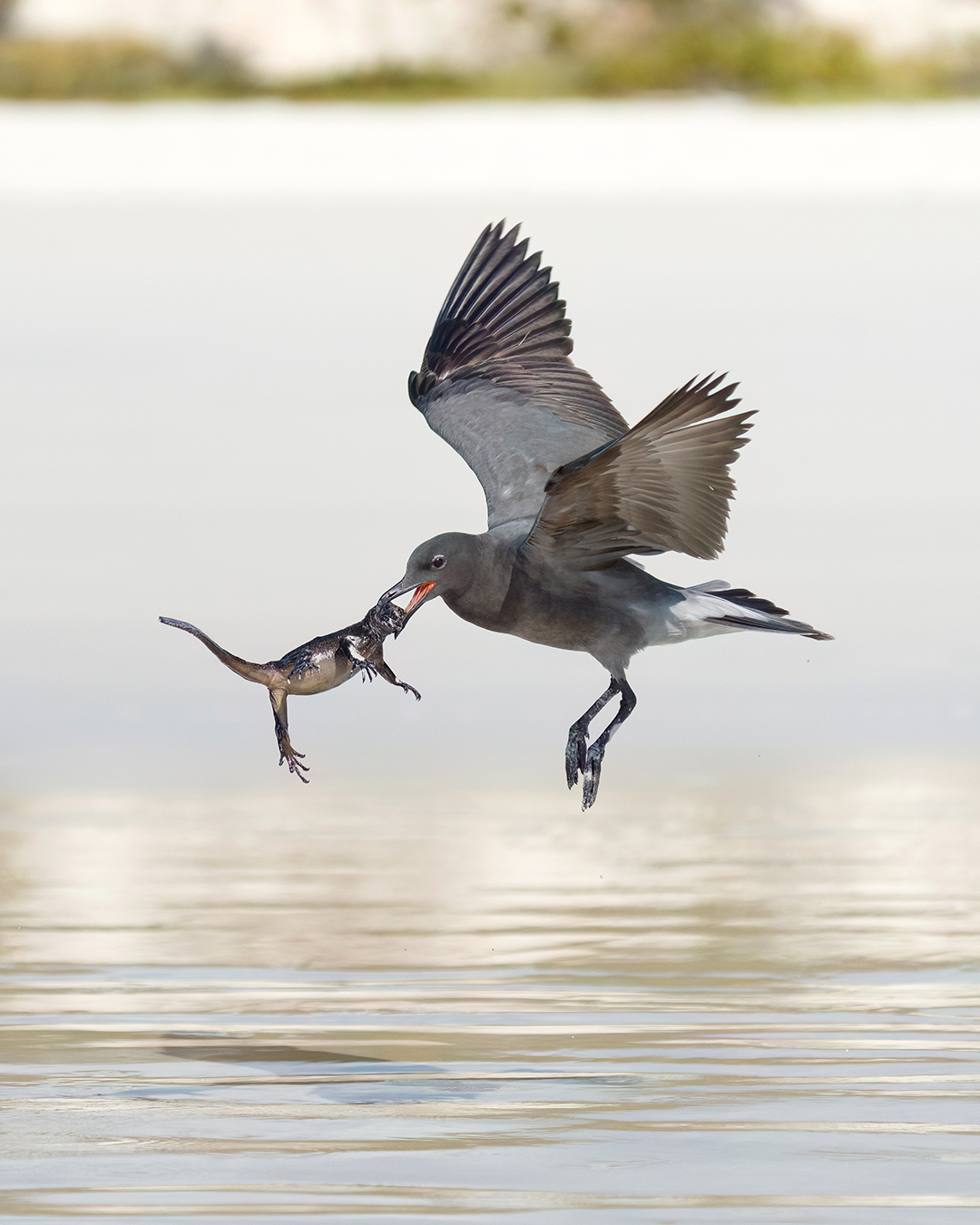
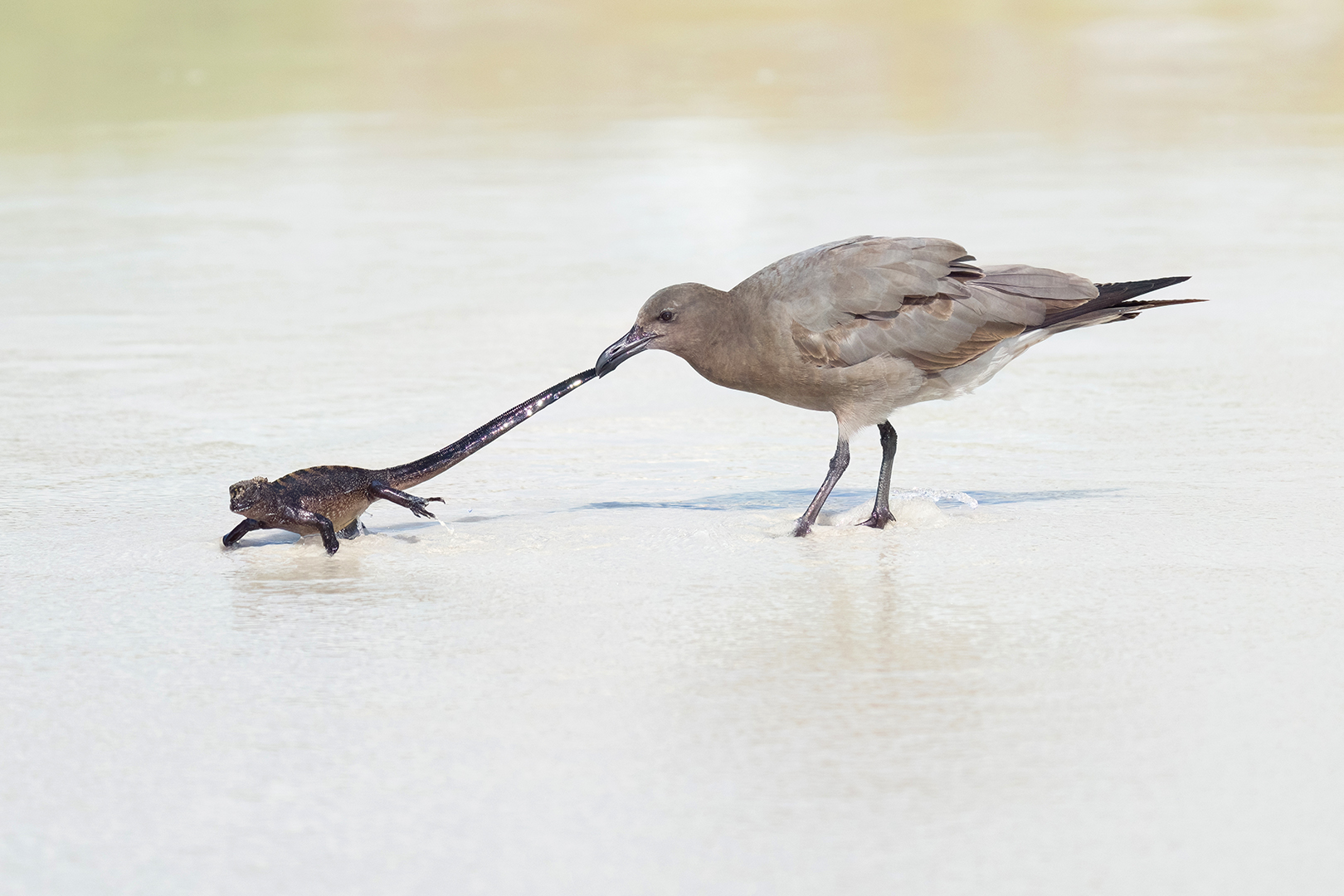
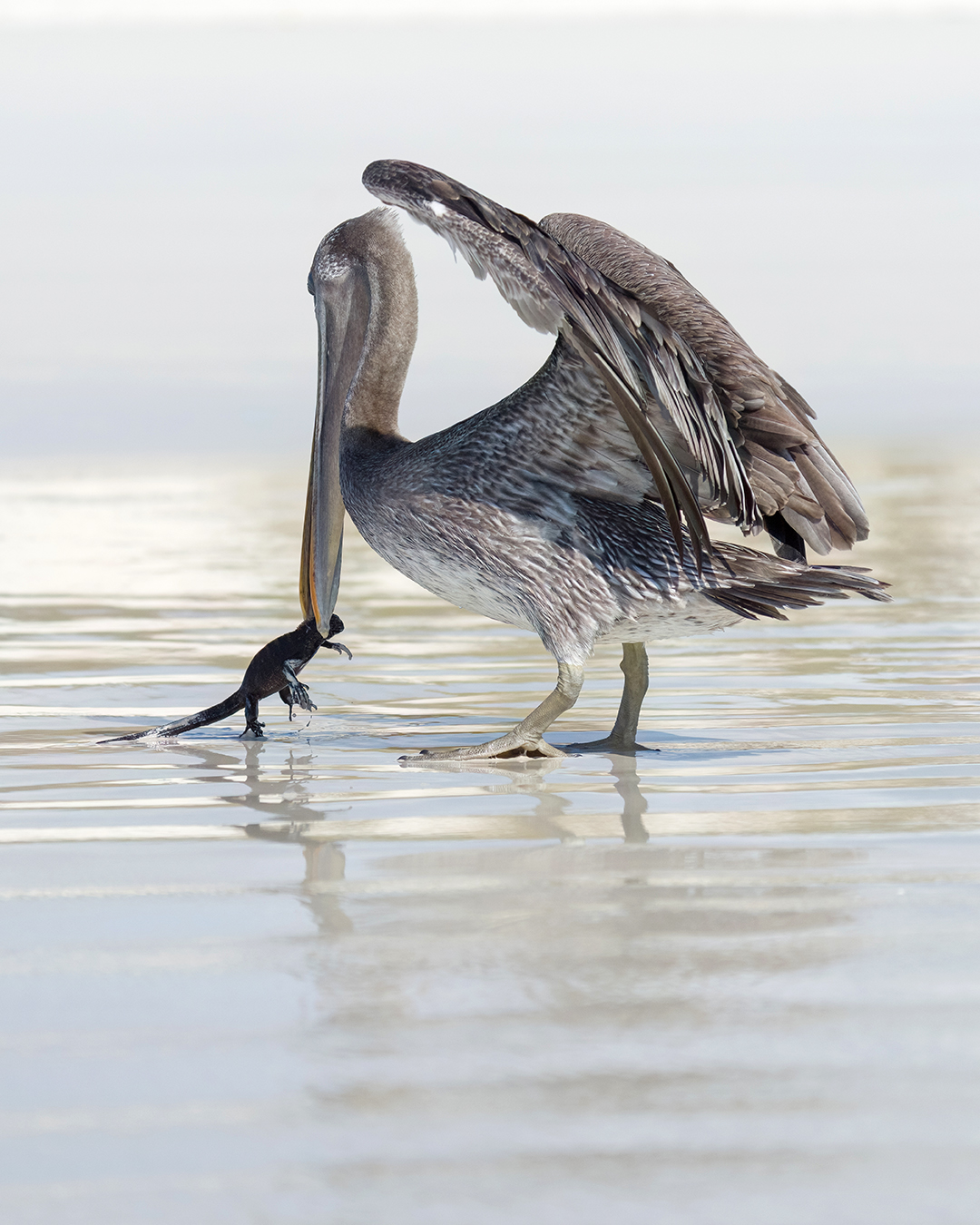
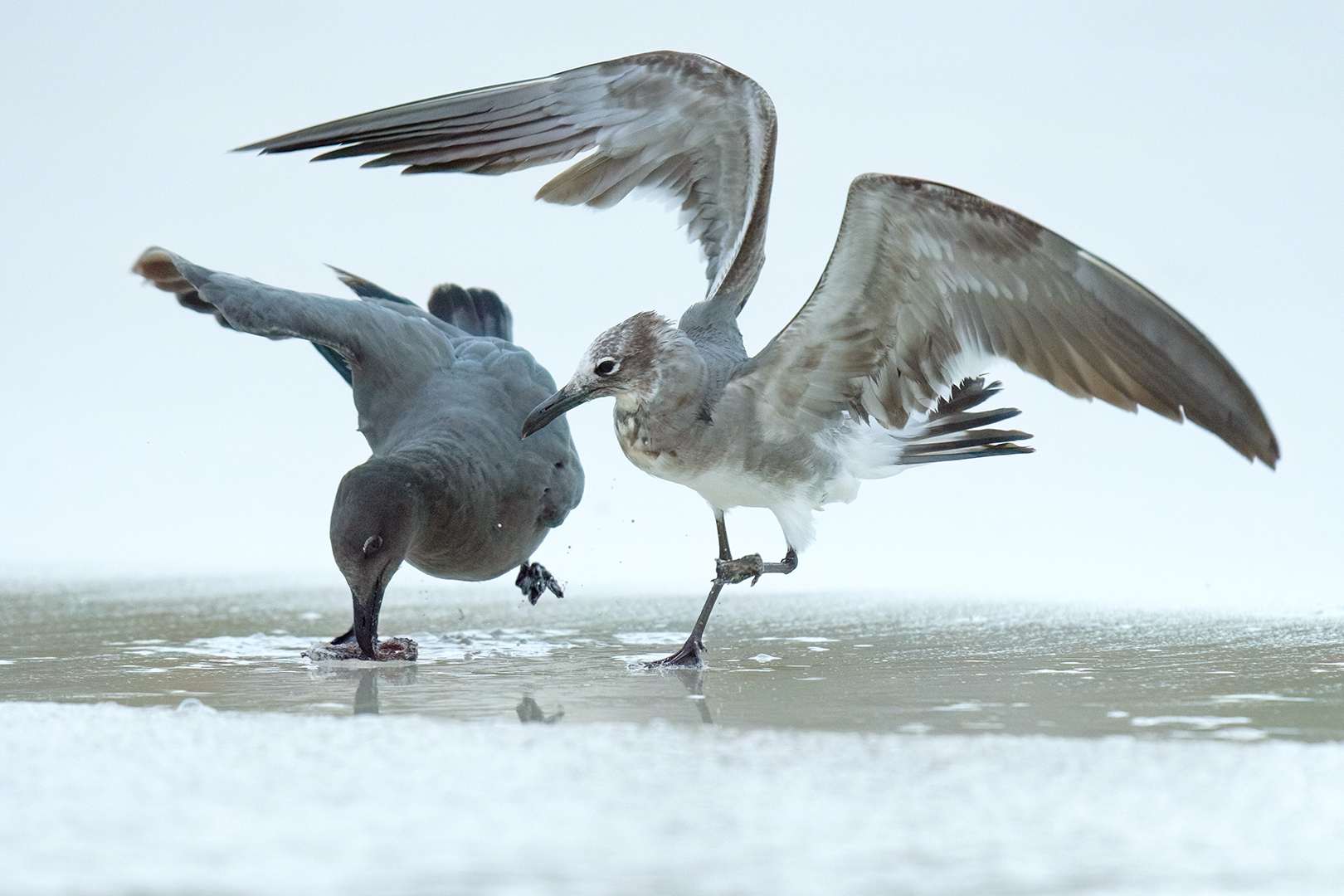
Later I noticed a lava gull focusing on a small dark shape in the surf that turned out to be a young marine iguana. For over an hour the gull relentlessly tormented the poor iguana, pecking it, dragging it by the tail, and even biting its head and taking flight. The iguana seemed to be too big for the gull to eat, so I’m not sure what it was hoping to accomplish. At one point a pelican became interested, scared the gull away, and took a turn picking up the iguana. Soon after that an Ecuadorian grandmother saw the iguana being harassed and decided to pick it up herself (to protect it, I assume, but still a clear violation of park rules). So over a span of only about 30 minutes that unfortunate iguana was manhandled by a gull, a pelican, and an old lady. Not a fun morning.
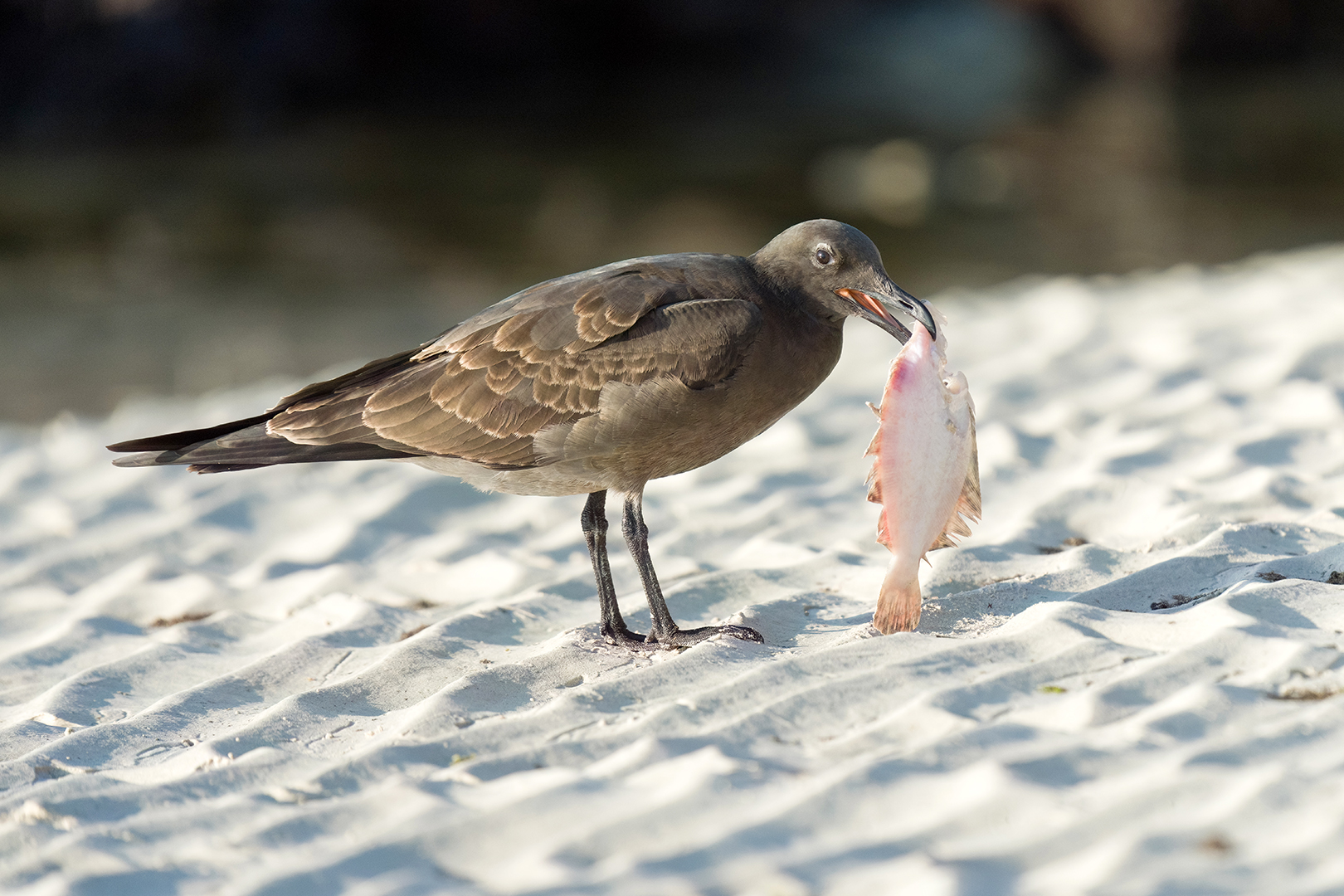
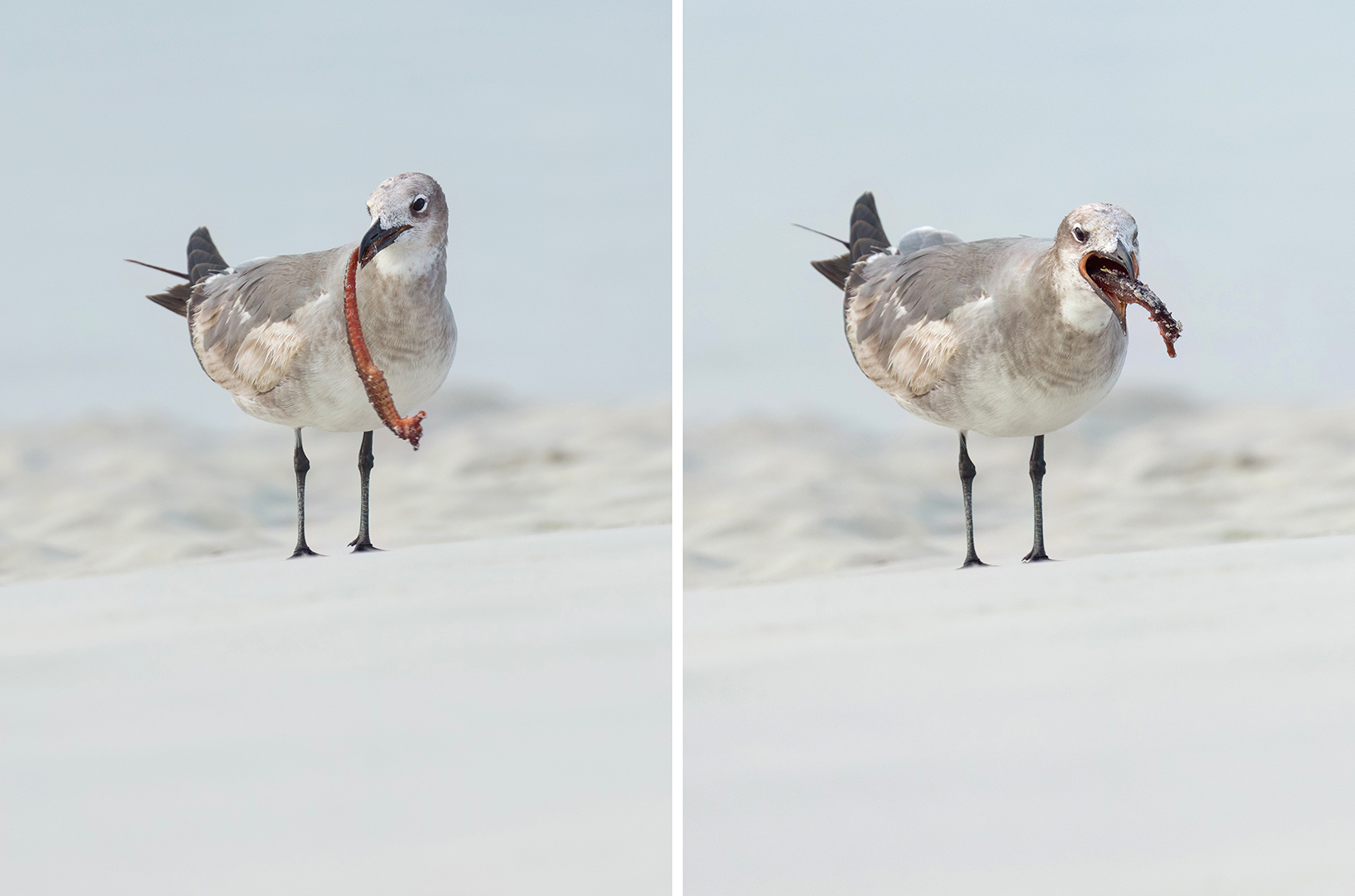
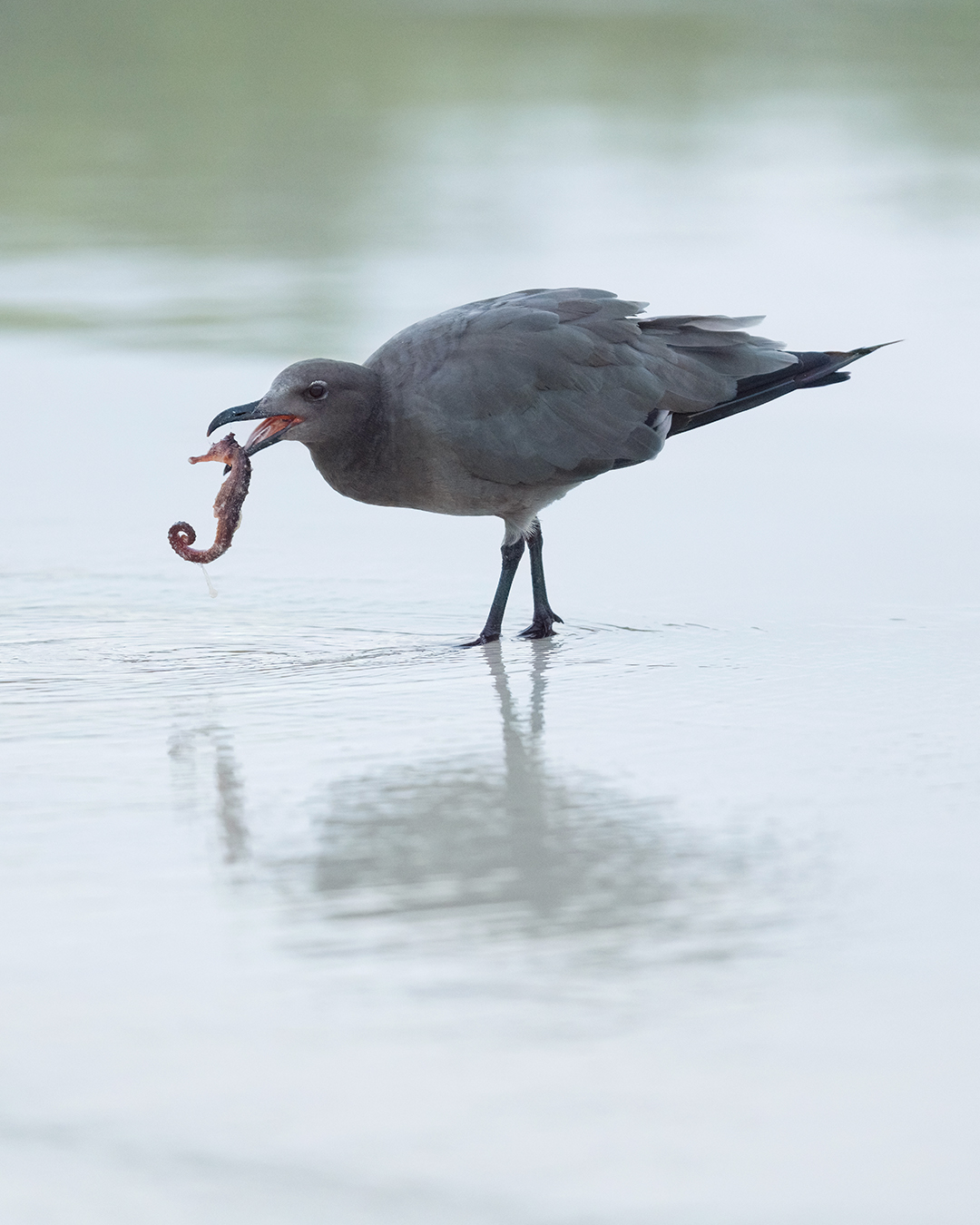
Monday, February 2. The tide was high on my first two mornings at Tortuga Bay, which may have put a damper on the marine life that can usually be seen in the shallow surf at Playa Mansa. This morning, however, the tide was lower and I was able to watch baby hammerhead sharks, baby reef sharks, and a stingray. Later, by the big tide pool on Playa Brava, I noticed a juvenile laughing gull (I think) eating something. I fired off a few photos of what turned out to be the gull swallowing a sea horse – another wildlife behavior I’d never seen before. What won’t gulls eat?
Tuesday, February 3. A barn owl! I’d started my walk extra early, which meant the trail was barely visible in the pre-dawn darkness. But about a third of the way to the beach I caught a glimpse of movement in a tree branch to my left – a faint silhouette, an apparition, a moon-faced ghost in the shadows. The Galapagos barn owl tilted its head and assessed me. There wasn’t enough light for a decent photo, so I took a video with my phone to capture the memory. The owl eventually relocated to an even darker perch and then flew off altogether. Seeing one again felt like a gift.
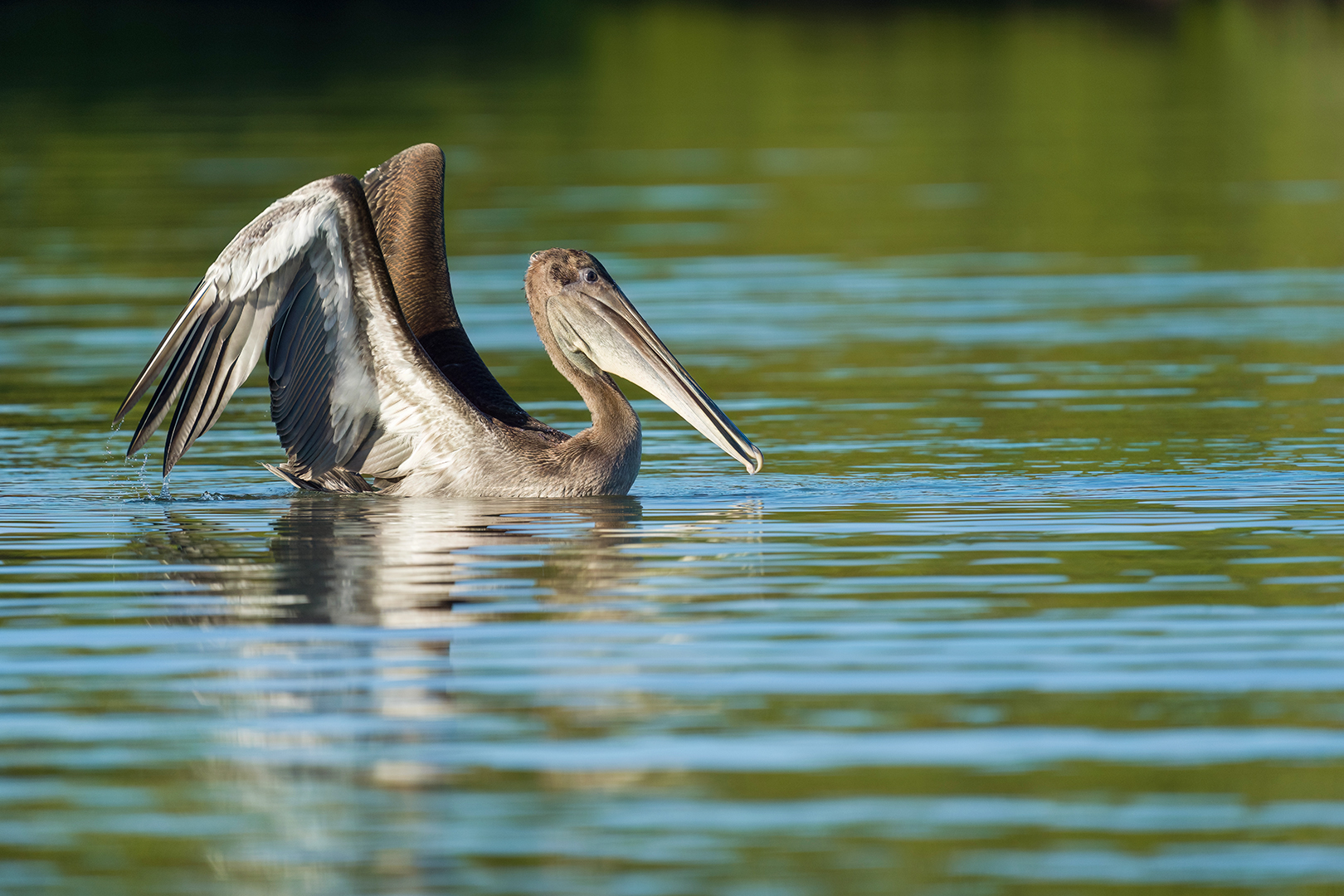
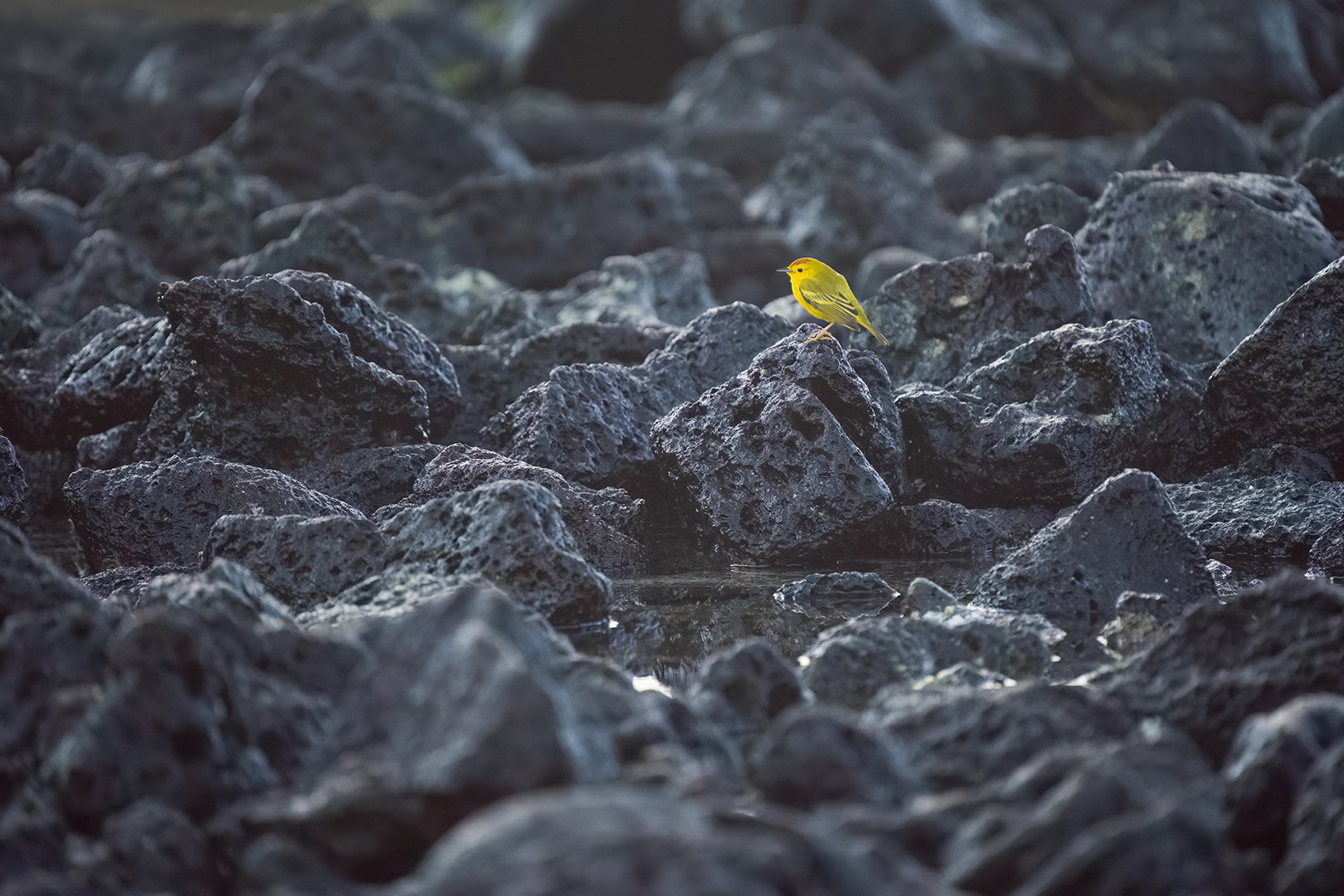
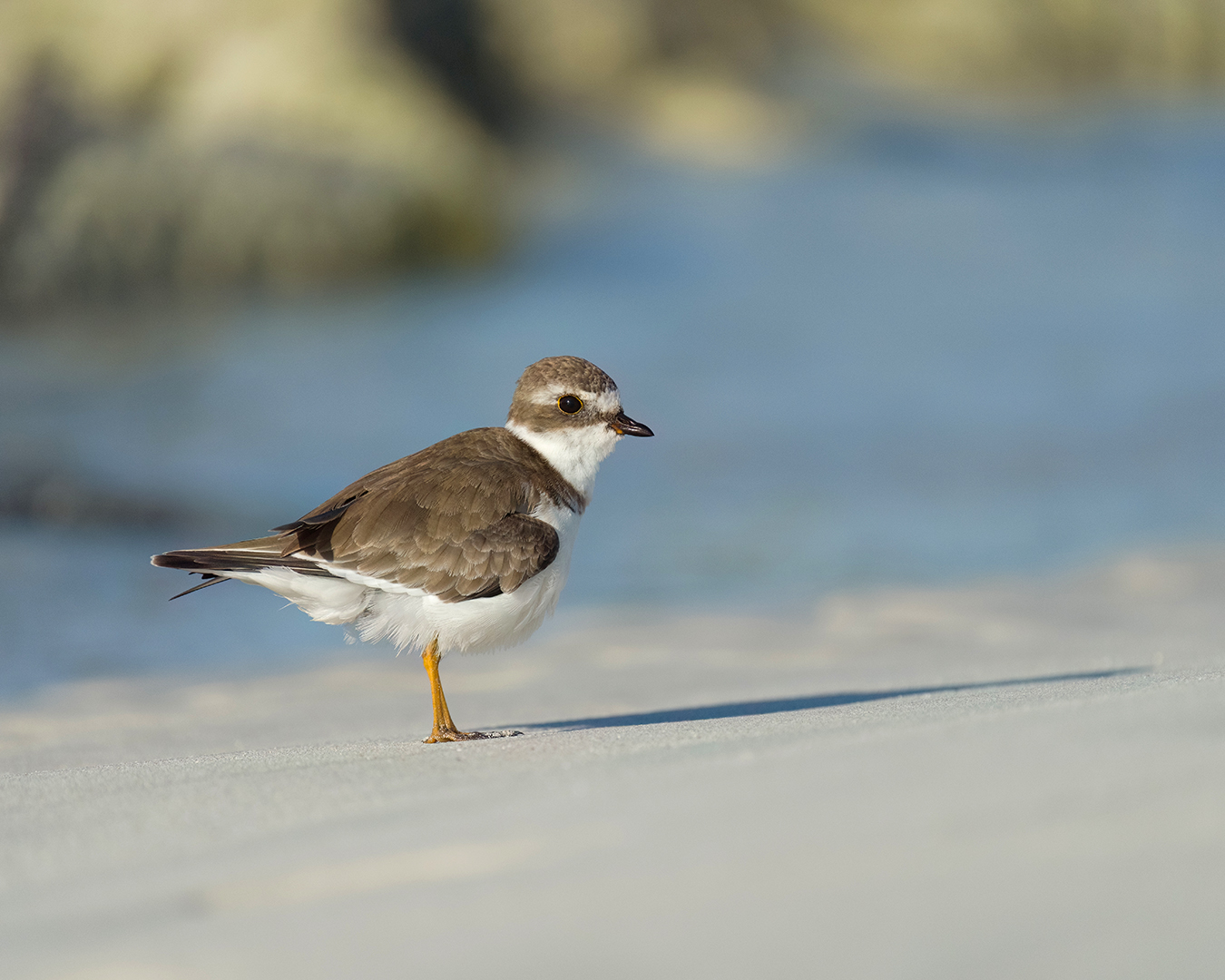
Wednesday, February 4. Almost as soon as I reached the tide pool at the end of Playa Brava, I spotted – for the second time – a juvenile laughing gull with a sea horse in its beak. This time, however, the gull didn’t eat the sea horse right away. Instead the gull flipped it around, dropped it, and paraded it around like a trophy. Eventually a lava gull decided to put an end to all that showboating and stole the sea horse, which it also tossed around for a while before finally gulping it down.
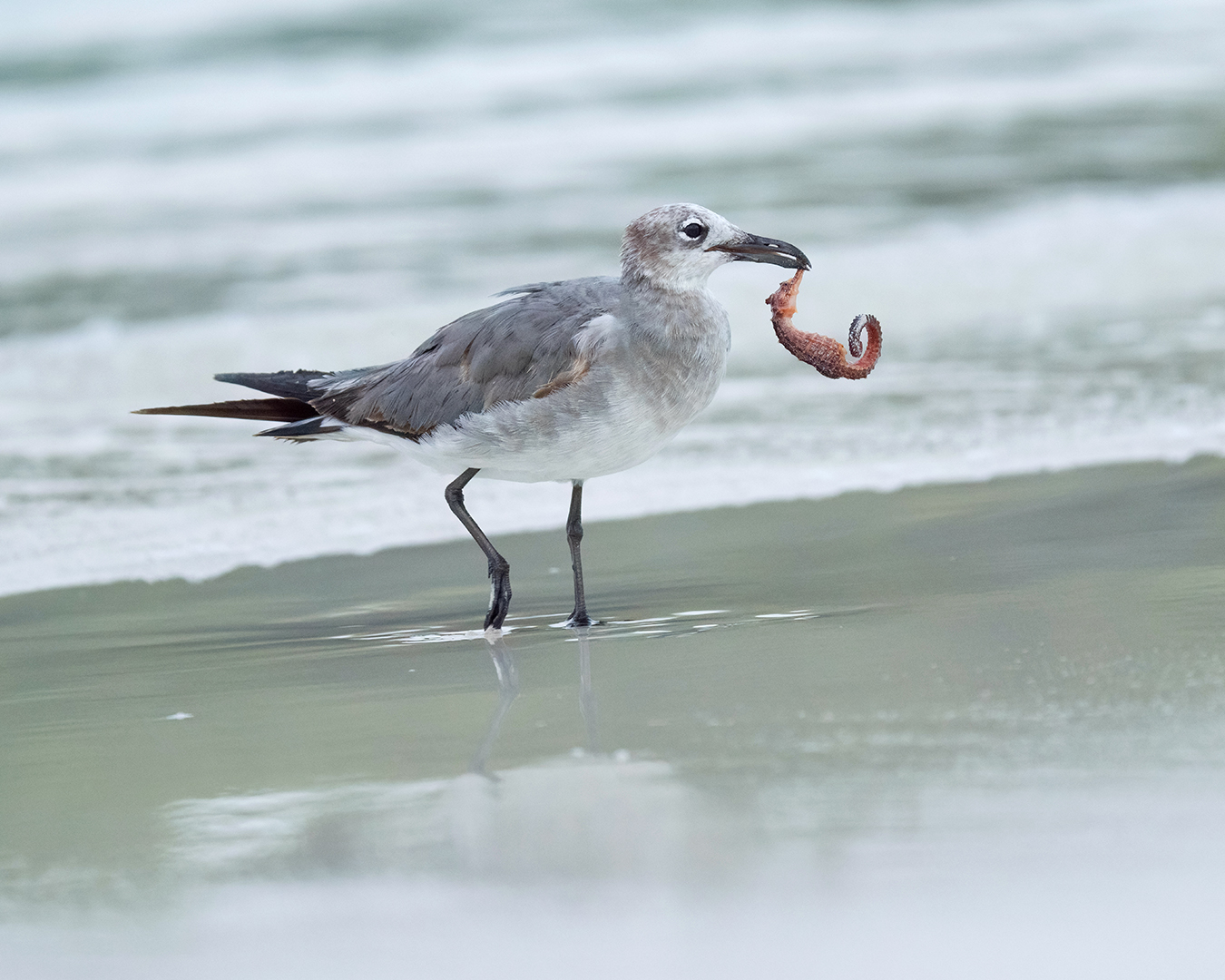
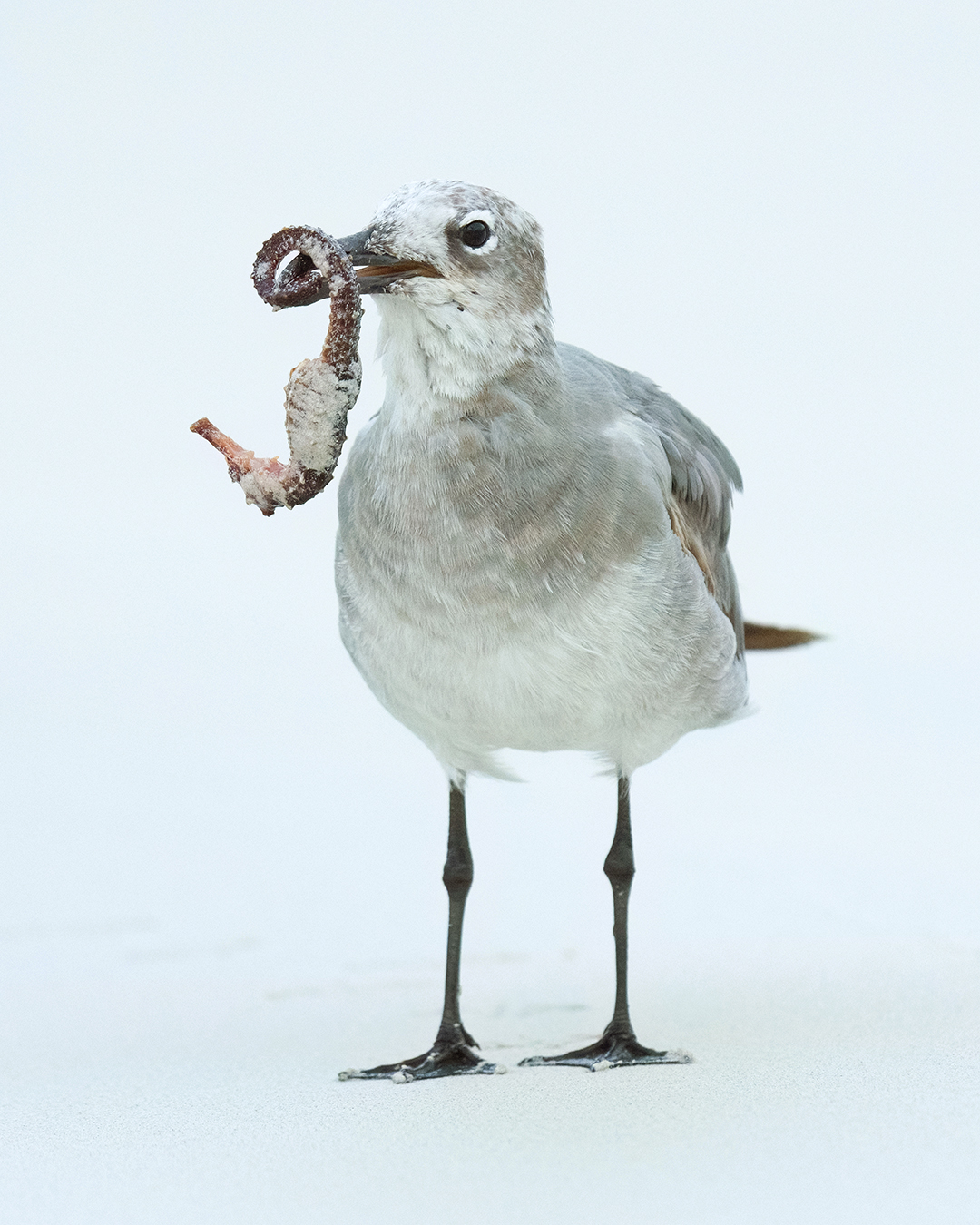
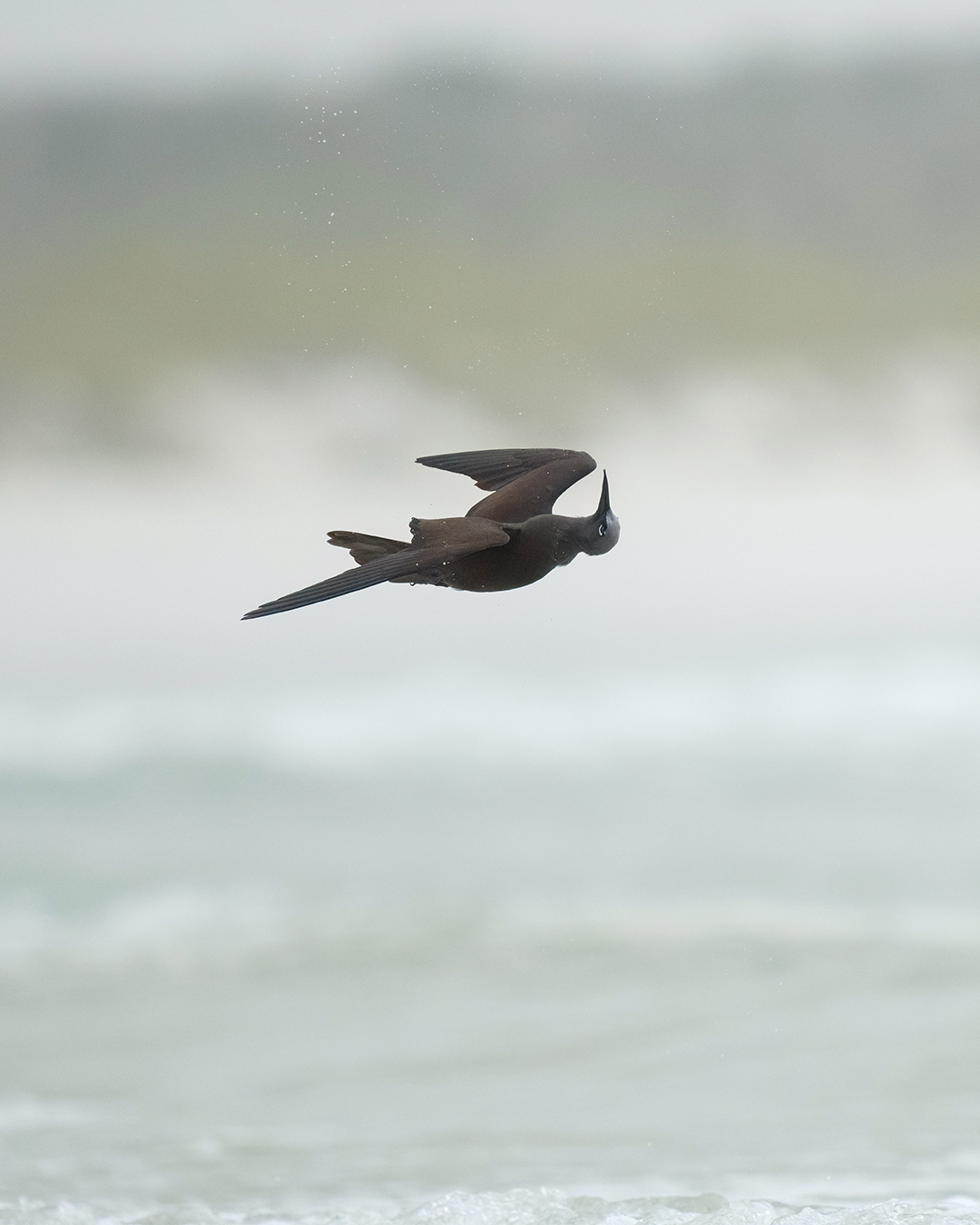
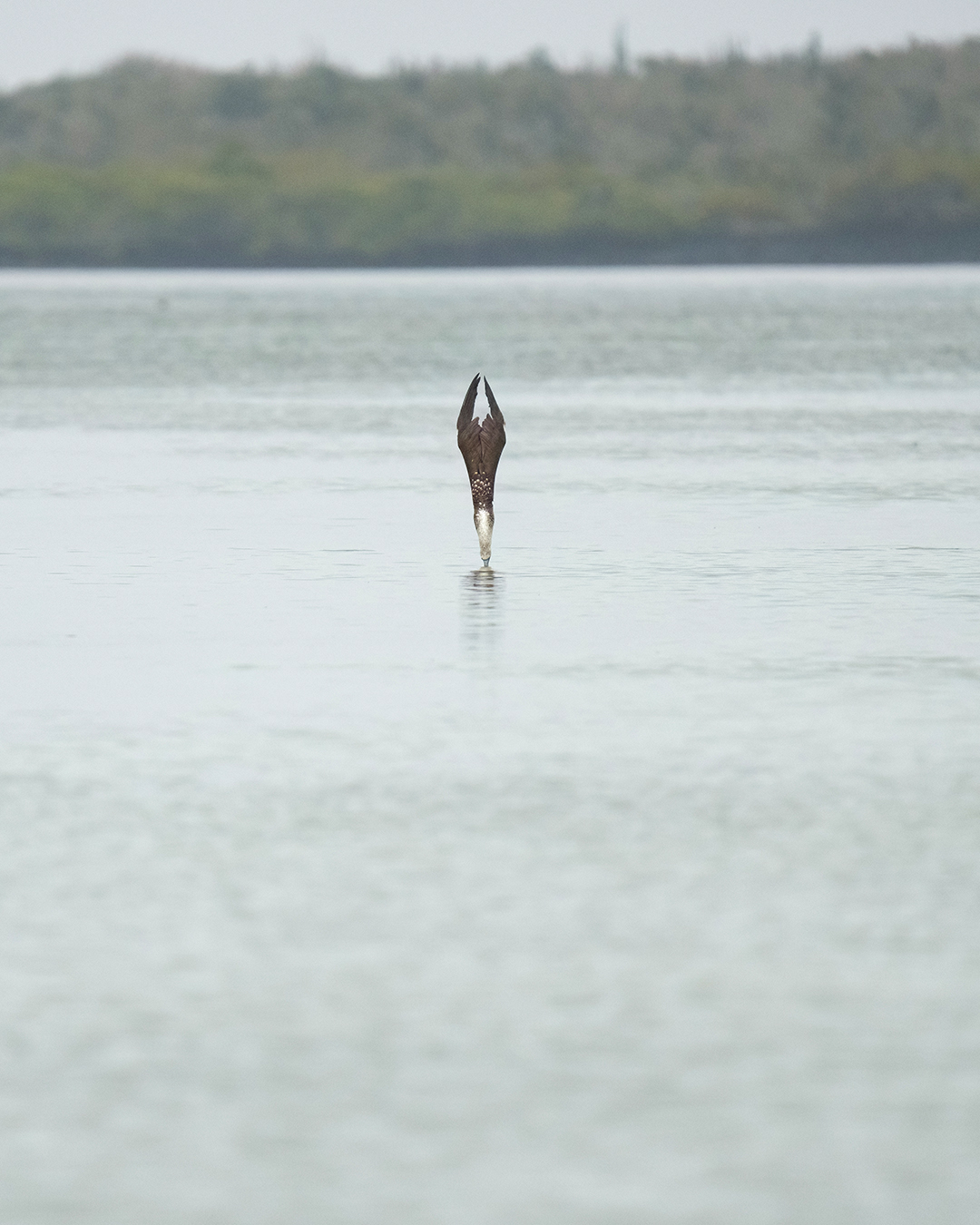
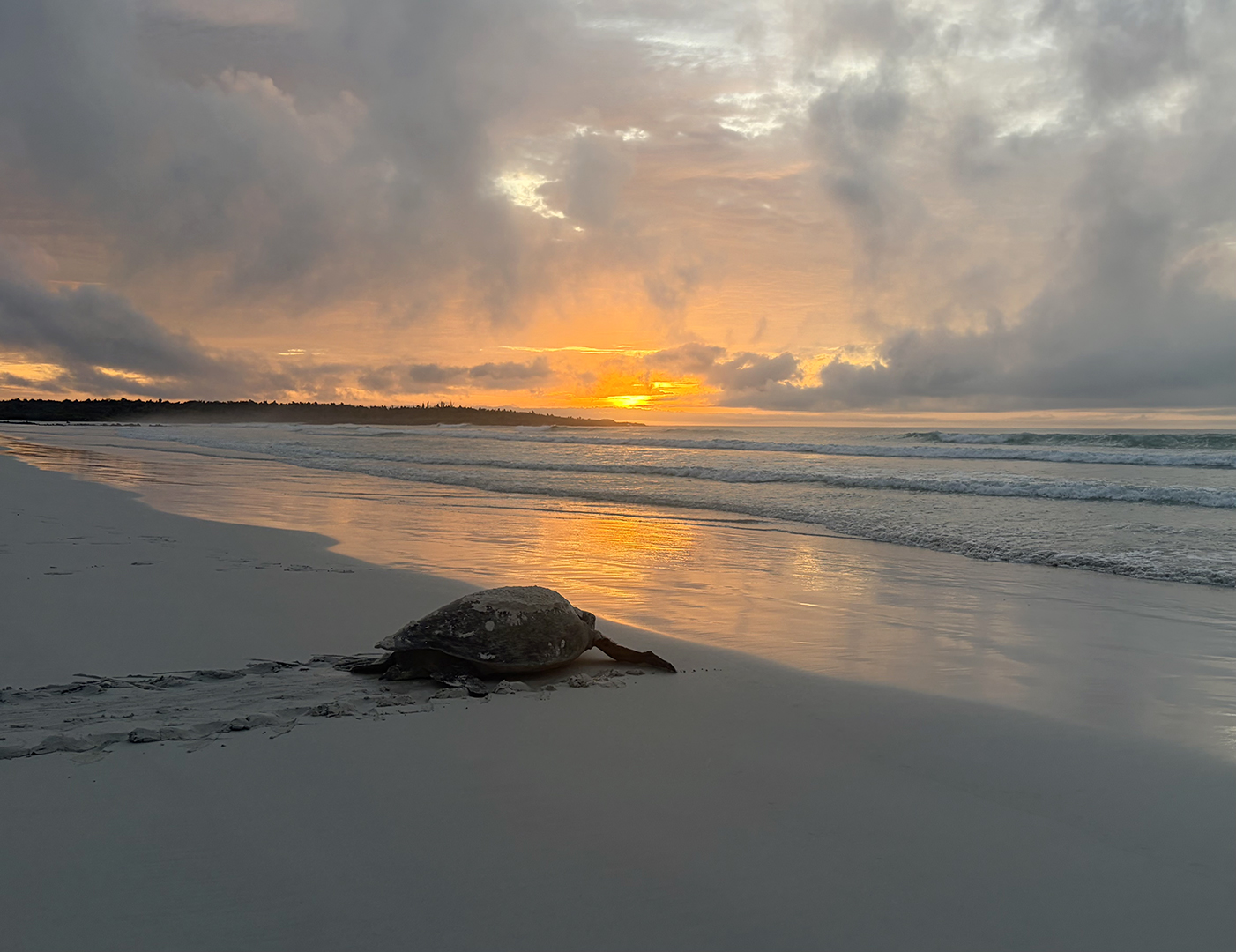
Thursday, February 5. Arriving at Playa Brava just before sunrise, I noticed something large and dark moving slowly from the beach towards the surf. A sea turtle, heading back to the ocean after laying her eggs! I rushed over (keeping a respectful distance) to capture her exhausted return to the water just as the sun emerged on the horizon.
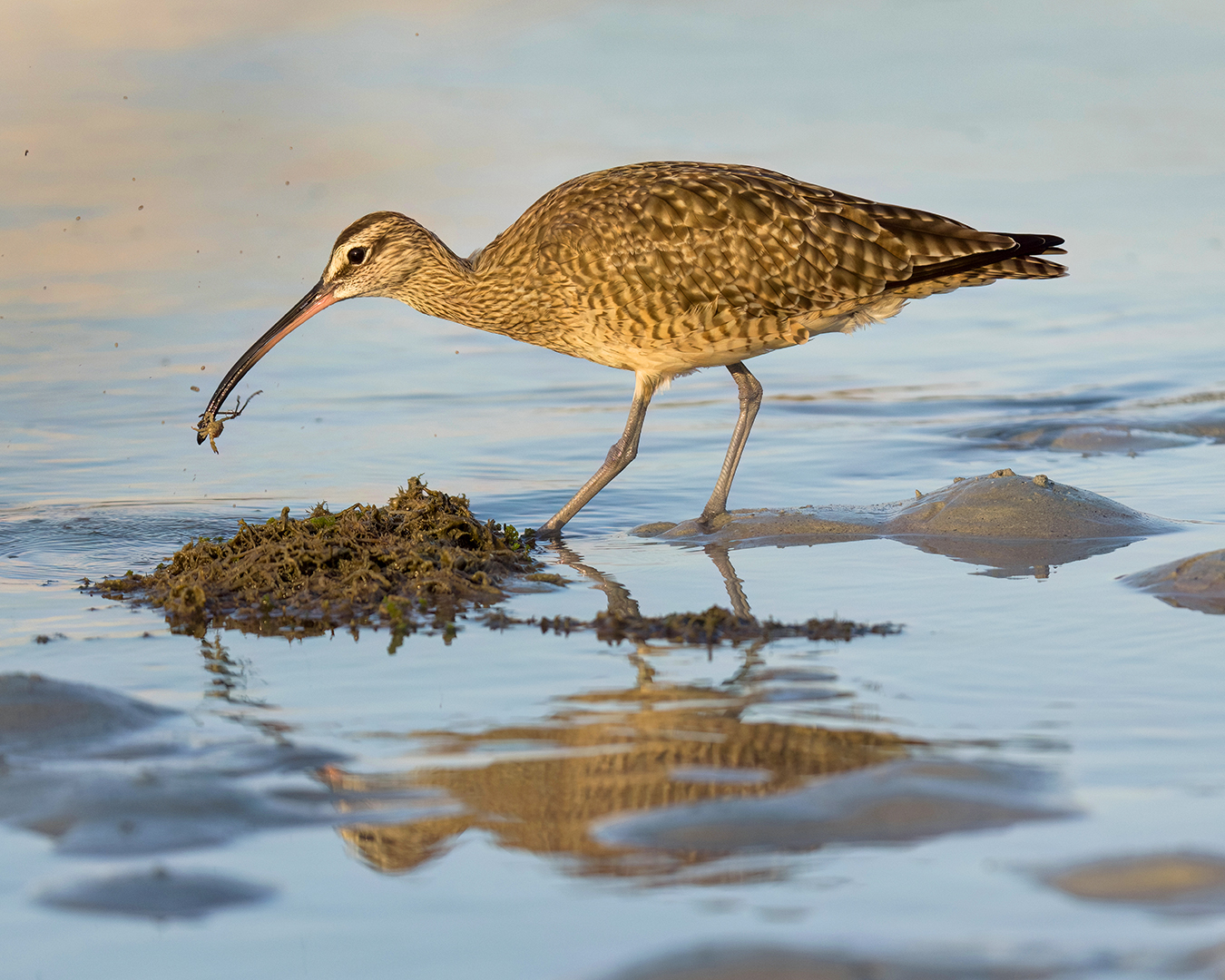
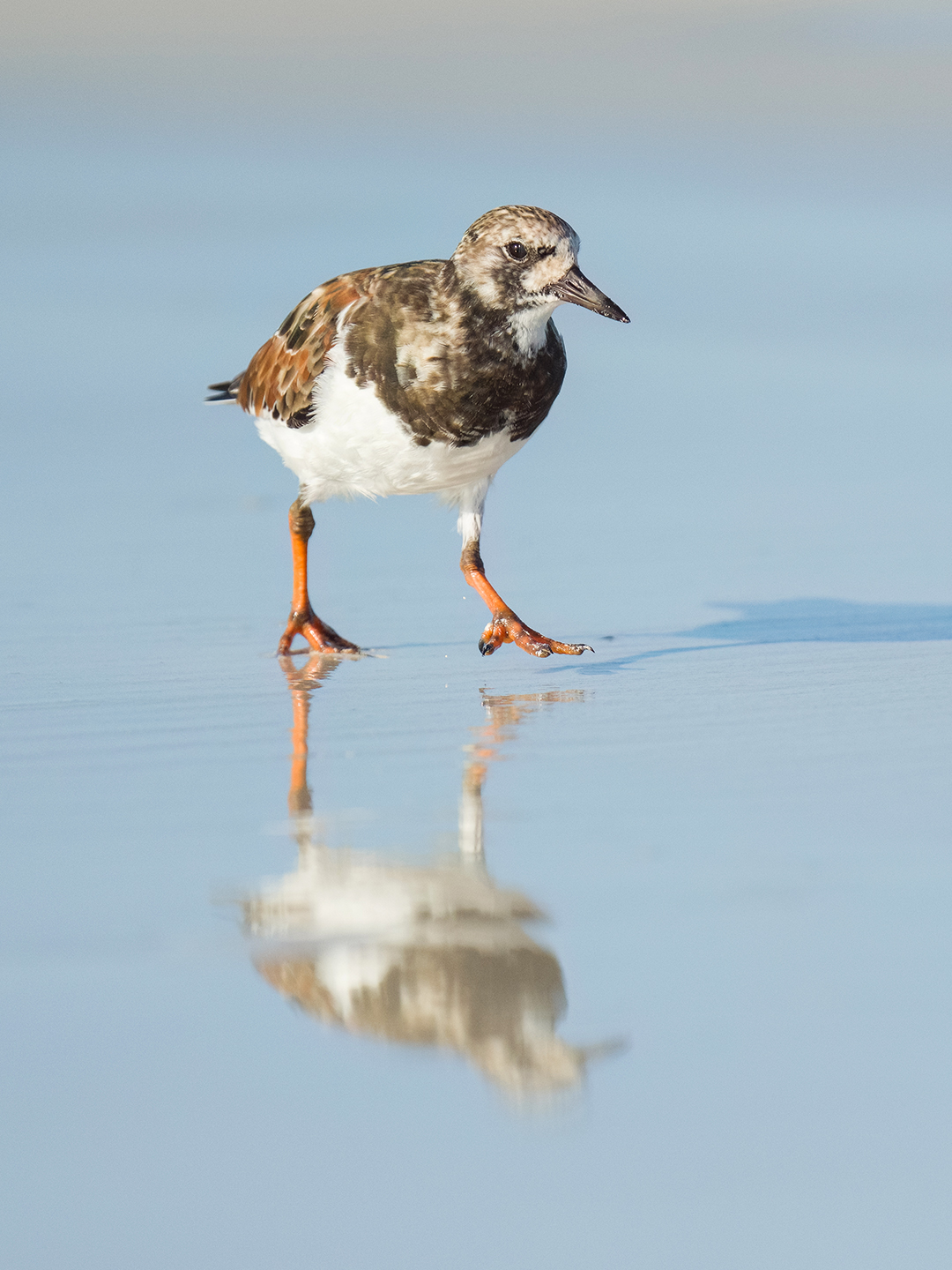
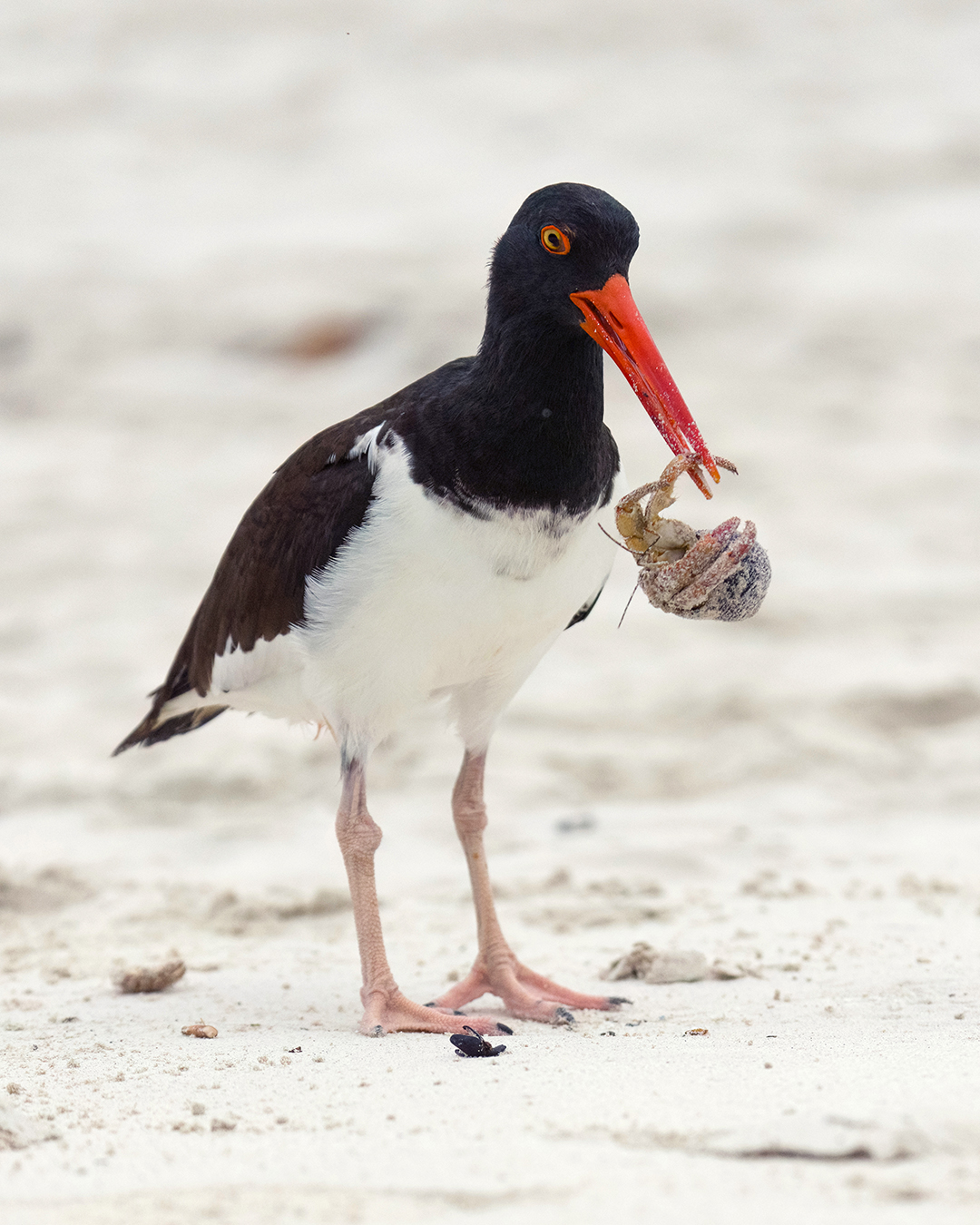
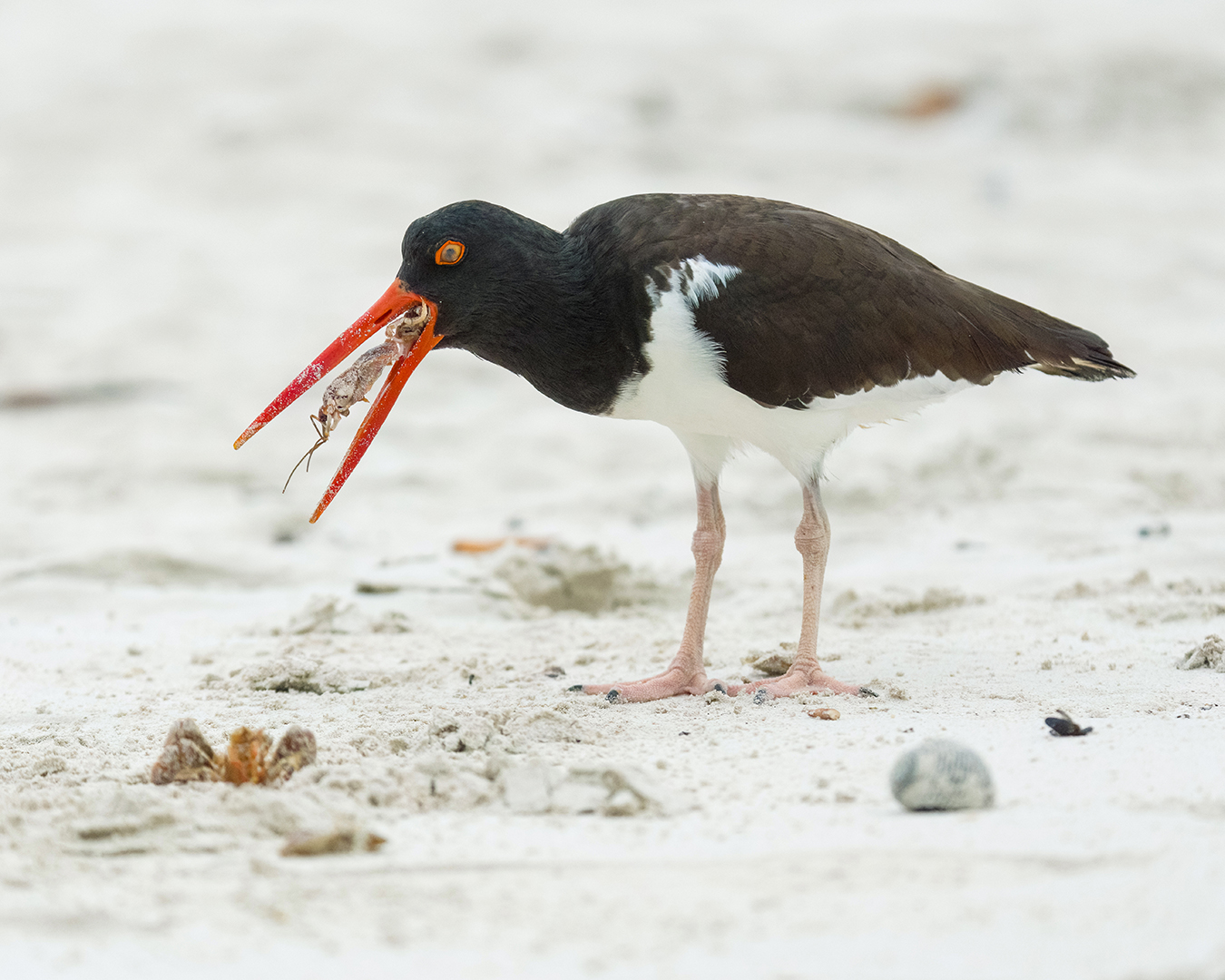
Later by the big tidepool I watched an oystercatcher methodically extract a hermit crab from its shell and then swallow it in sections – first the torso, then the claws.
Friday, February 6. Walking along the dark trail with the hyper-vigilance of someone trying his best to spot another barn owl, I caught the movement of a small shadow on a nearby tree branch. My phone’s flashlight revealed a rodent that immediately leaped to the ground and vanished into the brush. Whoa. I knew the island had rodents, but I’d never seen one here before. I imagine their presence in the area helps explain why barn owls were around too.
The action at Tortuga Bay turned out to be pretty slow that morning and I was starting to head back earlier than usual when I noticed a tiny black dot crossing the beach towards the ocean. Hurrying closer, I couldn’t believe what I was seeing – a single sea turtle hatchling making its initial dash to the ocean. How could this be? Don’t they usually hatch in big groups and rush to the ocean at night? And yet there it was. Trying to stay out of its way, I watched in amazement as it reached the surf and vanished into the water. (As much as I believe in not interfering with wildlife, I must admit that if one of the gulls had tried to eat that helpless baby turtle I would have been tempted to punch it.) Apparently only about one in a thousand sea turtle hatchlings live to adulthood. Godspeed, little buddy. I waited for a while and looked around the area of the beach where the hatchling seemed to have come from, but I couldn’t find any others.
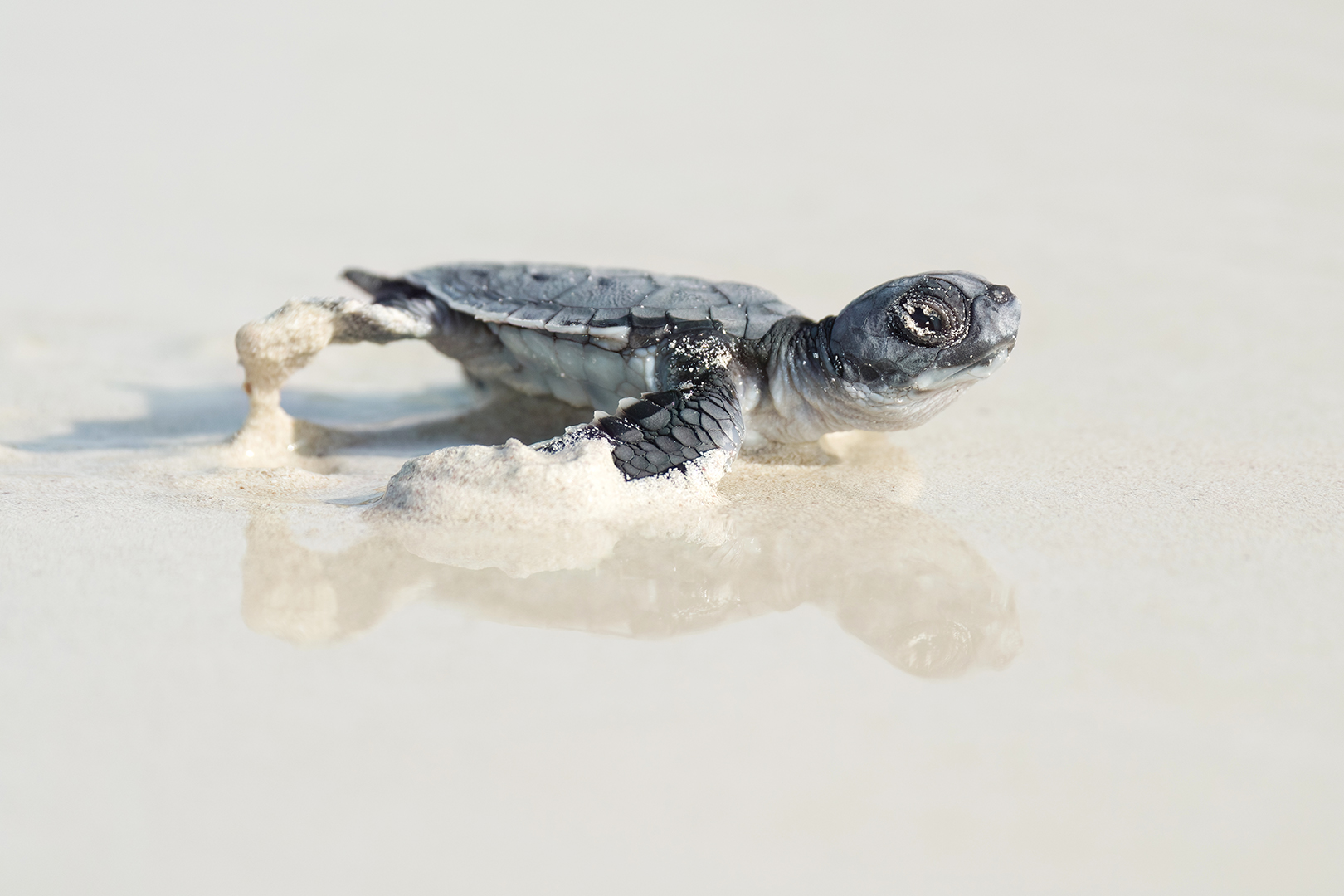
Saturday, February 7. I was scheduled to start my boat trip that afternoon, so this was my last morning at Tortuga Bay. I went straight to the area where I’d seen the sea turtle hatchling the day before, wondering if some of its siblings might still be around. Back where the beach gives way to vegetation I found a small group of dead hatchlings scattered around what must have been their nest, along with dozens of fresh tracks leading to the surf. Apparently the lone hatchling I saw was an early outlier and most of the others made their run overnight.
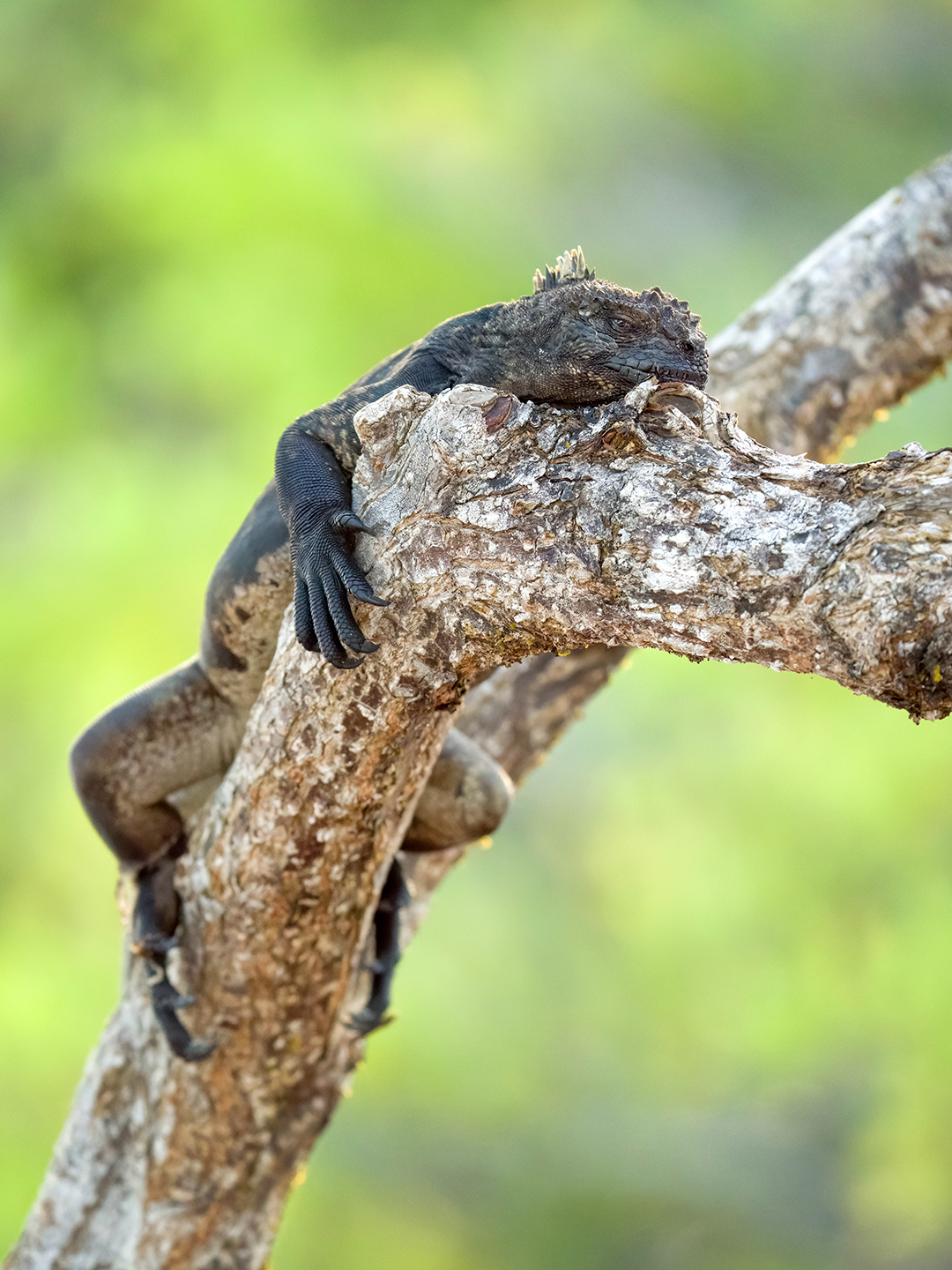
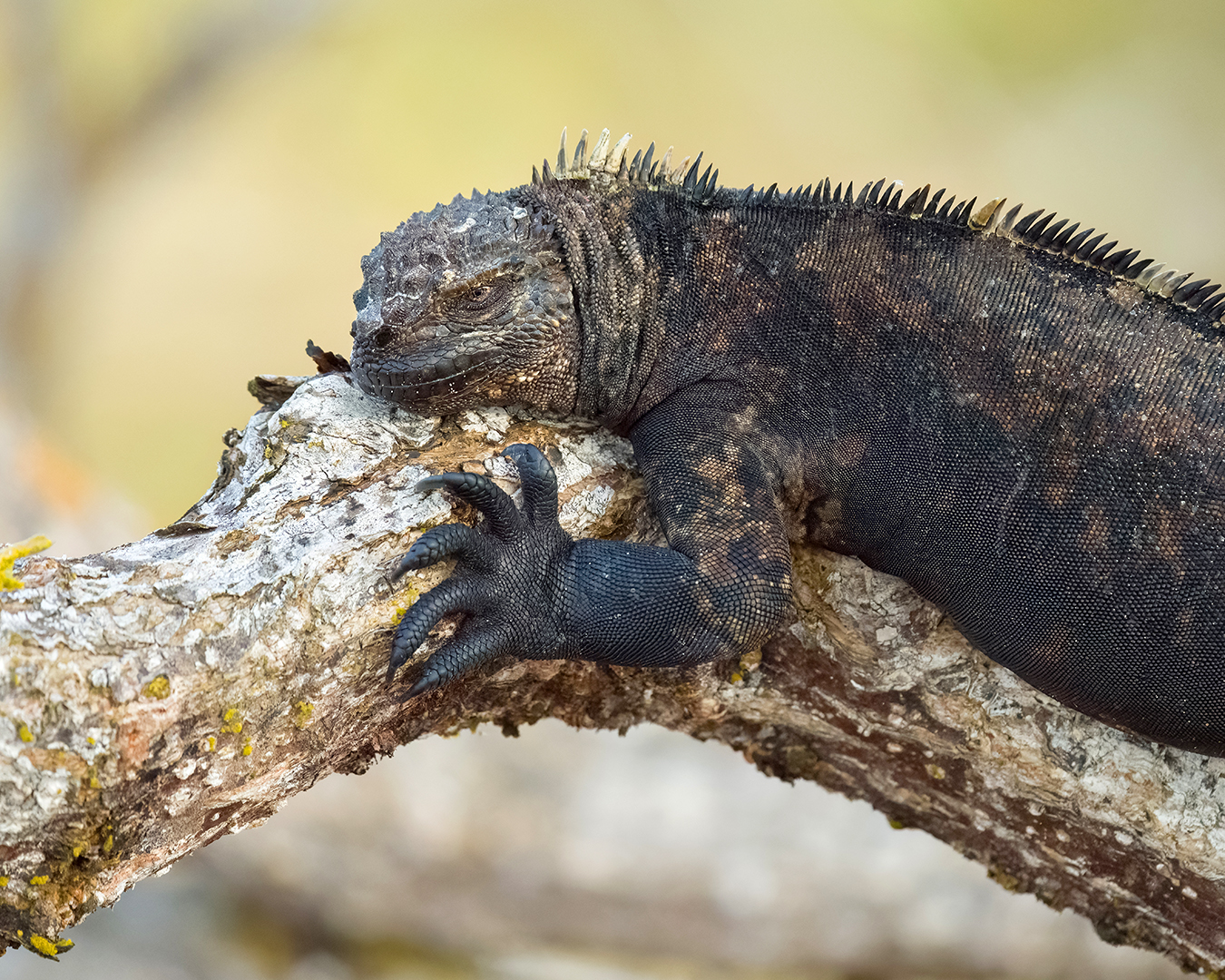
In the area between Playa Brava and Playa Mansa I finally managed to get some shots of a marine iguana that had been hanging out on a tree branch the past few mornings but had always been in the process of climbing down by the time I arrived. I don’t think I’d ever seen a marine iguana up a tree before, on any of the islands.
Nothing else notable seemed to be happening, so I thanked Tortuga Bay for an unforgettable week and headed back to Puerto Ayora to start my boat tour.
(Stay tuned for a second post on this Galapagos trip…)
 endlessloopphotography.com
2 thoughts on “Galapagos, Part 1”