

I knew almost nothing about Madagascar until Marie and I began considering it as our next travel destination. The little I did know, however, made me think it was my kind of place. A huge island off the southeast coast of Africa with relatively few tourists and lots of wildlife that can’t be found anywhere else in the world? Sign me up.
My simplistic Garden of Eden preconceptions collapsed quickly when I started reading about Madagascar before our trip, but learning more about the country – including some of its tragic aspects – only ramped up my interest. It blew my mind, for example, that a France-sized landmass just a few hundred miles away from the cradle of human civilization was one of the very last places to be settled by people. Most scholars think that permanent communities weren’t established on Madagascar until only about 2,000 years ago. Even wilder, the first inhabitants seem to have been seafaring Indonesians, at least some of whom were originally from southern Borneo. Waves of African and Arab settlers followed (along with more Indonesians), and the culture of the island swirled into a unique Malagasy creole.
When humans first arrived, Madagascar was basically one big forest – “The Green Island” – full of extraordinary megafauna like elephant birds, pygmy hippos, giant lemurs, and giant fossa. Pretty quickly, of course, people killed off all the big animals (except crocodiles) and began clearing the forests for firewood and agriculture. Today more than 85% of the forests are gone, exposing the rust-colored soil and transforming The Green Island into The Red Island. Seen from high above, apparently, the erosion-muddied rivers make the country look like it’s bleeding.
In 1913, Madagascar was home to about three million people. Today the population is 31 million, and almost 80% of those people live on less than $2 a day. This grinding poverty juxtaposes awkwardly with the spectacular richness of the (remaining) biodiversity. The island has more than 200 species of mammals, 300 species of birds, and 500 species of reptiles and amphibians – the vast majority of which are endemic and can be found nowhere else. By 2050, Madagascar’s human population is projected to jump to 53 million. It’s difficult to imagine how the country’s parks and nature reserves can withstand the pressures that will inevitably be applied by that many struggling people.
An author writing a book about Madagascar (“The Gardens of Mars”) shared a story about a group of locals who were roasting lemurs to eat. Someone asked if they understood that destroying the remaining wildlife and forests would eliminate one of the country’s few sources of future prosperity. “Yes,” the locals answered, “but it’s better to die tomorrow than today.” Yikes. Here I was thinking it would be fun to see some lemurs, and now it was becoming clear that Marie and I were in store for a much more complicated experience.
In early October we dropped off our dog with my mom in Denver and took a long series of flights to Antananarivo (“Tana”), Madagascar’s capital and largest city. We’d booked a 14-day mostly-overland tour that would start with a flight to the southwest coast and then slowly drive us back to Tana, stopping at lots of national parks along the way. Normally Marie and I prefer to explore a new country independently, but Madagascar’s transportation infrastructure is pretty limited, and everything we read suggested that a tour would be the most efficient and cost-effective way to get around. (Alternatively we could have designed our own agenda, hired a driver with a 4×4, booked our own hotels, and learned to speak French or Malagasy, but that sounded like a lot of work.)

It’s always a little nerve-racking to meet a bunch of strangers you’re about to travel with for two weeks. Given that Madagascar doesn’t seem like the kind of place that attracts first-time travelers, we expected our group would include more than a few veteran globetrotters, and that turned out to be very true. Tennille, an American nurse traveling with her friend Ava, had already been to more than 100 countries. For Kat, a 29 year-old Canadian living in London, Madagascar completed her goal of visiting 50 countries before turning 30. Jean, an unfailingly positive Brit in her 70s, traveled so much that she couldn’t be bothered to keep track of her country count. Sally, a retired American teacher, said this was her 26th trip just with G Adventures, our tour company. I eventually discovered that there wasn’t a single overnight hike in the U.S. that I’d done that Lucie, a Czech woman currently living in Seattle, hadn’t done herself as well (along with countless other hikes too, of course). Einar and Sindre, two 19-year-old Norwegian friends, were in the middle of a multi-month, multi-country trip before returning home to start university and join the military, respectively. Rounding out our group were Roger, a retired American; Matthias and Jasmine, a young Swiss couple; Desiree, a solo Swiss traveler; and Skye and Maryanne, friends from Australia. Our guide, Solofo, was a local who spoke good English. First impressions, thankfully, were positive. Everyone seemed friendly.
We started our tour with a flight from Tana to Toliara (aka Tulear), a ragged, sun-bleached city on Madagascar’s southwest coast, and from there a short drive north took us to a beach resort in Ifaty, our home for the next three nights. Marie was thrilled to have so much time to relax by the ocean, but I was champing at the bit to see some wildlife. Happily we both got our way.
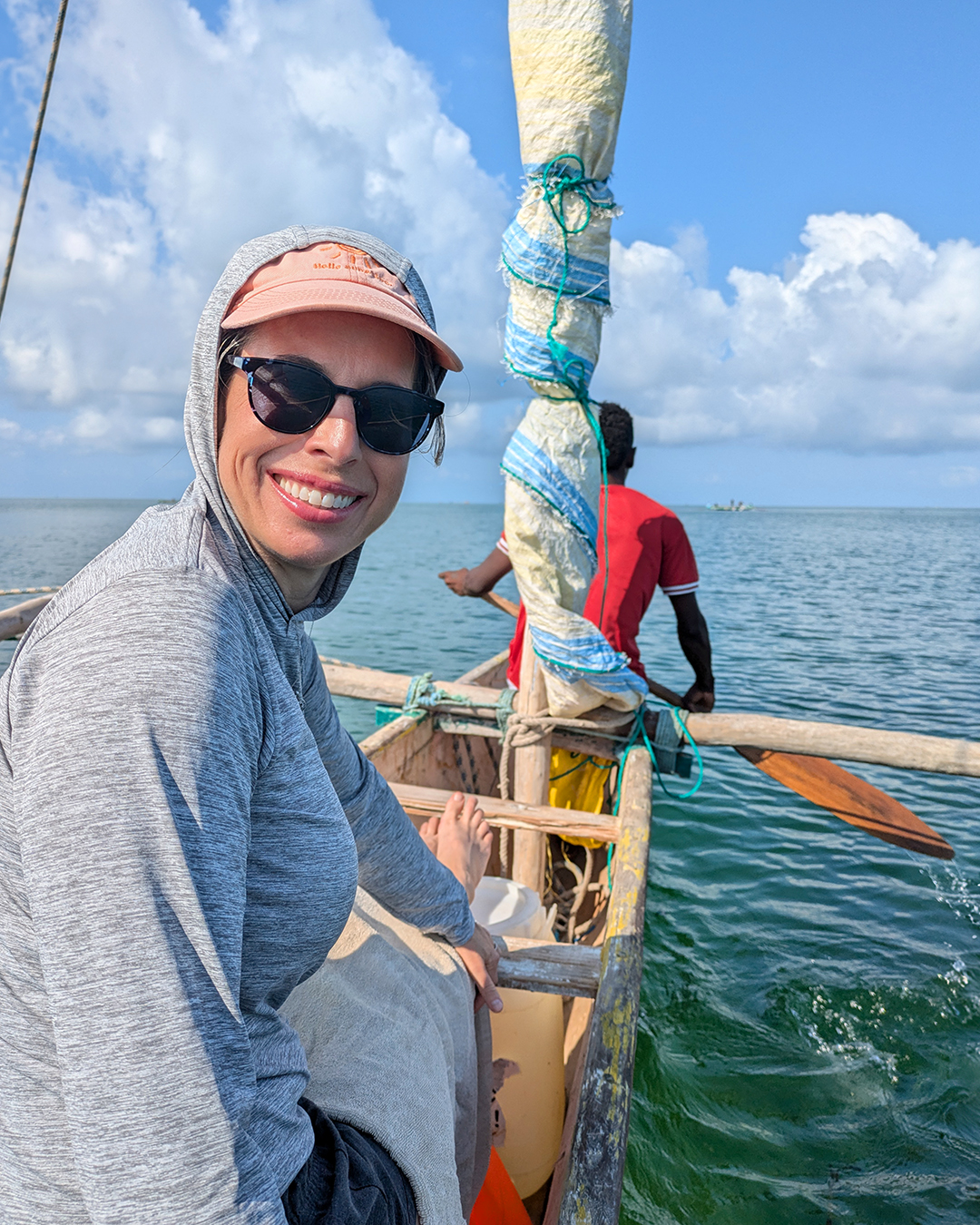
On our first morning in Ifaty, Marie and I headed out in one of the local outrigger canoes to do some snorkeling. It felt great to slip into the warm water of the Mozambique Channel and check out some of the unique creatures hanging out by the reef.

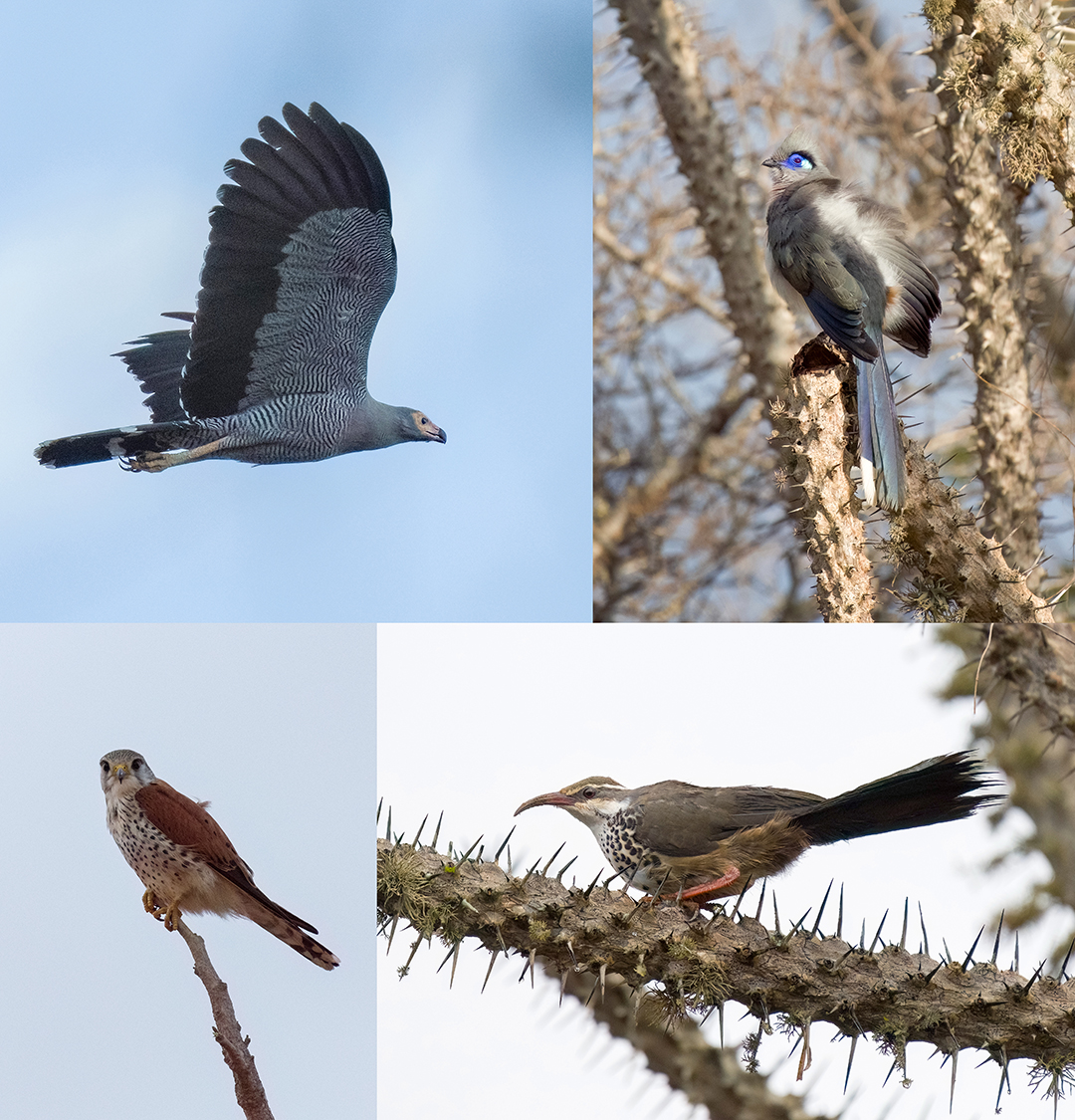
That afternoon a guide took some of us to see the Spiny Forest, a protected section of the area’s once-ubiquitous desert ecosystem, filled with iconic baobab trees, twisting thickets of thorn-covered vegetation, and some of the rarest birds and reptiles in the country. Kat, the Canadian, was a serious birder, and she’d already visited the Spiny Forest early that morning with a birding guide. As someone who feels pressure to be more enthusiastic about birds (driven somewhat internally but also by our neighbors Jill and Greg, who often remind me that not all wildlife has fur), I was thrilled to have an expert in our group.

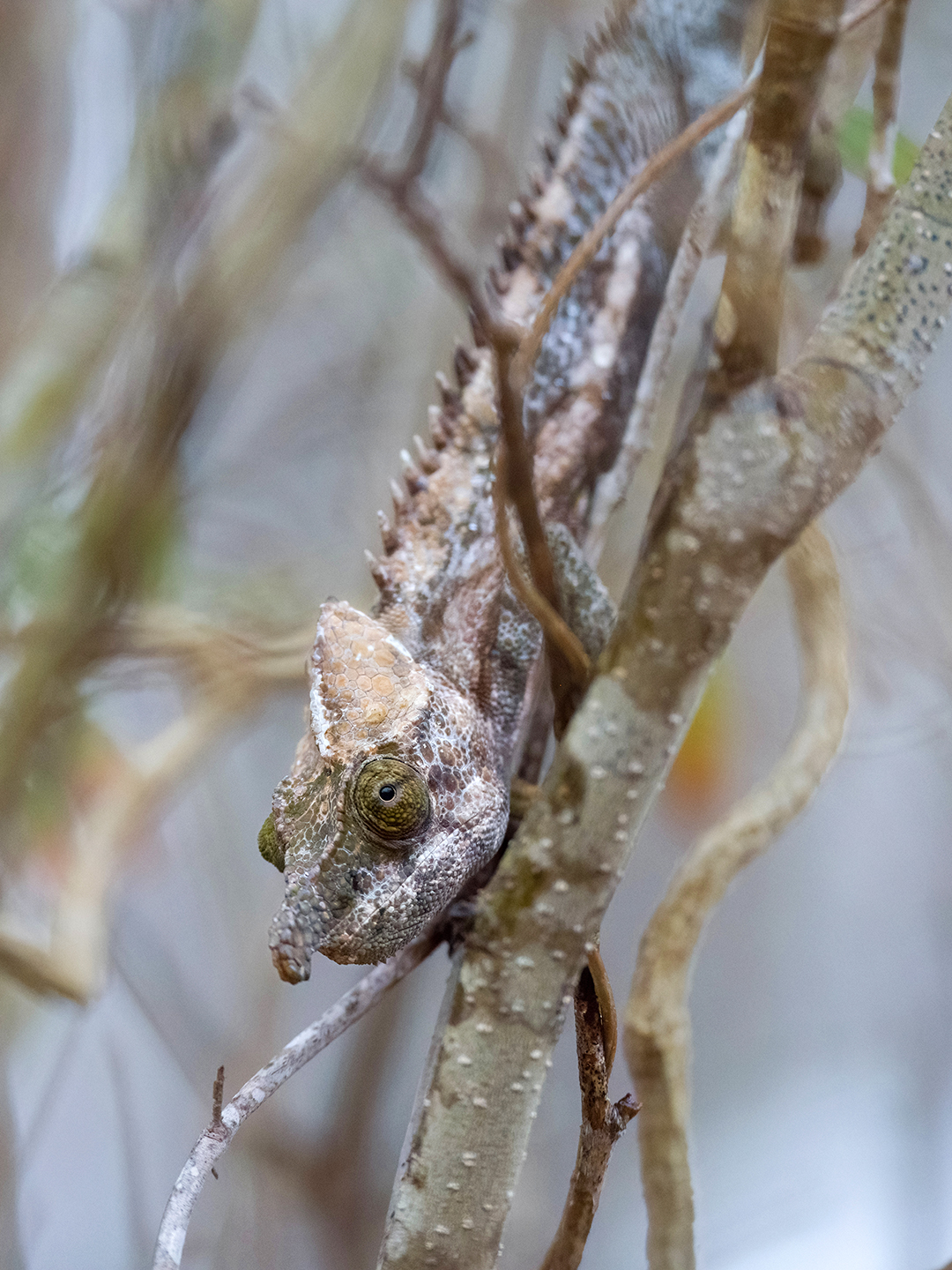

At 5am the next morning I joined Kat for another visit to the Spiny Forest. Having noticed on the iNaturalist app that someone spotted a lemur nearby, Kat asked our guide if there were any around. “Yes,” the guide said, “but not this morning.” It had rained overnight, and apparently the weather had prompted the lemur(s) to retreat into some kind of hole or den. “Maybe this afternoon, but maybe not.”
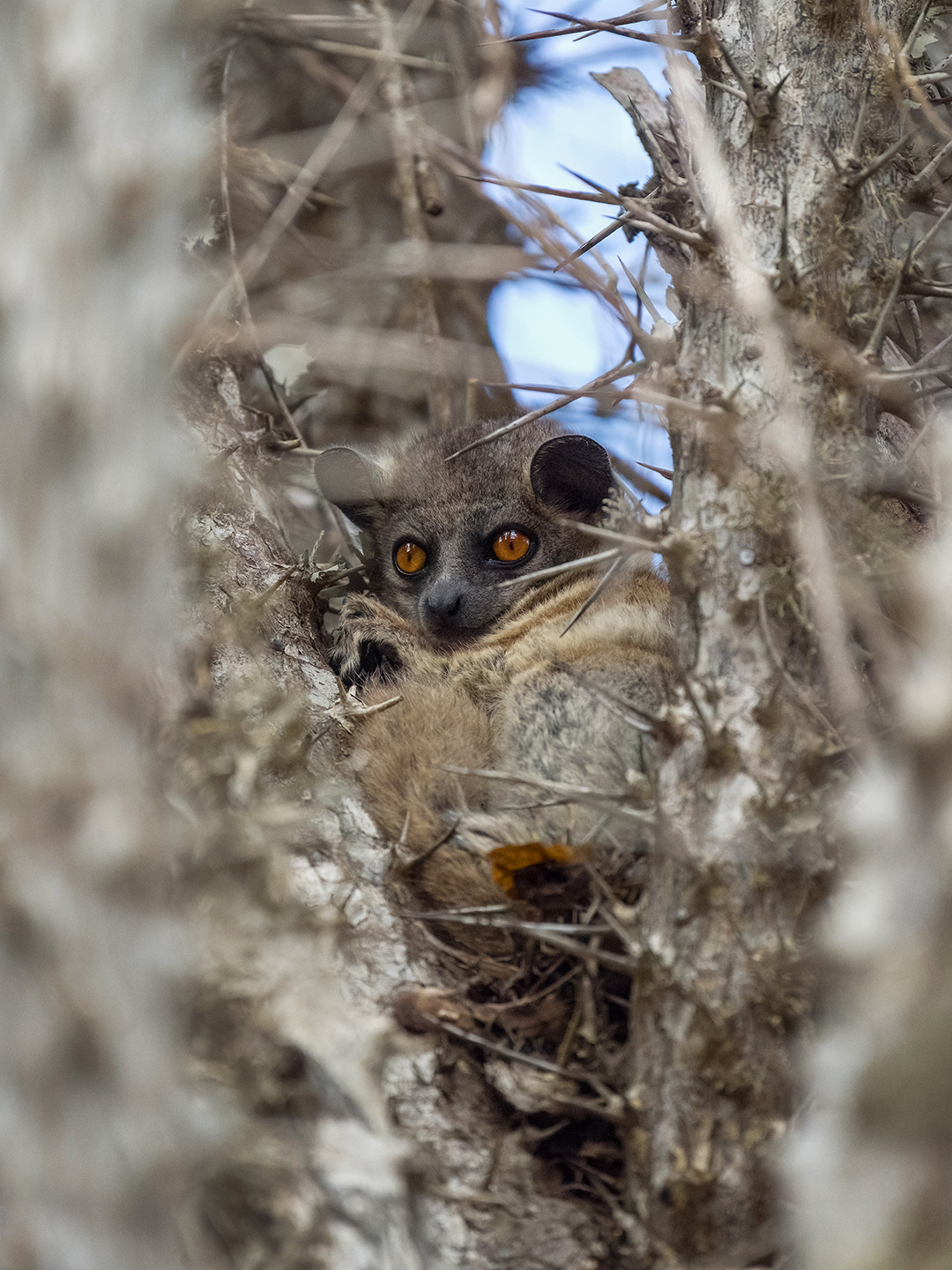
Kat and I were so excited about the prospect of seeing our first wild lemur that even a slim chance was irresistible – we headed right back to the forest that afternoon (Marie was almost intrigued enough to join but chose beach time instead). Very quickly our guide led us to a tree-sized cactus and pointed to a small brown shape nestled in a thorny crevice. A lemur! The guide identified it as a white-footed sportive lemur, but when we researched it later we thought it might have been a Petter’s sportive lemur. Regardless, what an amazing way to see our first lemur of the trip. I hadn’t known there were any lemurs in the area at all, and had it not been for Kat we would have completely missed it.

The next morning we boarded our baby blue 22-seat Toyota Coaster bus and settled in for a nine-hour drive. The road from Ifaty back to Toliara was in decent shape – recently repaired by the Chinese, Solofo told us – but things got rough once we turned away from the ocean. Madagascar’s road network is one of the least developed in the world. The highway from Toliara to Tana was paved, unlike most of the country’s roads, but many sections were so badly rutted that it was sometimes easier to drive beside the road than on it. Before long I felt like I was performing poorly in a mechanical bull-riding competition.
A vast treeless savannah stretched to the horizon in every direction. More often than not, smoke from small fires could be seen rising ominously to the sky, and occasionally a grubby-faced teenager would appear by the side of the road selling bags of charcoal. It’s one thing to read about large-scale deforestation, but seeing the monotonous, denuded aftermath like this, hour after hour after hour, felt overwhelming.
We arrived that afternoon in Ranohira, a town next to Isalo National Park, and visited Soa Zara, a community-based tree-planting project supported by G Adventures. It was encouraging to see an organization with local roots making a positive impact, even though it must feel at times like trying to battle a massive inferno with a garden hose.

We spent the next day exploring Isalo, a national park known for its dramatic rock formations. As we climbed a trail into the steep sandstone that morning, our guide pointed out small openings high on the cliff walls that locals had used as tombs for their dead. After a couple of hours we reached a small natural pool and stopped for a swim.


At mid-day we reached our lunch spot and reunited with the part of our group that chose not to do the longer hike. “Did you see the lemurs?” Tennille asked.
“No! Where?”
Apparently a family of Verreaux’s sifakas (a kind of lemur) had just been hanging out by the trail that led to the parking area used by the shorter-hiking part of our group. I practically sprinted over, elated to find the sifakas still in the trees above the trail.


I hated to waste time with lunch when there were white sifakas to watch, but our guide insisted that our entire group had to eat together. After lunch some of us managed to find the sifakas again before hiking up to two more natural pools.
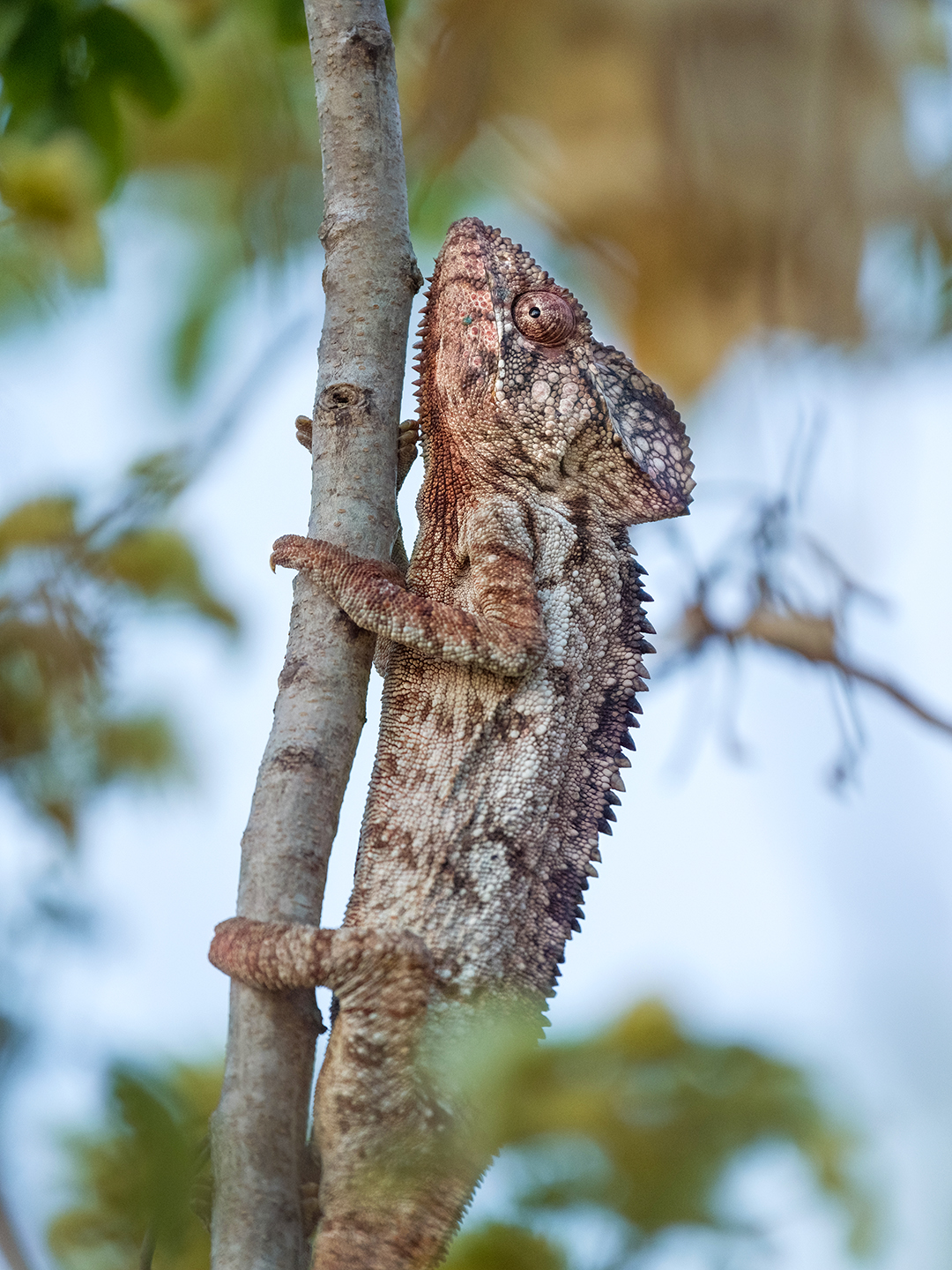
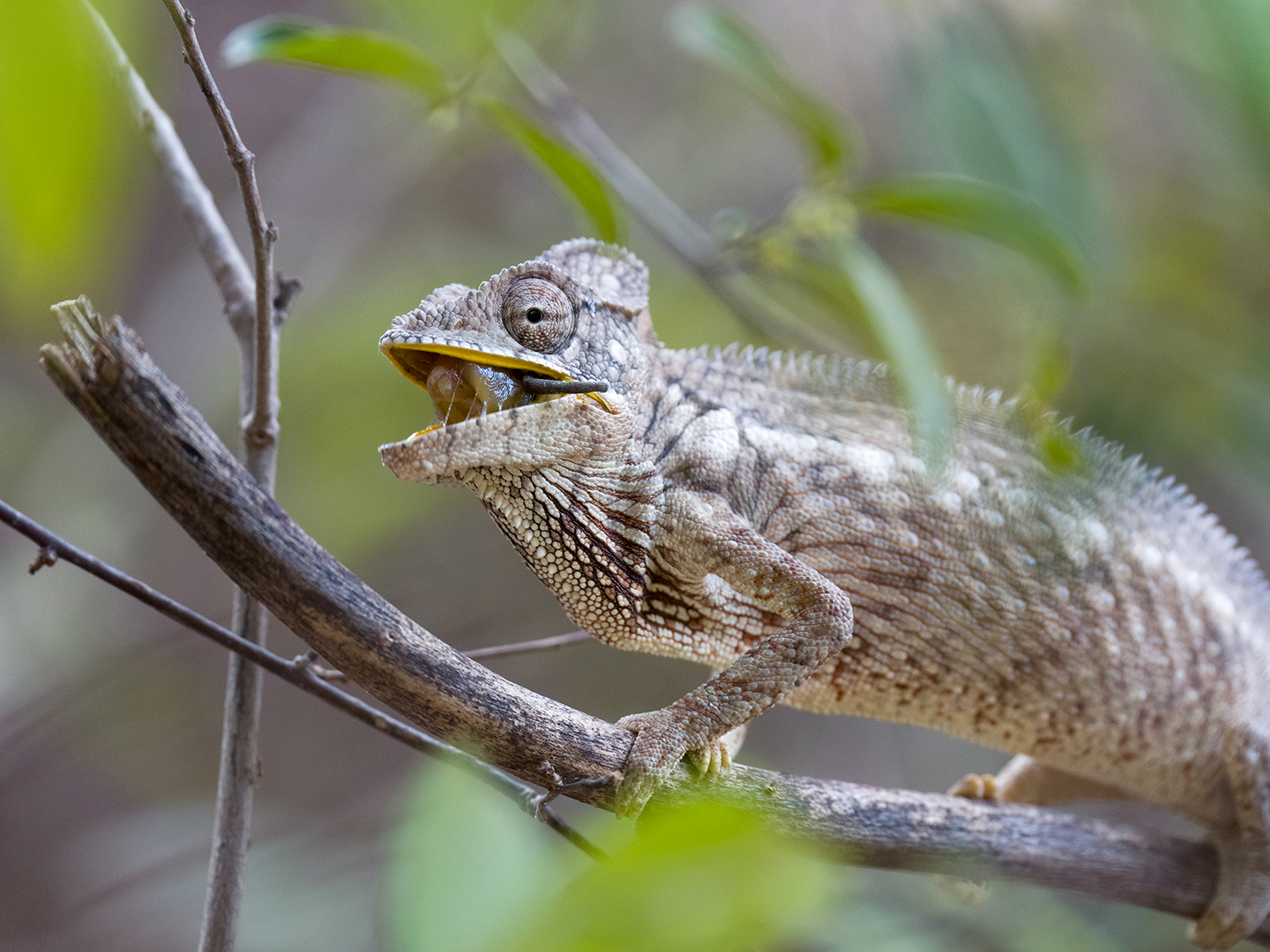
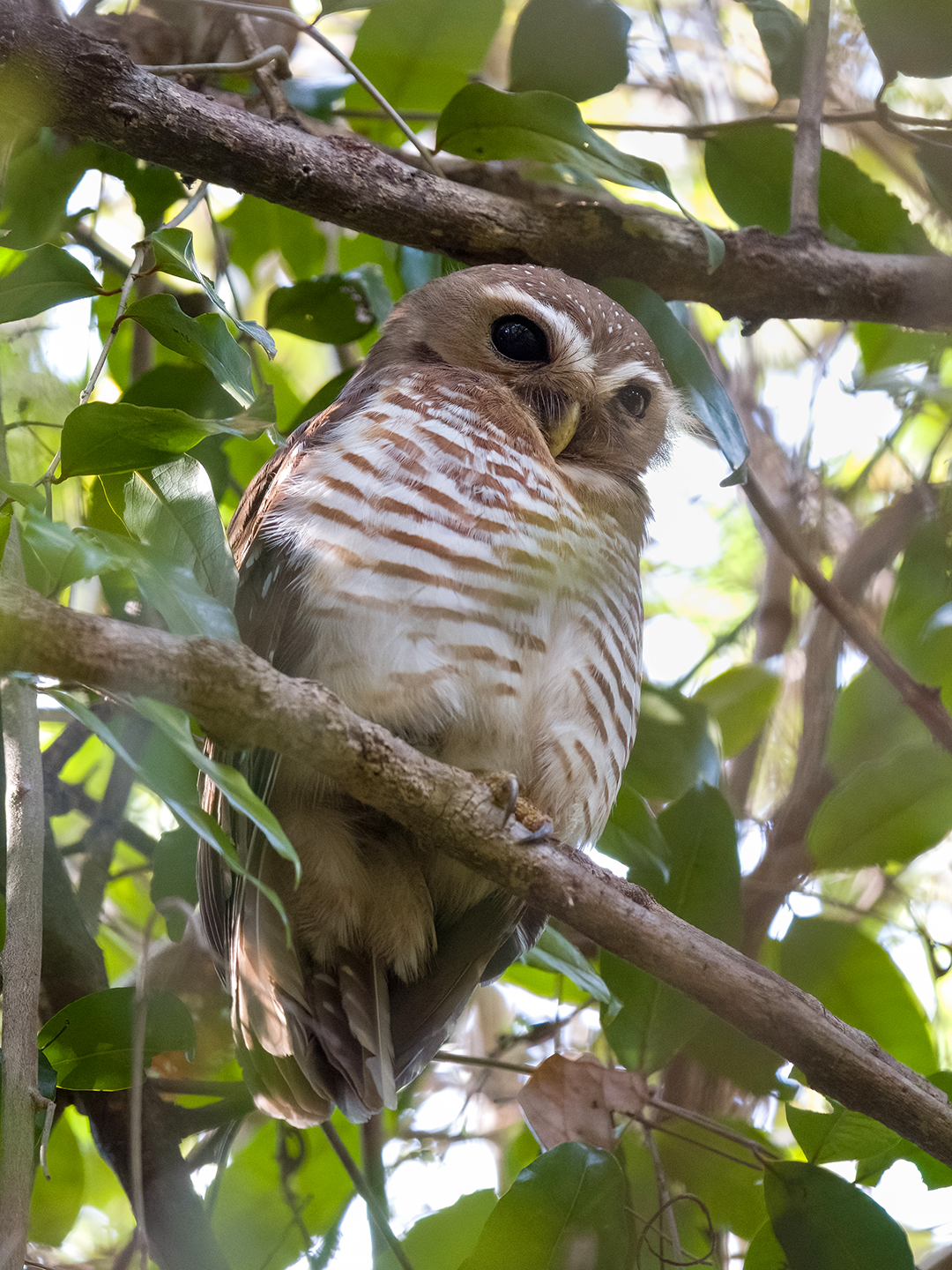
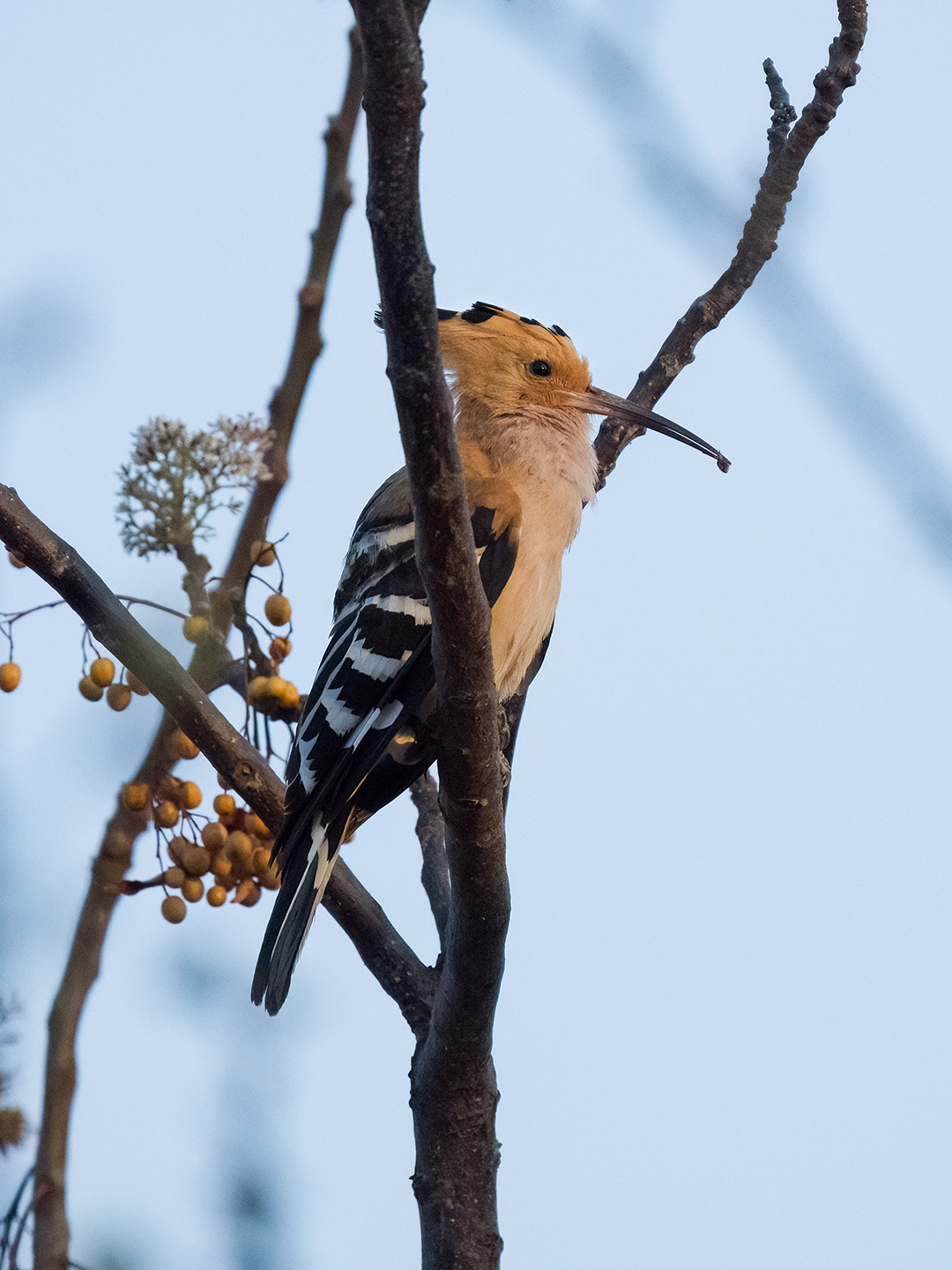
The sifakas were still around when we returned to the lunch area, but they were high up in the trees and some other wildlife demanded our attention – a white-browed owl (my first owl of the trip!) and a warty chameleon, both endemic.


By the end of the day it was clear that sickness was taking a toll on our group. Sally almost passed out on her walk back from the natural pools, and several others were feeling so bad that they’d remained in their hotel rooms. Some blamed undercooked zebu (a kind of cow) meat served at our visit to Soa Zara, while others suspected their anti-malaria medication might be causing problems. Regardless, Marie and I were grateful that – so far at least – we still felt pretty good.
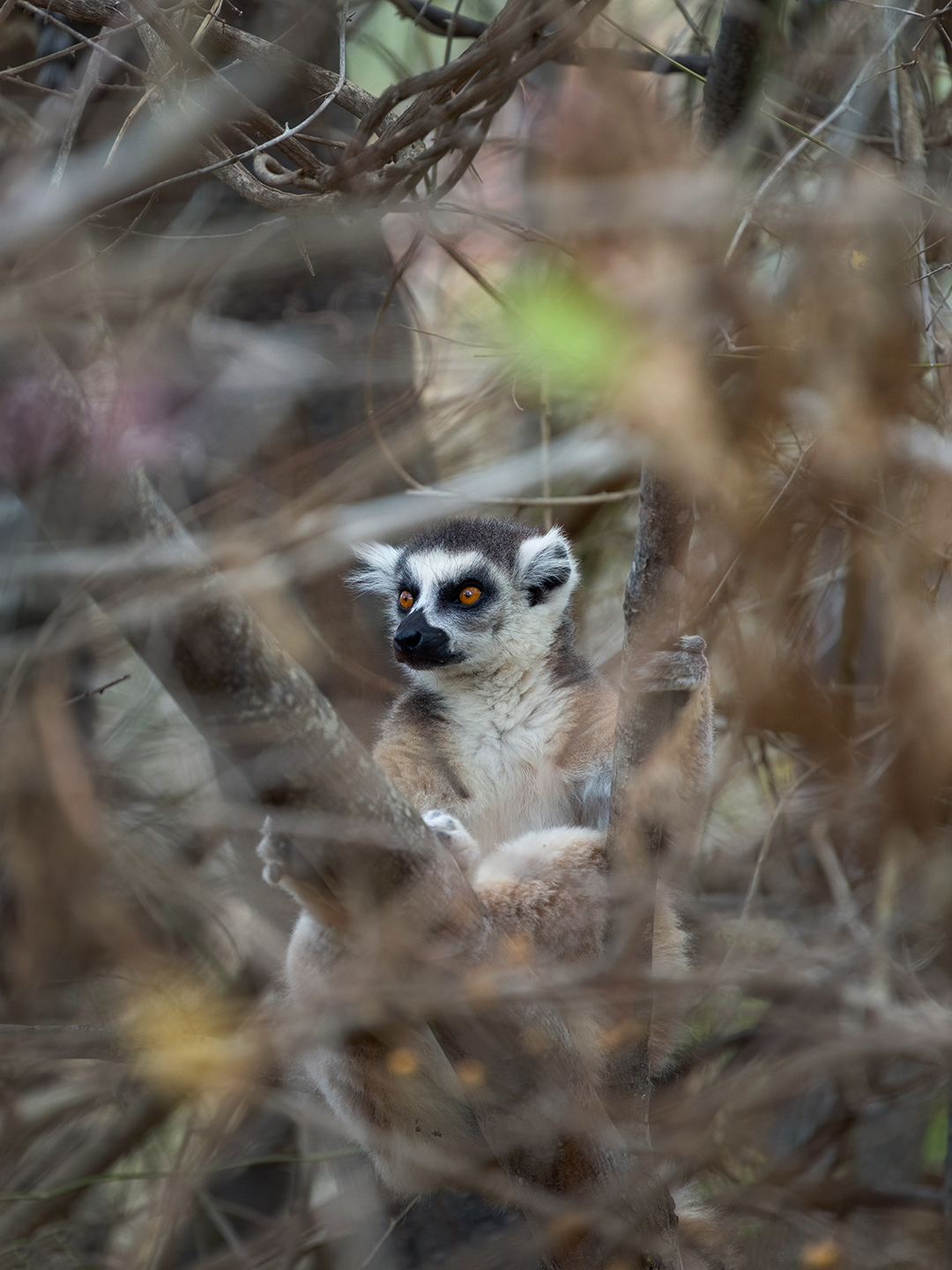
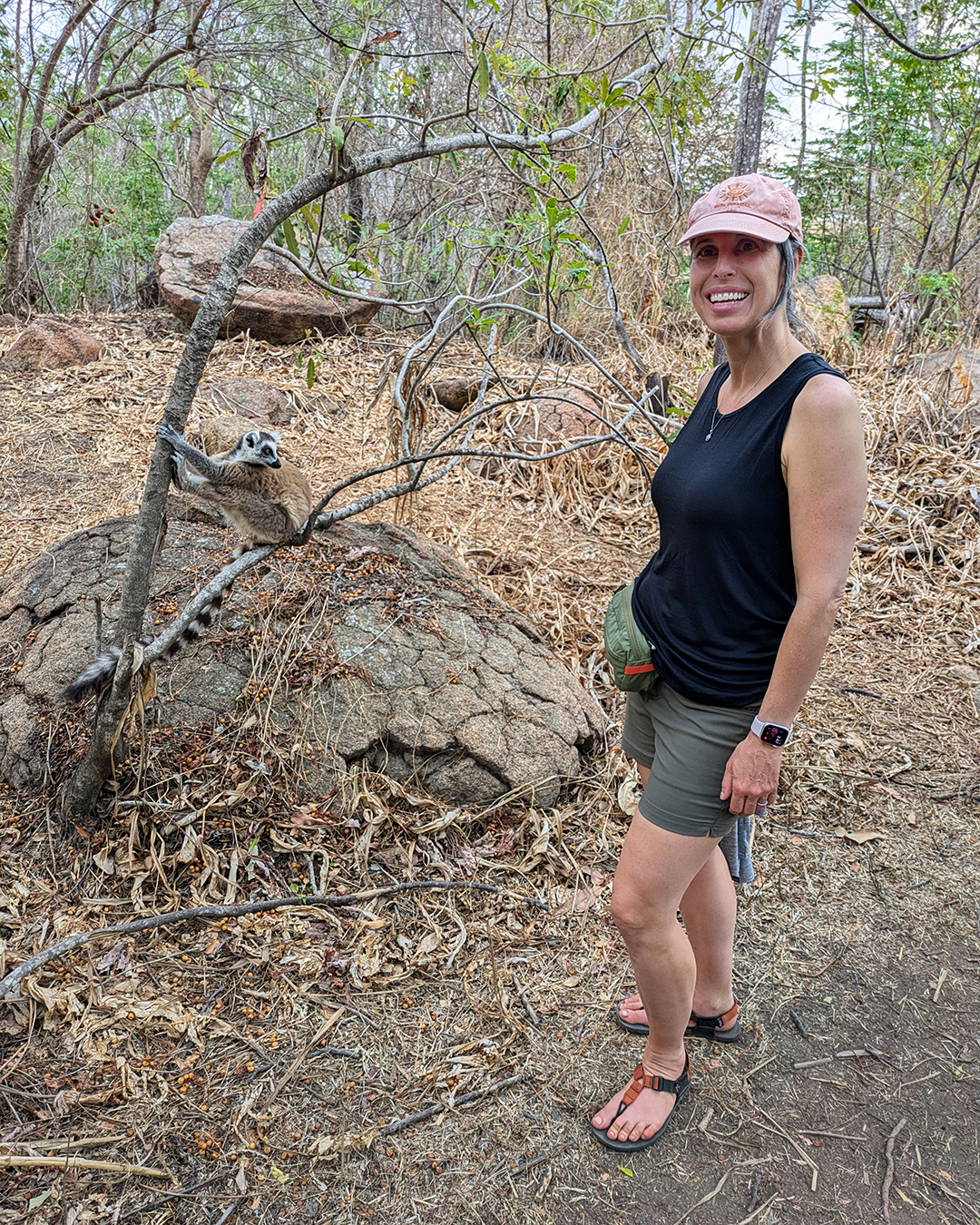
Our drive the next day was shorter, only about five hours, with an exciting destination at the end – the Anja Community Reserve, which was full-to-bursting with ring-tailed lemurs. We found the lemurs almost immediately. For almost two hours we watched what must have been over a hundred of them, including babies, playing and resting and eating, totally unconcerned by our presence.





Overall the first half of our trip had gone incredibly well. We saw amazing animals, Solofo was a great guide, and everyone in our group was nice. Marie and I were particularly enjoying getting to know Kat and Lucie, who shared our excitement for watching wildlife and hiking in the parks.
 endlessloopphotography.com
What a unique and fascinating trip. Incredible biodiversity but a sad story about the country. Glad you were able to visit “before it was too late”. Anxious for the next episode.
LikeLiked by 1 person
Many happy memories returned as I read your narrative. Thank you for sharing phenomenal photography. Seeing the creatures in their natural habitat was a dream come true – and only made better seeing them through your lens. Anxiously awaiting the next part of this adventure.
LikeLiked by 1 person
hi! My assigned user name is crazy. Hugs, sally
LikeLiked by 1 person
Ha, thanks Sally, that is quite a user name! I’m hoping to have the second/final post up this weekend – as promised I’ll include shots of the six different lemur species we saw at Ranomafana
LikeLike